

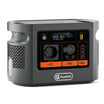
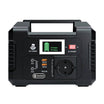

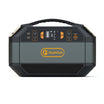
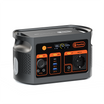


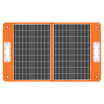
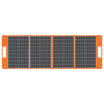


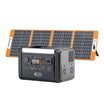

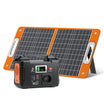


Short answer: the FlashFish T2000 may run a refrigerator when the appliance's running watts and startup demand stay within the station's output limits and a supervised test succeeds. The T2000 is listed as a 2000W, 1536Wh LiFePO4 power station, but capacity alone cannot guarantee refrigerator runtime or food safety.
Refrigerators are a common backup question because their compressors cycle on and off. That makes them different from a lamp or laptop charger with a steadier load. The right decision starts with the refrigerator label and manual, not a generic runtime chart.
The four checks that decide whether the setup fits
| Check | What to find | Why it matters |
|---|---|---|
| Running demand | Watts or amps from the appliance label/manual | Shows the normal load while the compressor runs |
| Startup demand | Manufacturer guidance or measured startup behavior | A compressor may briefly demand more than its running load |
| Energy over time | Measured use during a representative supervised test | Cycling, room temperature, door opening, and appliance condition affect use |
| Connection and placement | Direct plug, dry stable location, ventilation, cable layout | Prevents a theoretically suitable load from becoming a poor setup |
Start with output, not battery capacity
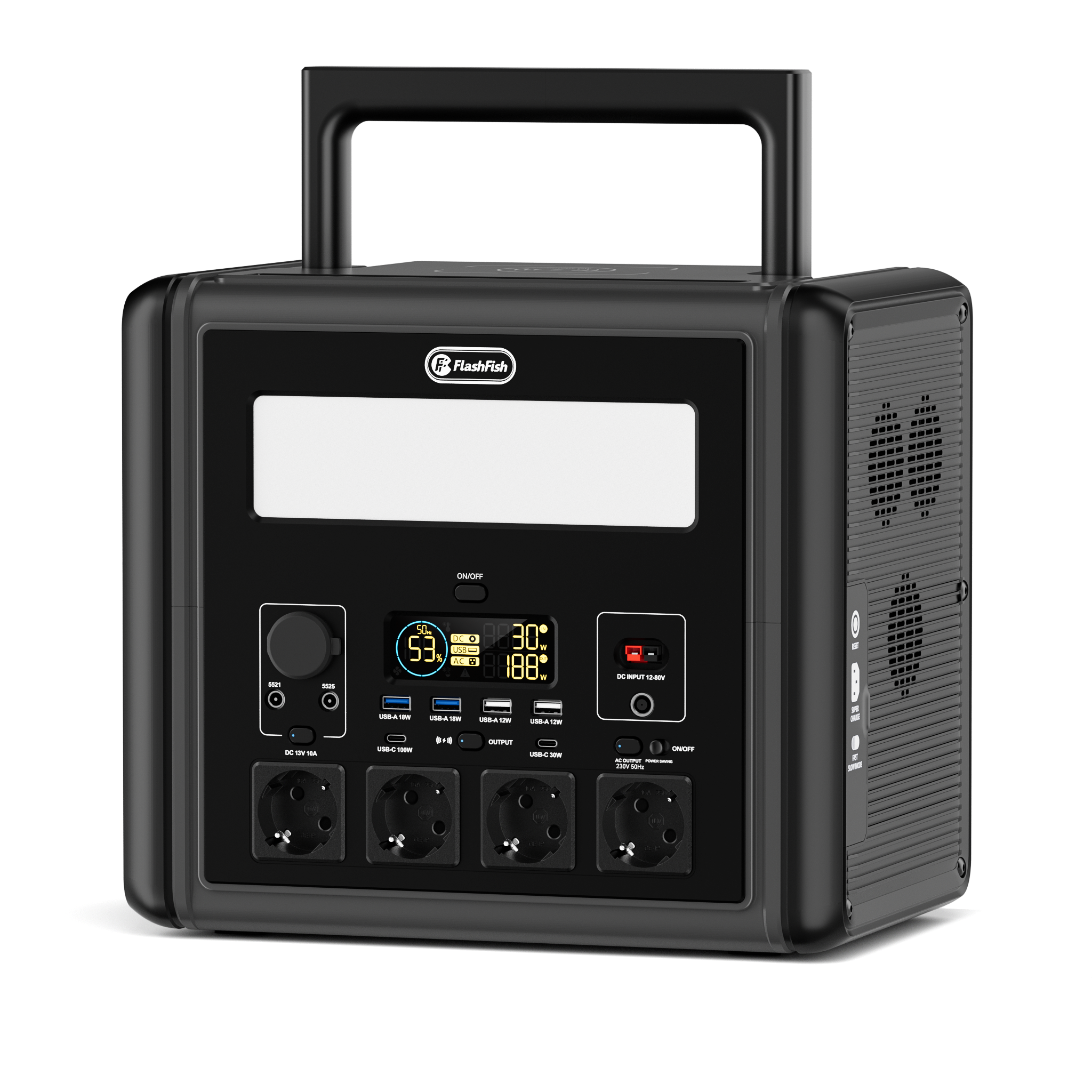
The FlashFish T2000 Portable Power Station is listed with 2000W output and 1536Wh capacity. Output is the first check because the station must handle the refrigerator while its compressor starts and runs. A large battery does not help if a load exceeds the output or behaves in a way the setup cannot support.
Read the refrigerator label and manual. If the manufacturer does not state startup behavior, use a suitable energy meter or qualified advice rather than guessing. Do not repeatedly retry a setup that trips, reports a fault, or behaves unexpectedly.
Then estimate energy without promising runtime
A refrigerator does not draw its running watts every minute. Its energy use changes with thermostat settings, ambient temperature, how often the door opens, how full it is, and the condition of the appliance. Power-station conversion losses and reserve planning also matter.
That is why a simple capacity-divided-by-watts calculation is only a rough planning check. The stronger method is a supervised test using the actual refrigerator under representative conditions. Record the starting battery level, test duration, ending battery level, and any compressor-start behavior. Keep reserve for other essentials rather than planning to drain the station completely.
Use a direct, manual-backup setup
Connect the appliance directly to the power station only when the product manuals and plug arrangement support it. Do not connect a portable power station to household wiring, improvise a transfer method, or assume it replaces a professionally installed backup system.
Place the station on a stable, dry surface with clear ventilation and protected cable routing. Keep it where the display can be checked. For broader manual-backup comparisons, browse the portable power stations collection, then verify the exact model page and manual before choosing a setup.
A safe pre-outage test plan
- Read the T2000 and refrigerator manuals before connecting anything.
- Record the refrigerator's label information and normal plug arrangement.
- Place the station in a dry, ventilated, accessible position.
- Run a supervised test long enough to observe several compressor cycles.
- Watch for faults, unexpected shutdowns, cable problems, or unusual behavior.
- Record battery change and keep a conservative reserve.
- Stop the test and seek qualified guidance if the setup does not behave normally.
Food safety is a separate decision
A power calculation does not determine whether food remains safe. The UK Food Standards Agency's consumer power-cut guidance recommends keeping refrigerator and freezer doors closed and provides food-safety advice for outages. Follow current local food-safety guidance and discard food when instructed; do not use a battery percentage or a general blog post as the food-safety test.
Where competitor content leaves a gap
Current competitor guides and refrigerator-specific battery products often emphasize headline runtimes. Those examples can show that the use case matters, but they do not replace a test with the exact appliance. The FlashFish approach should remain simpler: check output, observe startup behavior, measure the real load, keep reserve, and separate appliance power from food-safety decisions.
FAQ
Does 1536Wh mean a refrigerator will run for a fixed number of hours?
No. Listed capacity is a planning reference. Appliance cycling, startup demand, conversion losses, temperature, door opening, battery state, and reserve all change the result.
Can I plug the T2000 into a household wall socket to power the home?
No. Do not backfeed household wiring or improvise a transfer setup. Use direct appliance connections supported by the manuals or consult a qualified professional about installed backup equipment.
Should a refrigerator be the only backup priority?
That depends on the household. Make a written priority list for communication, lighting, food storage, medical or safety-critical needs, and other essentials. Safety-critical equipment requires its own manufacturer guidance and professional review.



Commenta
Nota che i commenti devono essere approvati prima di essere pubblicati.
Questo sito è protetto da hCaptcha e applica le Norme sulla privacy e i Termini di servizio di hCaptcha.