




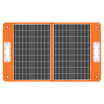
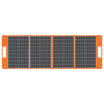


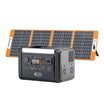

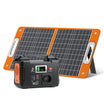

Short answer: read a compact power station by separating stored energy, continuous output, charging input, waveform, ports, weight and missing data. A small station can be the right choice for phones, camera batteries, lights and laptops, but it should not be chosen from watt-hours or a product title alone.
This guide is written for Europe buyers comparing budget and compact portable power stations. The practical test is simple: can the station power the exact devices you need, in the places you will use it, without relying on assumptions that the specification sheet does not actually provide?
Why spec literacy matters
Helpful buying advice should answer the user's real problem, show clear sourcing and make uncertainty visible. That is especially important in compact power stations because small differences in inverter output, charging input and port layout change what the product can safely do.
A compact model is often a good fit when the device list is low-power and specific: phones, camera chargers, LED lights, a router, a small laptop adapter or campsite accessories. It becomes a poor fit when the buyer expects kettles, heaters, large compressors, high-startup tools or long backup sessions from a small battery.
The seven-spec reading method
| Spec | What it tells you | What it does not tell you | Buyer action |
|---|---|---|---|
| Wh capacity | Stored battery energy before losses and reserve margin. | Exact runtime for every device. | Use it for rough comparison, then apply device watts and a reserve margin. |
| Continuous AC watts | The steady inverter output class. | Whether every appliance in that watt class is suitable. | Compare it with device labels, adapters and startup behavior. |
| Peak watts | Short startup headroom when the value is provided. | A steady planning limit. | Do not plan normal use from peak output. |
| Waveform | Whether AC output is pure sine wave or modified sine wave when stated. | Universal device compatibility. | Check sensitive electronics and motor loads carefully. |
| Charging input | How quickly the station can accept power from supported inputs. | Fixed solar recharge time. | Match panels to input limits and expect weather variability. |
| Ports | Which devices can plug in directly. | Total simultaneous-load suitability. | Add up the devices you actually intend to run. |
| Weight and size | How realistic the station is to carry and store. | Electrical fit. | Choose the smallest station only after the load list passes. |
Compact FlashFish examples
| Model | Product-source facts | Good-fit reading | Boundary to keep visible |
|---|---|---|---|
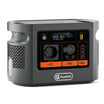
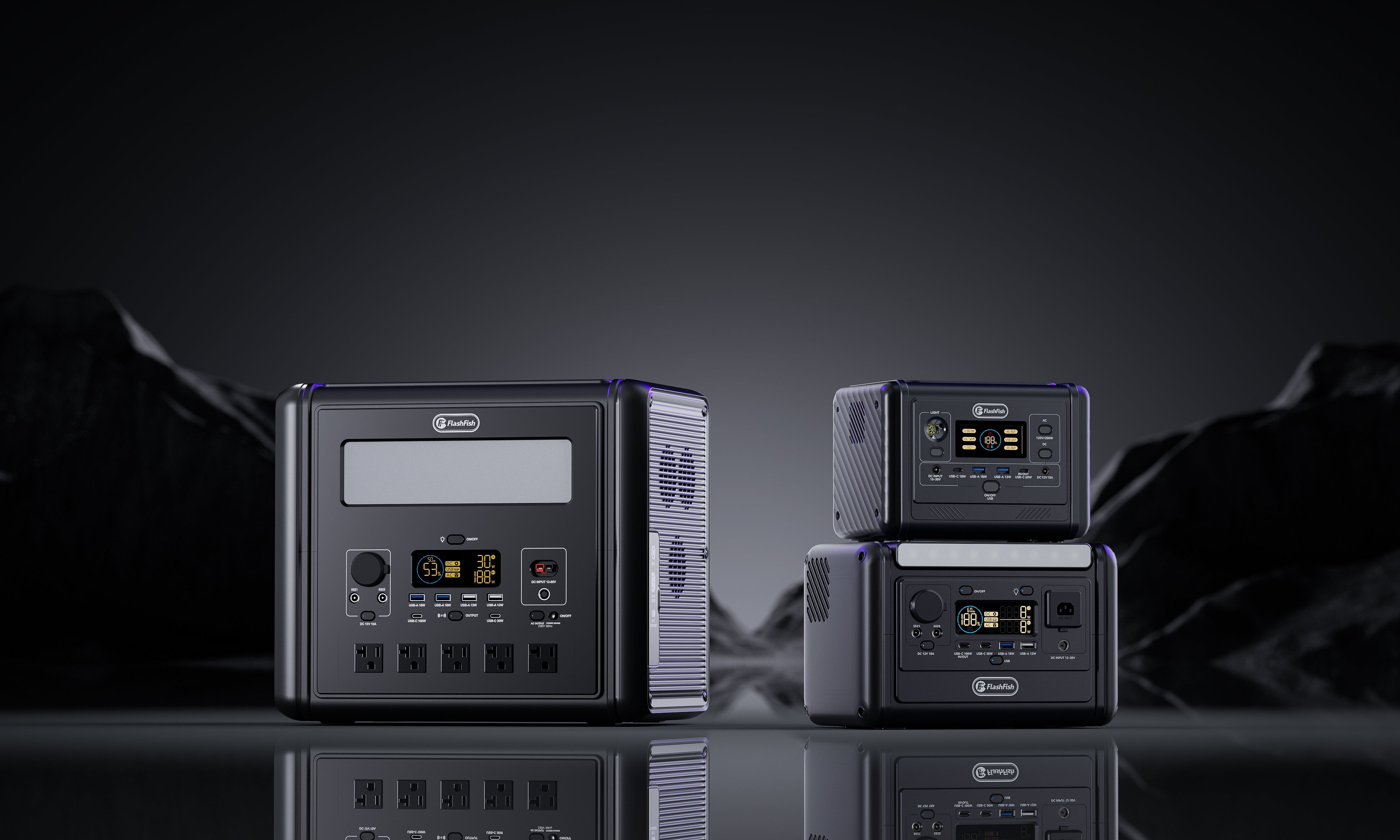
| FlashFish E200 | 151Wh, lithium-ion, 200W modified sine AC, 400W peak, 40W max solar/DC input and 1.85kg. | Light camping electronics, phones, camera batteries and low-power accessories where 200W modified sine output is appropriate. | Not a high-draw appliance station; the 40W input also limits solar recovery speed. |
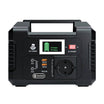
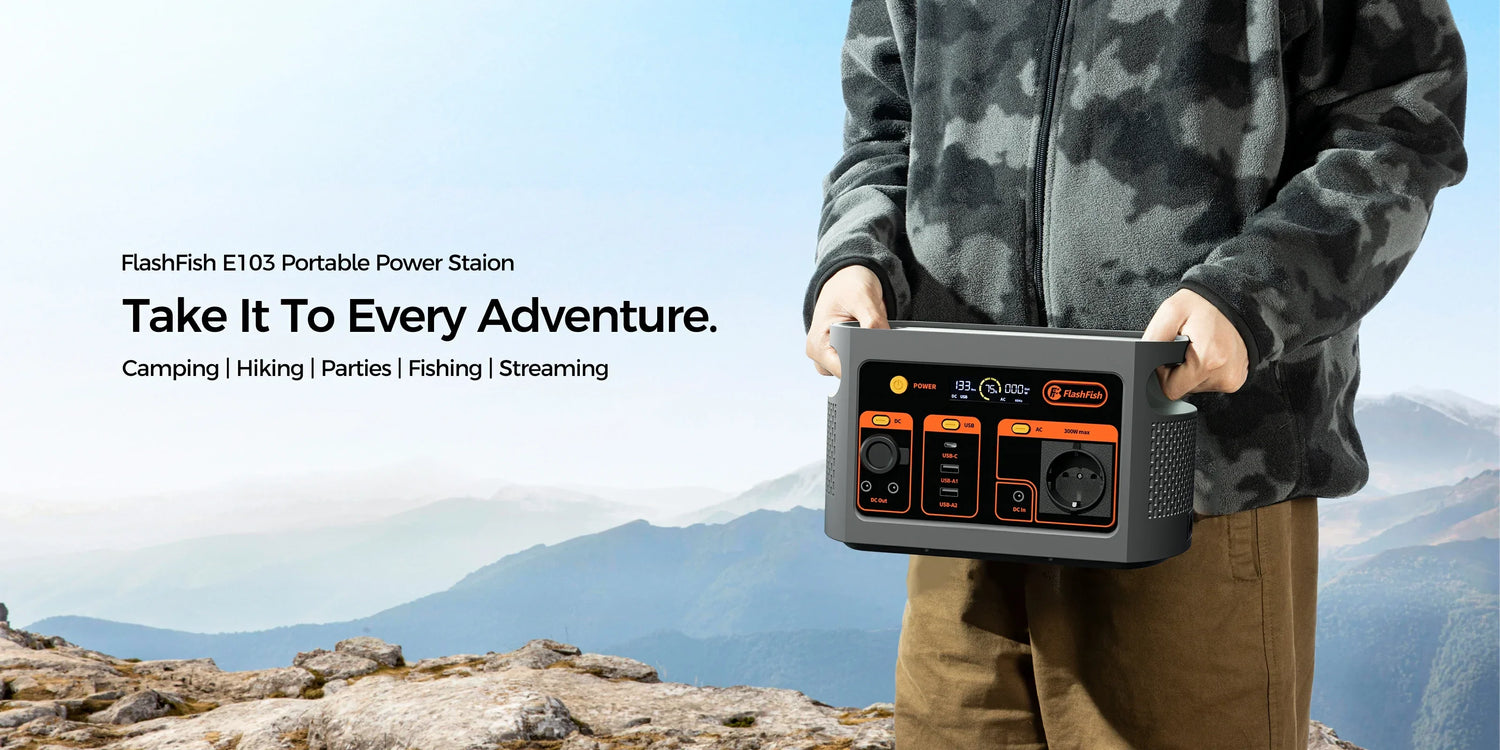
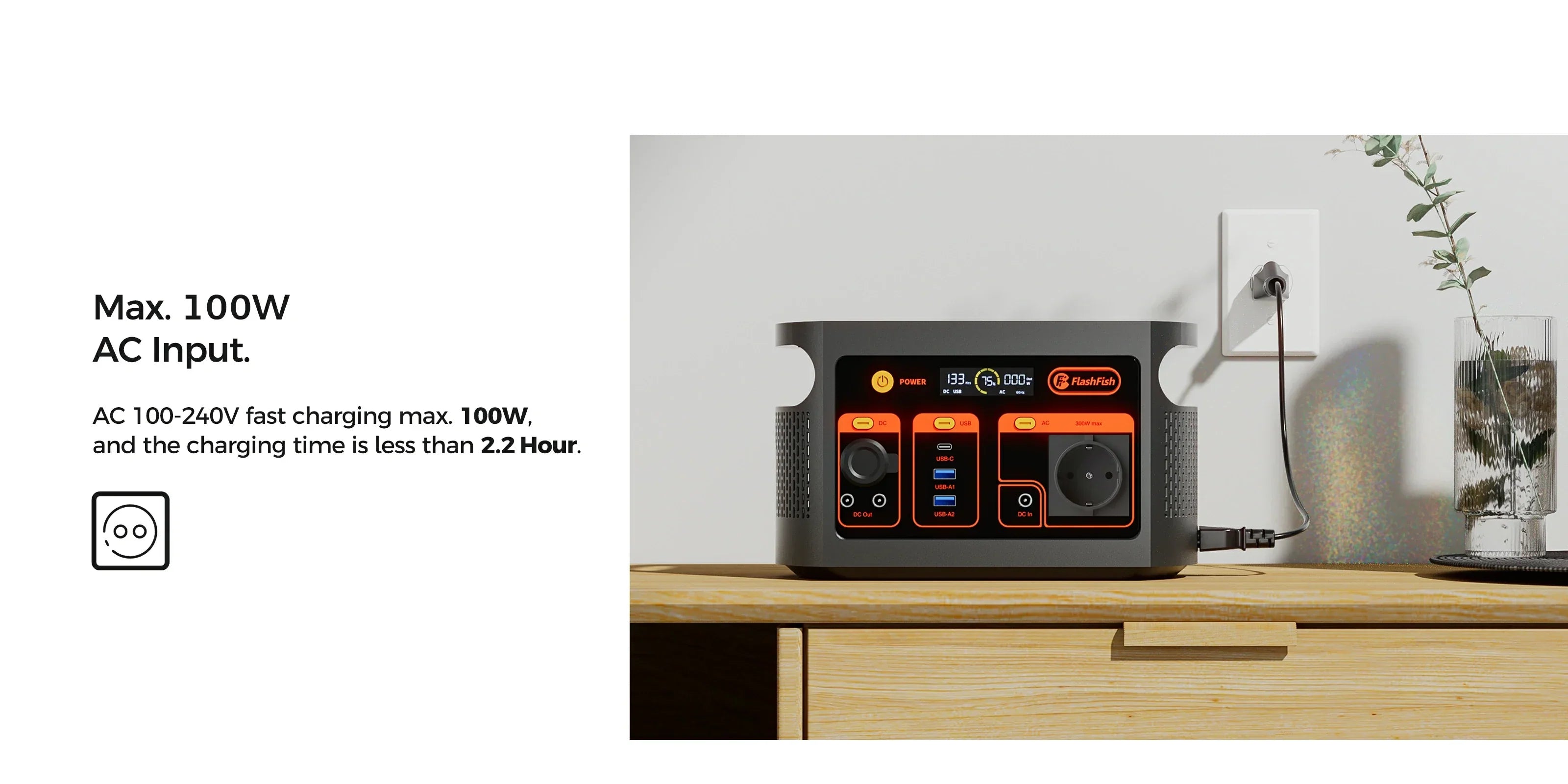
| FlashFish E103 | 179.2Wh, 300W pure sine AC, 90W max DC charging input, 3kg and 274 x 147 x 163mm dimensions. | A compact step up in AC output and input capacity for users who need pure sine output and USB-C-style modern charging context from the product page. | The local product database does not provide battery chemistry or AC peak output in the product summary, so this article does not infer those values. |
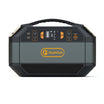
| FlashFish T1200S | 768Wh LiFePO4, 1200W pure sine AC, 2400W peak, 400W solar input and 12.45kg. | A larger selected-load station when compact models do not have enough output, reserve or solar input. | Less carry-friendly than E200 or E103; choose it for the load plan, not because bigger is automatically better. |
A buyer worksheet
- Write down the must-power devices. Use labels on adapters and chargers rather than product names alone.
- Separate AC and DC loads. USB lights and phones are different from AC laptop bricks or small appliances.
- Find the highest steady watt load. Compare that with continuous AC output, not peak output.
- Check waveform needs. Modified sine output may be acceptable for some simple loads, but sensitive electronics and motor loads deserve extra caution.
- Check charging input. Solar panels do not produce nameplate output every hour; shade, angle, season and temperature matter.
- Leave a reserve margin. Do not plan a trip around using every rated watt-hour.
- Treat blank fields as blank. If the product database does not provide a value, do not copy it from an unrelated product or assume it from marketing shorthand.
Common mistakes
- Buying by Wh only, then discovering the inverter is too small for the device.
- Buying by watts only, then discovering the battery is too small for the desired time window.
- Treating peak watts as a continuous output rating.
- Assuming a portable solar panel will deliver its rated watts in normal campsite conditions.
- Ignoring cable condition, cable reels or extension-lead ratings when using AC loads outdoors.
- Assuming missing chemistry, peak-output or runtime fields from similar-looking models.
When FlashFish fits
- E200 fits a light, low-watt list where carry weight matters more than AC headroom.
- E103 fits users who want a compact 300W pure sine class and can work within its available capacity and input limits.
- T1200S fits when the load list has outgrown compact stations and the user accepts the added size and weight.
- The portable power station collection is useful when the buyer wants to compare output, capacity and carry size side by side.
When it does not fit
- The device list includes heaters, kettles, large coffee machines, pumps or high-startup tools that have not been checked against labels.
- The goal is a fixed apartment energy-storage project rather than a movable station.
- The plan depends on fixed solar recharge time in cloudy or shaded conditions.
- The buyer needs a value that the product data does not provide and no current storefront evidence has been reviewed.
Safety note
For AC loads and charging setups, keep cables dry, rated and undamaged. Electrical Safety First warns against overloading extension leads, using damaged leads and leaving cable reels wound when they should be fully unwound. A compact battery still belongs to an electrical system, so cable and load discipline matter.
FAQ
Is Wh the most important compact power station spec?
No. Wh tells you stored energy, but the station also needs enough continuous output, suitable ports, supported charging input and realistic carry size.
Is a 300W station always better than a 200W station?
Not always. A 300W class helps when the device list needs the extra output, while a smaller 200W class may be better when the trip is mainly phones, camera batteries and lights.
Can I use peak watts to decide what to plug in?
No. Use continuous AC output for planning. Peak output, when provided, is short startup context and should not be treated as normal working output.
Why does this guide avoid claiming E103 battery chemistry?
The local product database used for this workflow leaves that product-summary field blank, so the safe draft position is to avoid adding chemistry claims until a human review reconciles the current storefront and database fields.
Does a solar panel rating tell me the recharge time?
No. The station input limit, panel rating, panel angle, shade, season, temperature and weather all affect real charging.
What should I check before buying a budget station?
Check your device labels, continuous AC output, charging input, waveform, port needs, carry weight, product URL status and any missing specification fields.
Sources and review notes
- FlashFish product-source bundle, accessed 14 July 2026, for E200, E103 and T1200S product facts and blank-field boundaries.
- Europe Shopify discovery, accessed 14 July 2026, for active Europe-store URLs and store scope.
- Google Search Central helpful content guidance, accessed 14 July 2026, for people-first and source-transparency principles.
- European Commission JRC PVGIS user manual, accessed 14 July 2026, for solar-radiation and PV-output variability context.
- Electrical Safety First extension-lead guidance, accessed 14 July 2026, for cable, reel and overload cautions.



Leave a comment
Este site está protegido pela Política de privacidade da hCaptcha e da hCaptcha e aplicam-se os Termos de serviço das mesmas.