








Short answer: identify the exact model, check public safety alerts and seller rights, inspect the closed unit and its charging equipment, then ask for a limited demonstration. Walk away from swelling, cracking, liquid damage, burnt odour, unusual heat, improvised chargers, missing identity labels or a seller who will not document the unit. A short test can expose obvious faults; it cannot prove original battery capacity or hidden cell condition.
This is a buyer-screening guide, not a repair procedure or a substitute for a qualified electrical inspection. No used power station was purchased, opened or capacity-tested for this article.
Start with identity, not the seller’s description
A listing title such as “1 kWh solar generator” is not enough. Ask for clear photographs of the rating label, model name, serial or batch identifier, ports and charger label. Compare them with the manufacturer’s current support material. If labels are removed, inconsistent or unreadable, you cannot reliably check alerts, find the correct manual or match a charger.
Search the exact brand and model in the European Commission Safety Gate. Also check the manufacturer’s support or recall page if one exists. An empty search result is only one check: it does not establish authenticity, battery health or the history of that individual unit.
Separate trader rights from a private sale
Before discussing price, establish who is selling. Your Europe’s consumer shopping guidance distinguishes purchases from professional traders from private sales. For second-hand goods sold by a trader, the applicable period and remedies can vary by country and agreement; a private marketplace sale does not receive the same standard EU consumer protection.
| Evidence | Why it matters | Buyer action |
|---|---|---|
| Trader name, address and VAT/business details | Clarifies the contracting party and applicable consumer route | Verify before payment and retain the invoice |
| Original receipt or order record | Helps establish age and model history | Check that model and seller story agree |
| Serial or batch identifier | Supports alert and support checks | Do not publish it; retain it privately |
| Written condition description | Creates a record of disclosed faults and included items | Save the listing and messages |
| Return or inspection terms | Defines what happens if a fault appears | Get the terms before paying |
Rules differ across Europe, so confirm the position in the delivery country. This checklist does not replace local consumer advice.
Inspect the closed unit before powering it
Perform the inspection in good light with the station switched off and disconnected. Do not remove the case. Health Canada’s lithium-ion guidance treats swelling, modification and visible damage as stop-use issues. Electrical Safety First also recommends checking the item, cable, recall status, instructions and correct charger when buying second-hand electrical goods.
- Case: reject swelling, separation, deep dents, cracks, missing screws or evidence of an opened enclosure.
- Ports: look for scorching, melted plastic, looseness, corrosion, debris or bent contacts.
- Cables: reject exposed conductors, crushed insulation, taped repairs or plugs that do not match the intended market.
- Environment: ask about flood, condensation, hot-car, freezing, workshop-dust and long-term empty-storage exposure.
- Smell and heat: burnt or solvent-like odour, hissing, smoke or abnormal heat means stop. Move away and follow local emergency guidance without handling a distressed battery unnecessarily.
Use a demonstration to find faults, not to certify health
If the unit passes the visual screen, ask the seller to demonstrate it with the correct charger and a modest, known appliance that remains below the station’s documented continuous output. Keep the station dry, ventilated and supervised. Watch for unstable input, warning codes, resets, abnormal fan behaviour, sparking, smell or rapid heating. Confirm that the display, buttons and intended output ports respond.
Do not use a high-power heater, kettle or improvised load as a stress test. Do not short ports, bypass protections, mix chargers or open the case. A brief demonstration can show that the unit turns on and powers something; it cannot quantify usable capacity, remaining cycle life, calibration accuracy or damage that appears only under a full cycle.
| Observation | What it supports | What it does not prove |
|---|---|---|
| Unit accepts its correct charger | Basic input operation at that moment | Full charging performance or cell balance |
| A modest load runs without an alert | Basic output operation for that load | Maximum output, long runtime or all-port health |
| Display reaches 100% | Reported state of charge | Original watt-hour capacity or battery health |
| Case looks clean | No visible external damage found | No internal damage, moisture history or prior repair |
Price the evidence gap
A used station is not automatically poor value. The decision depends on the price difference versus a documented new unit, the seller route, correct accessories, serviceability and how much uncertainty remains. If the saving is small but the history, charger or return route is missing, the risk-adjusted value may be weak. If the unit is professionally sold, fully identified, correctly equipped and supported by written terms, the evidence is stronger.
Do not turn a seller’s battery-percentage screenshot into a capacity claim. A meaningful capacity assessment needs controlled charging and discharging, known measurement equipment, a documented method and safe operating conditions. That is beyond a casual marketplace handover.
When FlashFish fits — and when it does not fit
When a new FlashFish Europe model may fit
- You prefer a current product page, known regional sales route and documented included charging equipment.
- The intended appliance labels fit the model’s continuous output and ports with sensible headroom.
- The price difference versus an uncertain used listing is not large enough to justify missing history or weak recourse.
When it does not fit
- You need a certified used-capacity report or an independent condition inspection that the store does not provide.
- Your required appliance, plug, voltage, installation or charging input is not documented for the exact regional model.
- You need a specialised repairable system, fixed-installation approval or professional emergency-power design.
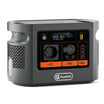
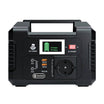
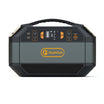
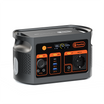
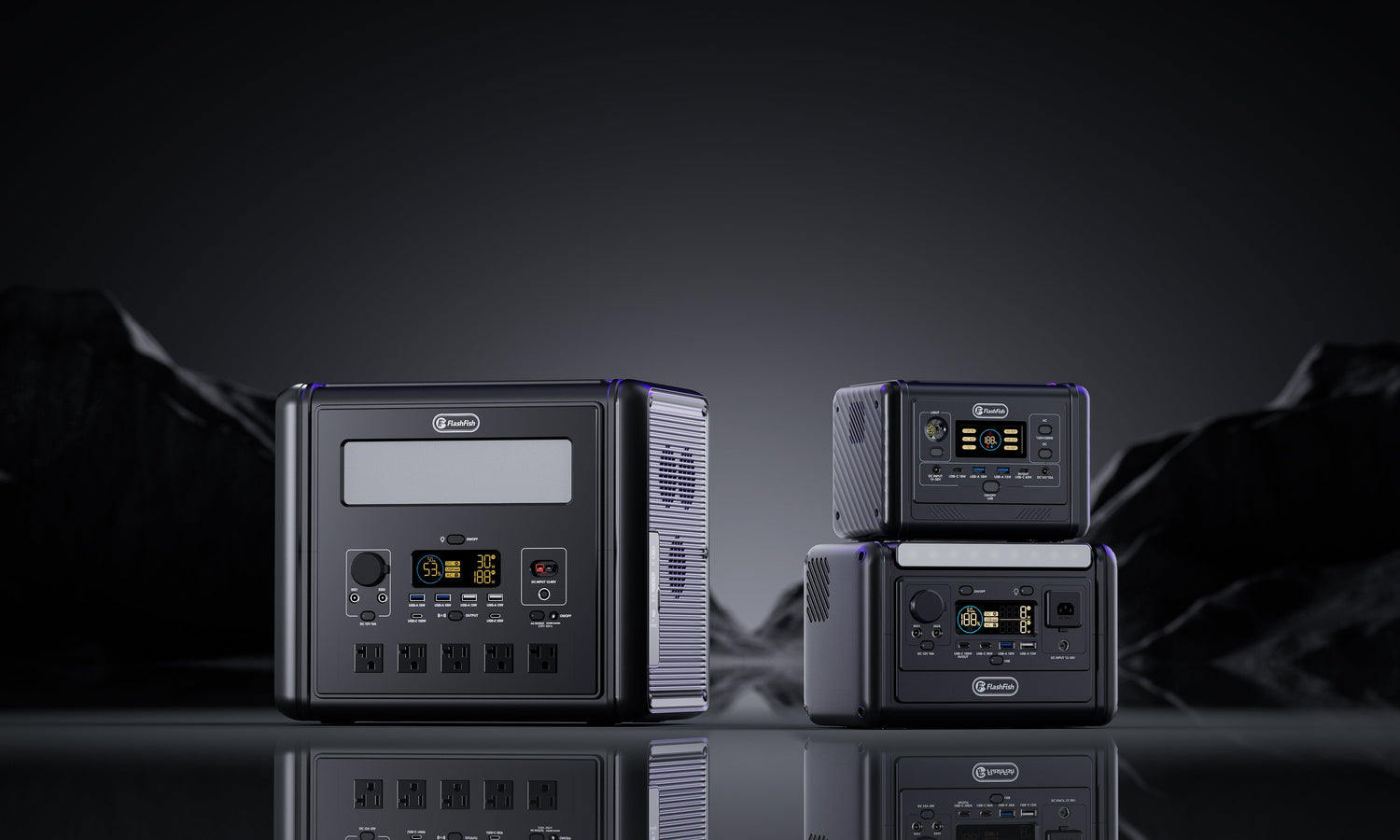
Start with the appliance and evidence requirements, not the logo. The FlashFish Europe portable power station collection can provide a documented new-unit reference point, but it does not validate a third-party used listing.
Frequently asked questions
Does a 100% display prove a used battery is healthy?
No. It shows the station’s reported state of charge, not its original capacity, internal condition or behaviour over a full charge-and-discharge cycle.
Should I buy a used station without the original charger?
Treat a missing or unidentified charger as a major evidence gap. Confirm an exact manufacturer-authorised replacement for the model before buying rather than improvising.
Can I open the case to inspect the cells?
No. Do not open a high-energy battery product for a casual pre-purchase check. Damage, swelling, unusual heat, odour or tampering are reasons to stop and seek qualified advice.
Do EU consumer rights cover private marketplace sales?
The standard EU protections for purchases from professional traders do not apply in the same way to private sales. Confirm the seller type and country-specific rules.
What if the exact model appears in Safety Gate?
Do not assume the listing is unaffected. Compare model and serial details with the alert and follow the authority or manufacturer instructions before proceeding.
Sources and evidence limits
- European Commission Safety Gate — product-alert search.
- Electrical Safety First second-hand buying guidance — condition, recall, instructions and charger checks.
- Your Europe consumer shopping guidance — trader/private-sale distinction and country variation; the direct statutory-rights page is recorded in the editorial source notes.
- UK OPSS second-hand product guidance — conservative component and modification checks.
- Health Canada lithium-ion battery safety — damage, swelling, modification and charger boundaries.
Human review must confirm country-specific consumer language and current safety links before publication.



Leave a comment
Este site está protegido pela Política de privacidade da hCaptcha e da hCaptcha e aplicam-se os Termos de serviço das mesmas.