








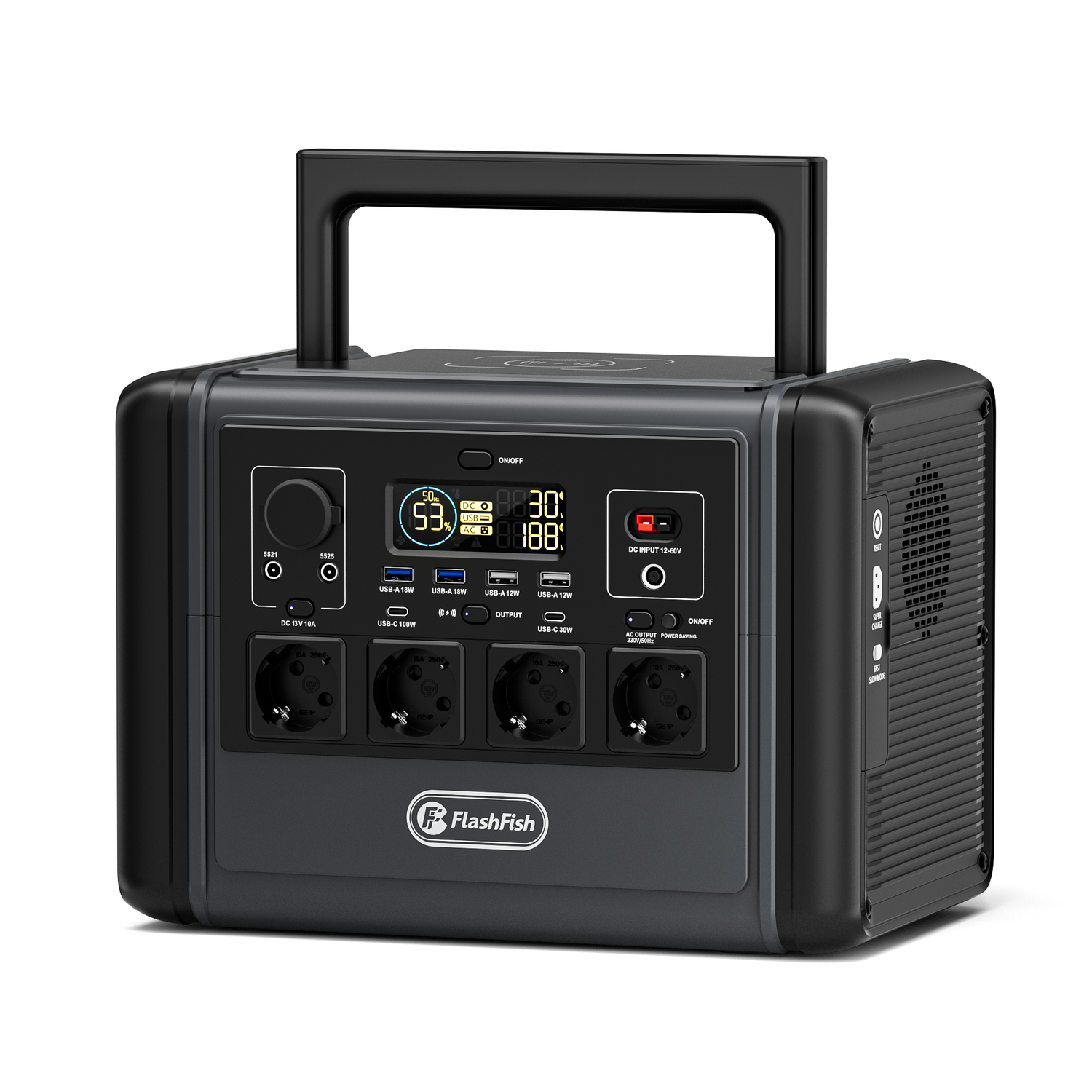
Short answer: rated watt-hours tell you how much energy a portable power station stores on paper, while usable capacity is the portion you can realistically deliver to devices after conversion losses, inverter self-consumption, battery reserve, temperature and load behavior. European buyers should treat rated Wh as the starting point, then plan with a safety margin instead of promising exact runtime.
This matters because shoppers often compare a 768Wh, 1536Wh or 5120Wh number as if it converts perfectly into appliance runtime. In real use, the output type, inverter efficiency, startup watts and device cycling decide how much of that stored energy reaches a laptop, light, router, cool box or home-storage load.
Why usable capacity matters
A power station is not just a battery cell in a box. It includes battery management, DC outputs, AC inverter hardware, fans, display electronics and safety limits. When you run AC appliances, the station must convert DC battery energy into AC output. The U.S. Department of Energy describes inverters as devices that convert DC electricity to AC electricity, and Penn State's inverter-efficiency course material notes that some power is lost as heat and standby consumption.
The practical buyer rule is: do not divide rated Wh by device watts and treat the result as a promise. Use the calculation only as a first estimate, then reduce the expected result for real conditions.
Rated Wh, usable Wh and watts are different
| Term | Plain meaning | How shoppers misuse it | Better buying question |
|---|---|---|---|
| Rated watt-hours (Wh) | The battery energy figure listed for the station. | Assuming every Wh reaches every device. | How much margin should I leave for losses and reserve? |
| Usable capacity | The realistic energy available to the connected load after conversions and operating limits. | Treating it as a fixed percentage for all loads. | Am I using AC, DC, USB-C or solar input, and how efficient is that path? |
| Watts (W) | The power a device draws while running. | Confusing output watts with runtime. | Can the station handle the device's continuous and startup watts? |
| Peak watts | Short surge capacity for startup loads. | Using peak output as if it were continuous output. | What is the continuous rating and how long does the device draw power? |
A practical runtime estimate
Use this as a planning method, not a publication-ready promise:
rated Wh x realistic efficiency margin / device watts = rough runtime
For example, if a station is rated at 768Wh and a device draws 60W, the simple paper estimate is 12.8 hours. A more realistic buyer plan reduces that result for inverter loss, idle consumption, temperature, battery reserve and whether the device cycles on and off. For a compressor cool box, the label and startup behavior matter more than a neat spreadsheet.
FlashFish examples using the same logic
| Model | Rated capacity from FlashFish product specifications | Continuous AC output | What the capacity means in practice |
|---|---|---|---|
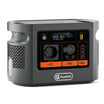
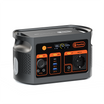
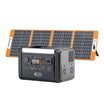
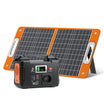
| FlashFish T1200S | 768Wh LiFePO4 | 1200W | Useful for mid-capacity camping and selected-load backup when the actual device list fits the output limit. |
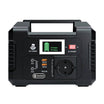
| FlashFish T2000 | 1536Wh LiFePO4 | 2000W | Better for larger selected loads, but still not a reason to skip appliance-label checks. |
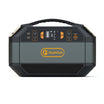
| FlashFish SR5000 | 5120Wh LiFePO4 | 2400W rated off-grid AC output | Home/balcony storage planning needs tariff, placement and local-rule checks, not only a bigger Wh number. |
Common mistakes
- Confusing W and Wh: watts describe load size; watt-hours describe stored energy.
- Using peak output for planning: continuous output is the safer number for normal operation.
- Ignoring AC conversion loss: AC appliances usually cost more stored energy than direct DC or USB-C loads.
- Forgetting idle draw: an inverter left on for small loads can use energy even when the device draw is low.
- Expecting solar panel ratings all day: JRC PVGIS shows why slope, azimuth, radiation and system losses matter for solar estimates.
- Skipping safety checks: extension leads, damp campsites and overloaded sockets still need normal electrical caution.
Buying and maintenance checklist
- List the real devices you want to power and write down their watts.
- Separate AC appliances from USB-C, USB-A and DC devices.
- Use continuous output for load planning and leave margin for startup watts.
- Estimate runtime with an efficiency margin and call it a rough estimate.
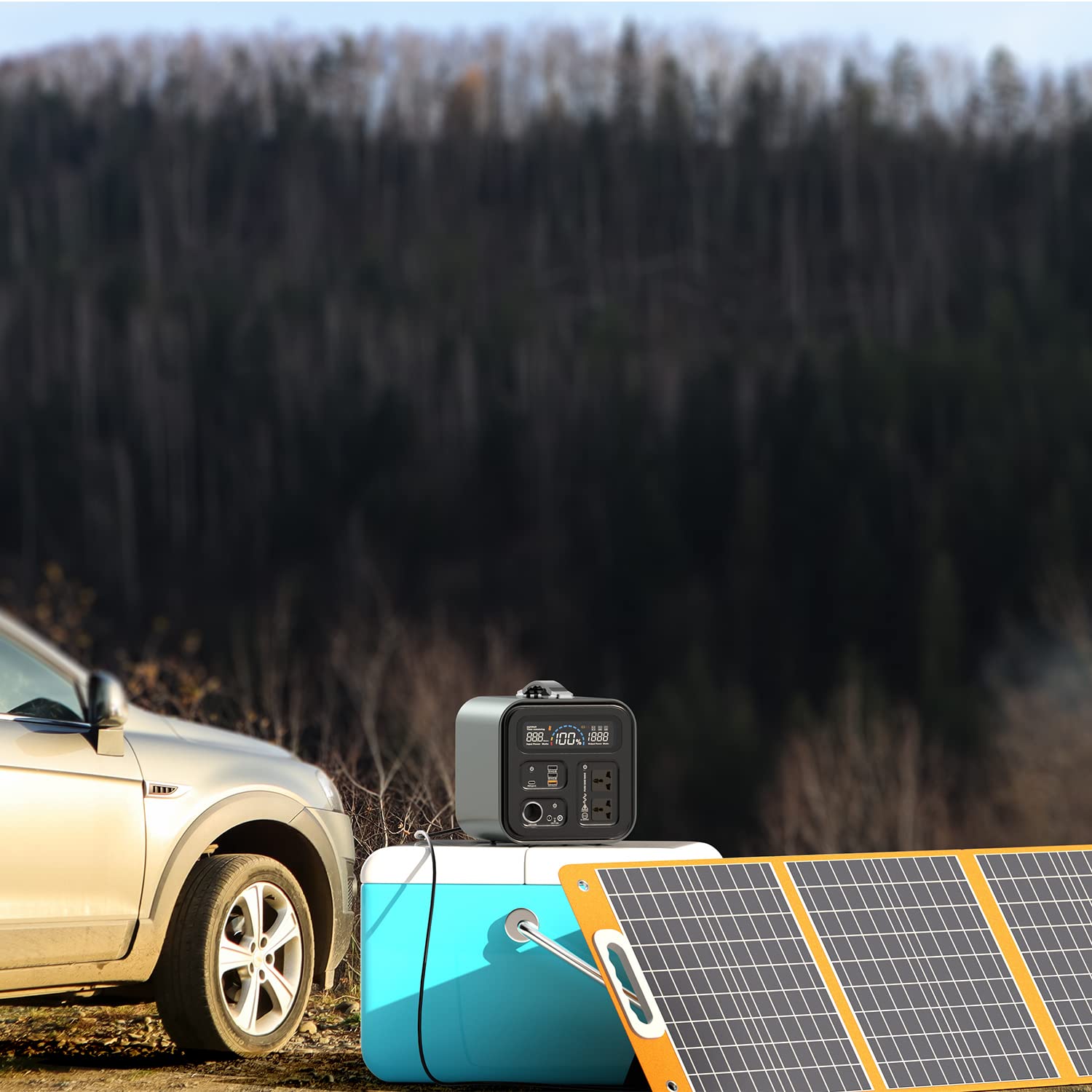
- For solar, check panel voltage, station input limits, angle, shade and weather.
- Before storage, follow the product manual for charge level, temperature and inspection.
Safety note
Portable power stations can be useful indoors for selected loads, but they are still electrical equipment. Keep them dry and ventilated, avoid overloaded extension leads, do not modify battery packs, and do not use a blog article as medical, legal, installation or emergency-backup advice.
FAQ
Does rated Wh equal real runtime?
No. Rated Wh is the starting energy figure. Real runtime depends on device watts, AC or DC output path, inverter efficiency, idle consumption, temperature, battery reserve and how the device cycles.
Why does AC use reduce usable capacity?
The station must convert DC battery energy into AC output. Inverter hardware consumes energy and loses some power as heat, so an AC load usually gets less usable energy than the simple rated-Wh number suggests.
Is USB-C more efficient than AC?
Often it can be, because fewer conversion steps may be involved, but the exact result depends on the station design, charger, cable and device. The safest wording is to test critical setups instead of promising a fixed percentage.
Can I use rated Wh to compare T1200S and T2000?
Yes, but capacity is only one line. Compare continuous output, solar input, USB-C needs, weight, device labels and whether the larger station is actually useful for your load list.
Why does solar charging take longer than expected?
Panel wattage is a best-case rating. Real input changes with sun angle, shade, cloud cover, panel temperature, station input limits and season. Treat solar as a variable top-up, not a clock-like refill.
Should I plan backup power from exact runtime numbers?
No. Use runtime math to size a starting point, then test the actual devices and keep a backup plan for safety-critical needs.
Sources and further reading
- FlashFish product specifications for T1200S, T2000 and SR5000 manual-derived capacity, output, input, weight and chemistry data.
- U.S. Department of Energy inverter basics for DC-to-AC conversion context.
- Penn State inverter efficiency lesson for conversion-loss and standby-consumption context.
- European Commission JRC PVGIS for solar radiation, system loss, slope and azimuth variables.
- Electrical Safety First overloaded sockets guidance for conservative extension-lead and overload cautions.
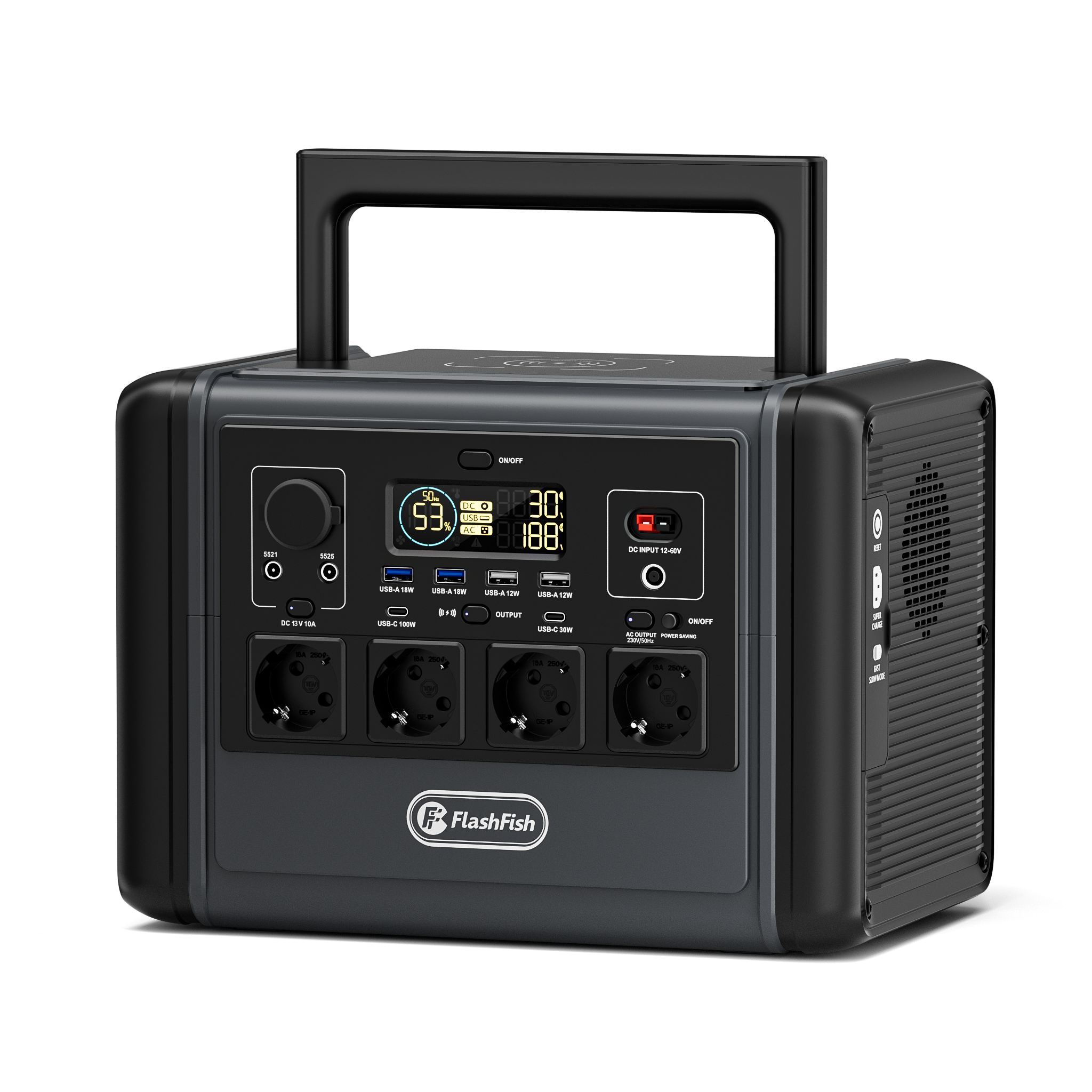
For users comparing portable power stations, FlashFish models such as T1200S and T2000 can be reviewed against the same rated-capacity, usable-capacity, output and solar-input criteria discussed above. The key point is not the brand name alone, but whether the model matches the real load and runtime need.



Leave a comment
Este site está protegido pela Política de privacidade da hCaptcha e da hCaptcha e aplicam-se os Termos de serviço das mesmas.