

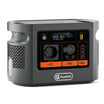
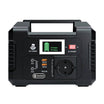

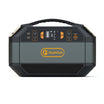
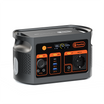


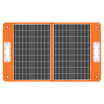
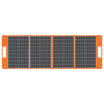


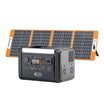

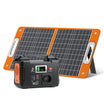

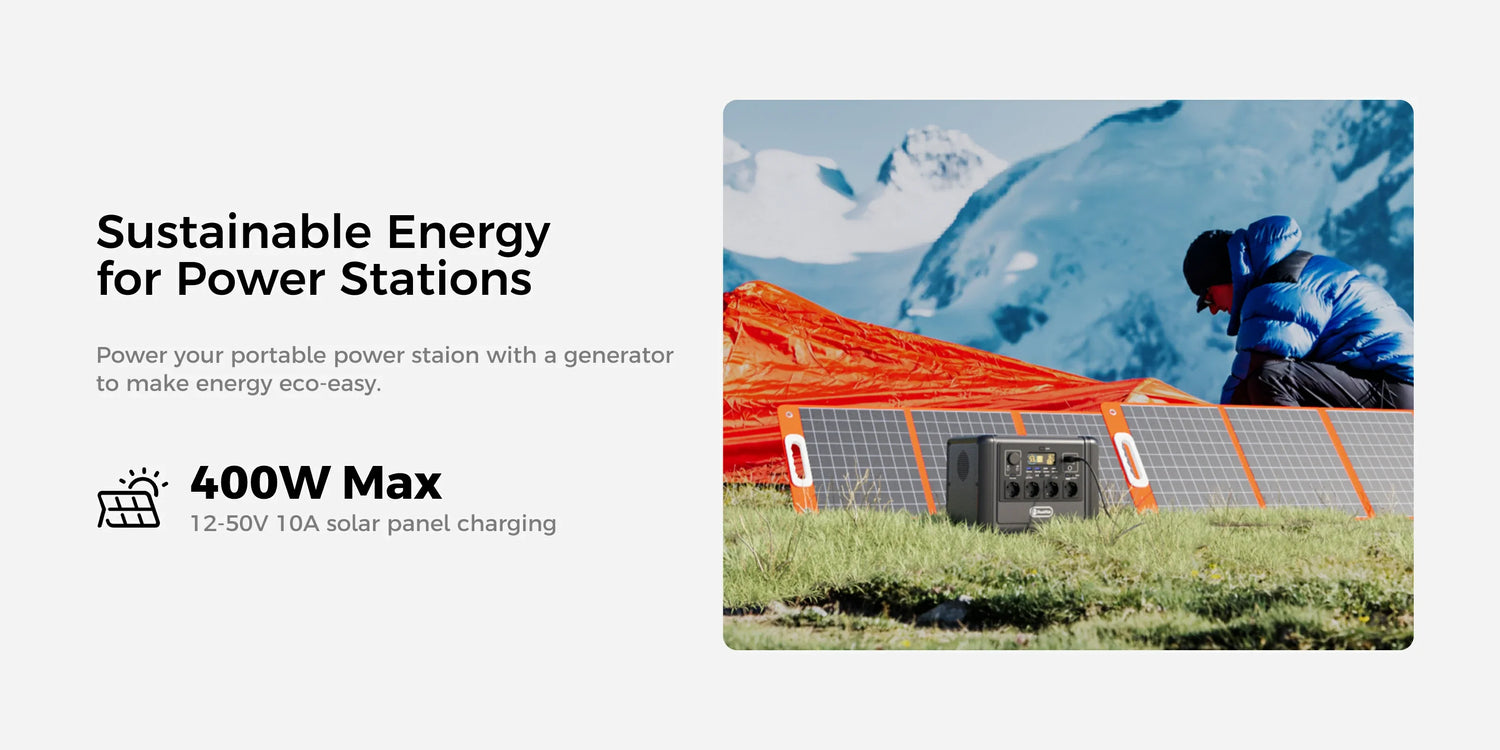
Short answer: choose more stored energy when the measured weekend demand and reserve must be covered before departure or when the sun window is unreliable. Add solar when the exact station-panel path is documented and the campsite offers usable, supervised sunlight. Choose both only when the extra panel, cables, setup time and carry burden solve a measured gap.
Use RESERVE: Record trip watt-hours, Establish a reserve, map the Sun window, verify the Electrical match, compare the full Route and carry burden, Validate campsite conditions, and keep an Exit plan. This makes solar replenishment a conditional input, not free energy in the budget.
Build the RESERVE worksheet before choosing hardware
| Field | What to write down | Why it changes the answer |
|---|---|---|
| Trip energy | Measured Wh for each exact device, mode, day and output path | Defines the stored-energy requirement |
| Reserve | Energy held back for navigation, light, phone or an early departure | Prevents leisure loads consuming the fallback |
| Sun window | Location, season, hours, shade, orientation and ability to reposition | Determines whether solar is a credible replenishment opportunity |
| Electrical match | Station input limits, panel Voc, current, connector, polarity and approved wiring | A watt rating or connector shape alone cannot prove compatibility |
| Full carry | Station, panel, cables, protection and transport method | The lighter electrical option may become the heavier travel system |
| Fallback | Loads to stop, reserve floor and a non-powered alternative | Keeps weather or equipment failure from becoming critical |
Three current product paths illustrate the trade-off
| Path | Published planning facts | What it may solve | What remains open |
|---|---|---|---|
| E106B | 384Wh nominal, 600W continuous AC, about 5.2kg | Lower-energy trips where carry matters | Measured delivered Wh, exact load fit and refill plan |
| T1200S | 768Wh nominal, 1200W continuous AC, 2400W peak, about 12.45kg | More stored energy and a wider verified AC envelope | Regional label, delivered Wh, actual devices and reserve |
| T1200S + TSP100 kit | Current ACTIVE Europe kit; TSP100 local record: 100W, 18V, 5.6A, about 2.8kg | Stored energy plus a documented current kit route to solar replenishment | Delivered components, field yield, setup window and campsite conditions |
The FlashFish E106B 384Wh portable power station and FlashFish T1200S 768Wh portable power station are both currently ACTIVE in the Europe Shopify evidence. The local E106B record does not provide chemistry or peak AC output, and the local T1200S manual-derived source is from another electrical region. Those unknowns and regional boundaries remain visible.
The current FlashFish T1200S + TSP100 solar generator kit provides a current first-party combination to evaluate. A kit listing is stronger evidence than matching connector photos, but the delivered components and regional instructions still control.
More battery buys certainty; solar buys an opportunity
Stored energy can be measured and packed before departure. It is still subject to output conversion, standby demand, temperature and the chosen reserve, but it does not depend on tomorrow's sunshine. A larger battery is therefore the clearer response when the critical gap must be covered even under poor weather.
Solar can restore part of the energy used during the trip. PVGIS explains why rated peak power is not daily production: real energy changes with location, time, panel angle, orientation and conditions. Shade from a tent, tree or vehicle can further change a portable setup. Treat solar as measured replenishment after setup, not as energy already secured at departure.
Compatibility needs more than panel watts
The local TSP100 record lists 100W, 18V and 5.6A, but it does not provide open-circuit voltage. That missing field matters when matching a panel to a station input. Verify Voc, input voltage and current, connector, polarity, any series or parallel wiring and the exact delivered instructions. Do not infer an E106B + TSP100 pairing from nominal ratings alone.
Three camping profiles produce different answers
- Short, low-energy trip with a long walk-in: if measured devices and reserve fit the smaller station, E106B's approximately 5.2kg mass may matter more than extra stored energy or a panel that has no reliable setup window.
- Cloud-prone trip with no refill access: if the measured budget exceeds the smaller path, T1200S can be the clearer starting point because its 768Wh nominal figure is packed before departure. Runtime still needs trip-specific measurement.
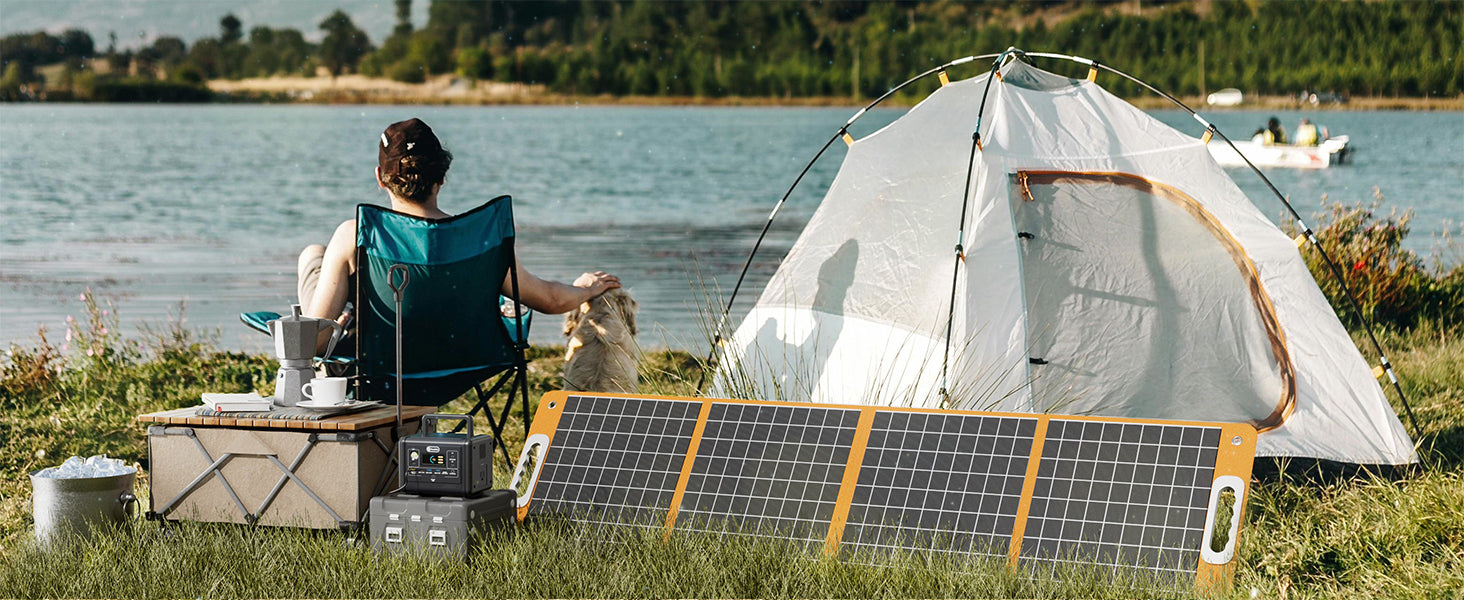
- Sunny base camp with supervised setup time: the current T1200S + TSP100 kit can be evaluated when the T1200S load envelope is needed and realistic solar replenishment reduces a measured deficit. The result remains weather-dependent.
Review the current T1200S + TSP100 kit after completing RESERVE. Recheck current availability, delivered components and regional instructions rather than converting this framework into a default recommendation.
Choose more battery when
- The measured weekend energy plus reserve must be present at departure.
- Sun, setup time or supervised panel placement is unreliable.
- The larger station's verified output envelope is genuinely required by the exact devices.
- The additional station mass is acceptable for the complete route.
Choose solar when
- The base station already fits every verified load and only the energy budget needs replenishment.
- The exact panel-station electrical path and delivered cable set are documented.
- The campsite offers a realistic unshaded window and permits a safe, supervised setup.
- The extra panel and cable mass solves more than it complicates.
Choose neither upgrade yet when
- The trip watt-hours have not been measured.
- A connector, polarity, Voc or station-input limit remains unknown.
- The plan assumes a fixed panel yield or converts nominal Wh directly into runtime.
- Critical devices have no reserve or non-powered fallback.
Keep campsite placement and cable limits separate
Camping and Caravanning Club guidance highlights damp conditions, off-ground connections, careful cable routing and supervision. A portable panel also adds a larger physical footprint, moving cables and a wind-exposed surface. Follow the exact product and campsite instructions; do not infer that a product image establishes wet-location approval.
Frequently asked questions
Is a bigger battery always better than a solar panel for camping?
No. More stored energy is less dependent on weather, while solar can replenish energy when the exact equipment, sunlight window and setup fit. Carry weight, device demand and fallback matter too.
Does a 100W solar panel deliver 100W all day?
No. The rating is measured under defined conditions. Real output changes with location, season, time, orientation, shade, temperature, weather and the connected station.
Can I connect any TSP100 to any portable power station?
Do not assume that. Verify station input voltage and current limits, panel open-circuit voltage, connector, polarity, wiring and the exact manufacturer instructions before connection.
Does 768Wh mean twice the camping runtime of 384Wh?
No. It is twice the nominal energy figure, but delivered energy and device runtime also depend on output path, conversion, standby demand, load behaviour, temperature and reserve.
When is the T1200S + TSP100 kit the clearer choice?
It is a plausible starting point when the verified load needs the T1200S envelope and a realistic sunny setup window makes replenishment useful. Current instructions and trip-specific evidence still control.
Conclusion: size the uncertainty as well as the battery
More battery and more solar solve different problems. Pack stored energy for the demand that must be covered; add solar only for a compatible, practical refill opportunity. Compare E106B and T1200S only after measuring your weekend load.
Sources and evidence boundaries
- Current FlashFish Europe E106B, T1200S, TSP100 and T1200S + TSP100 kit evidence plus the local product database for bounded product facts.
- European Commission JRC PVGIS for solar variability and battery-flow concepts, not FlashFish field testing.
- Camping and Caravanning Club for general campsite electrical boundaries, not product approval.
Evidence checked 3 September 2026. No station, panel or campsite was physically tested.



Leave a comment
Este site está protegido pela Política de privacidade da hCaptcha e da hCaptcha e aplicam-se os Termos de serviço das mesmas.