

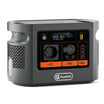
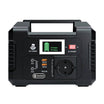

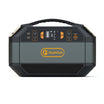
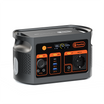






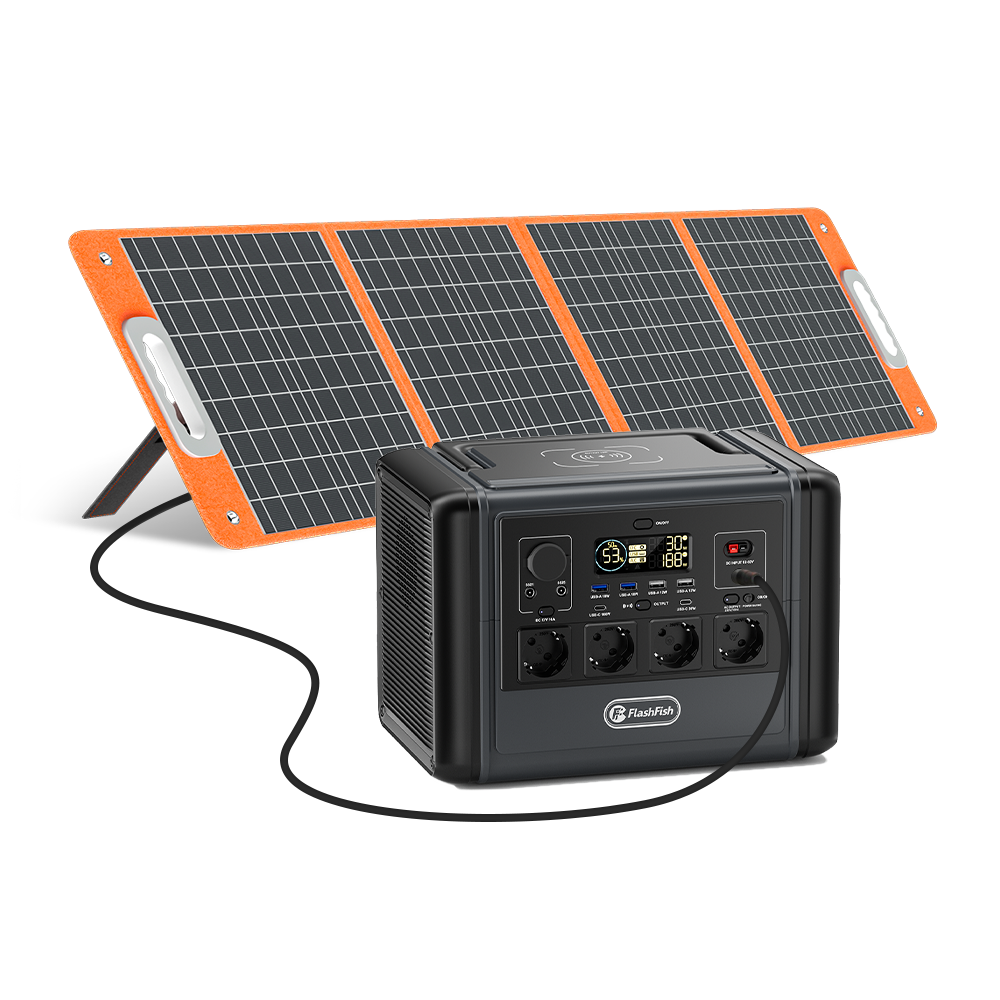
Evidence boundary: no connector or panel was tested for this guide. FlashFish product pages provide selected input and adapter fields; the local TSP60 and TSP100 open-circuit-voltage records are blank. Stäubli rules below apply only to the exact identified Stäubli connector family.
Use CONNECT before the first charging attempt
| CONNECT gate | Inspect or record | Stop condition |
|---|---|---|
| C — Condition | Housing, latch, seal, contacts, strain relief, insulation and cable along its full length. | Crack, looseness, bent or recessed contact, corrosion, heat mark, cut, swelling or improvised repair. |
| O — Output identity | Panel model, rated power, operating voltage/current and open-circuit voltage from the exact label or manual. | Missing or unreadable label, or a critical electrical field absent from the available evidence. |
| N — Name the interface | Exact connector manufacturer/family, size, contact arrangement and required mating part. | Identification is based only on appearance or a seller's generic “MC4-style” or barrel-plug description. |
| N — Never mix or modify | Original cable set, approved adaptors and manufacturer assembly/replacement instructions. | Mixed manufacturers, filed plastic, bent contacts, tape repair, forced fit or unknown polarity adaptor. |
| E — Electrical limits | Panel open-circuit voltage, operating voltage/current, station voltage/current/watt input window and polarity. | Any value is outside the exact station manual, or polarity and open-circuit voltage cannot be verified. |
| C — Connect without load | Manufacturer sequence for covering or isolating the panel, joining the cable, connecting the station and energising. | Connection or disconnection would occur under load contrary to the exact instructions. |
| T — Test and terminate | Low-risk first observation in a dry, stable, ventilated area; check display, cable and connector behaviour. | Heat, smell, arcing, unstable input, warning, water, damaged insulation or unexpected movement. |
What current FlashFish records can—and cannot—show
| Item | Published field | Missing or separate gate |
|---|---|---|
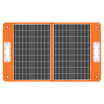
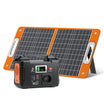
| TSP60 panel | 60W, 18V, about 3.3A; DC barrel adapters listed | Local open-circuit voltage is blank; verify exact polarity, cable and station match. |
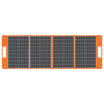
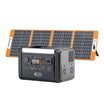
| TSP100 panel | 100W, 18V, about 5.6A; DC barrel adapters listed | Local open-circuit voltage is blank; verify exact polarity, cable and station match. |
| T1200S station | 12–50V/10A, 400W maximum solar/DC input | Input window alone does not approve a panel or adaptor. |
| T2000 station | 12–80V/10A, 600W maximum solar/DC input | Input window alone does not approve a panel or adaptor. |
These fields help reject obvious electrical mismatches, but they do not complete a compatibility decision. For example, TSP100's listed 18V operating value is not a substitute for the missing open-circuit voltage. The exact delivered panel label or manual must provide the evidence required by the station manual.
Decision step: Compare current FlashFish solar panel connector records, then match each field to the exact station and cable documents.
Connector names are not cosmetic
Stäubli's MA728 instructions say not to mate contaminated connectors, not to disconnect that connector family under load, to replace defective connectors and not to mate it with connectors from other manufacturers. Those are strong source-specific boundaries. Apply them only after identifying the exact Stäubli family; a visually similar solar connector may have different instructions or tolerances.
Barrel connectors need the same discipline. External diameter alone is not enough: internal diameter, contact length, polarity, current rating and cable wiring can differ. Never force a connector, reshape it or assume an adaptor reverses polarity correctly.
A cautious pre-charge sequence
- Read the exact panel, connector, cable and power-station manuals together. Photograph their labels.
- Keep the panel covered, face-down or otherwise isolated exactly as its instructions require before handling connections.
- Inspect both mating halves and the full cable. Keep them dry and free of dirt; do not use damaged or uncertain parts.
- Match connector identity, polarity, open-circuit voltage, operating voltage/current and station input limits on one worksheet.
- Join only the manufacturer-approved cable path without force. Follow the documented order for connecting the cable, station and panel.
- Expose or energise the panel as instructed and watch the station input, cable and connectors. Stop at the first warning sign.
- For shutdown, remove the solar source or load as the exact manuals direct before separating any connector that must not be disconnected under load.
When the evidence is sufficient—and when it is not
When FlashFish fits
- The exact panel and station manuals identify a supported cable path, connector, polarity and compatible electrical window.
- Every connector is clean, dry, undamaged and properly seated without force.
- The user can follow the documented isolation, connection, observation and shutdown sequence in a dry supervised location.
When FlashFish does not fit
- Open-circuit voltage, polarity, connector identity or an adaptor's wiring is missing or uncertain.
- The proposed setup mixes connector manufacturers, depends on a forced fit or includes damaged, wet or contaminated parts.
- The panel or station input is outside a documented limit, or the exact manuals give conflicting instructions.
FAQ
If a solar plug fits, is the panel compatible with the power station?
No. Confirm the exact connector family, pin or contact arrangement, polarity, cable rating, panel open-circuit voltage, operating voltage and current against the station's documented input window.
Can I clean a dirty connector and use it immediately?
Follow the exact connector and equipment instructions. Isolate the source first, do not mate wet or contaminated parts and replace damaged components rather than improvising a repair. If identity or condition is uncertain, stop.
Can I disconnect a solar connector while the panel is producing power?
Do not assume that is allowed. The cited Stäubli instructions say not to disconnect that connector family under load. Follow the exact panel, cable, connector and station shutdown sequence.
Do TSP60 and TSP100 work with every FlashFish power station?
This draft does not make that claim. Their pages list output and barrel adapters, but the exact station input window, connector, polarity, cable and panel open-circuit voltage must all be verified.
What damage means I should stop before solar charging?
Stop for cracks, looseness, bent or recessed contacts, corrosion, dirt, water, heat marks, damaged insulation, an unknown adaptor, uncertain polarity or any mismatch with the exact manuals.
Sources and evidence notes
- FlashFish TSP60, TSP100, T1200S, T2000 and the local product database — selected current panel/output and station/input fields with explicit gaps.
- Stäubli MA728 instructions — exact-family contamination, mixed-mating, defect and under-load boundaries.
Editorial viewpoint: solar compatibility is a chain of evidence, not a shape-matching exercise. CONNECT makes a missing identity, polarity or voltage field a stop condition instead of an invitation to experiment.
Next step: Review the T1200S solar input limits before choosing a cable, then verify the exact delivered manuals.
Evidence checked . Human review is required for exact connector identity, polarity, open-circuit voltage, cable and manual evidence, regional electrical wording, author/reviewer credentials, links, metadata, image context and rendered FAQ/schema parity before publication.



Leave a comment
Este site está protegido pela Política de privacidade da hCaptcha e da hCaptcha e aplicam-se os Termos de serviço das mesmas.