




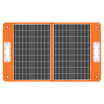
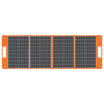


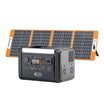

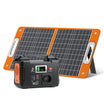

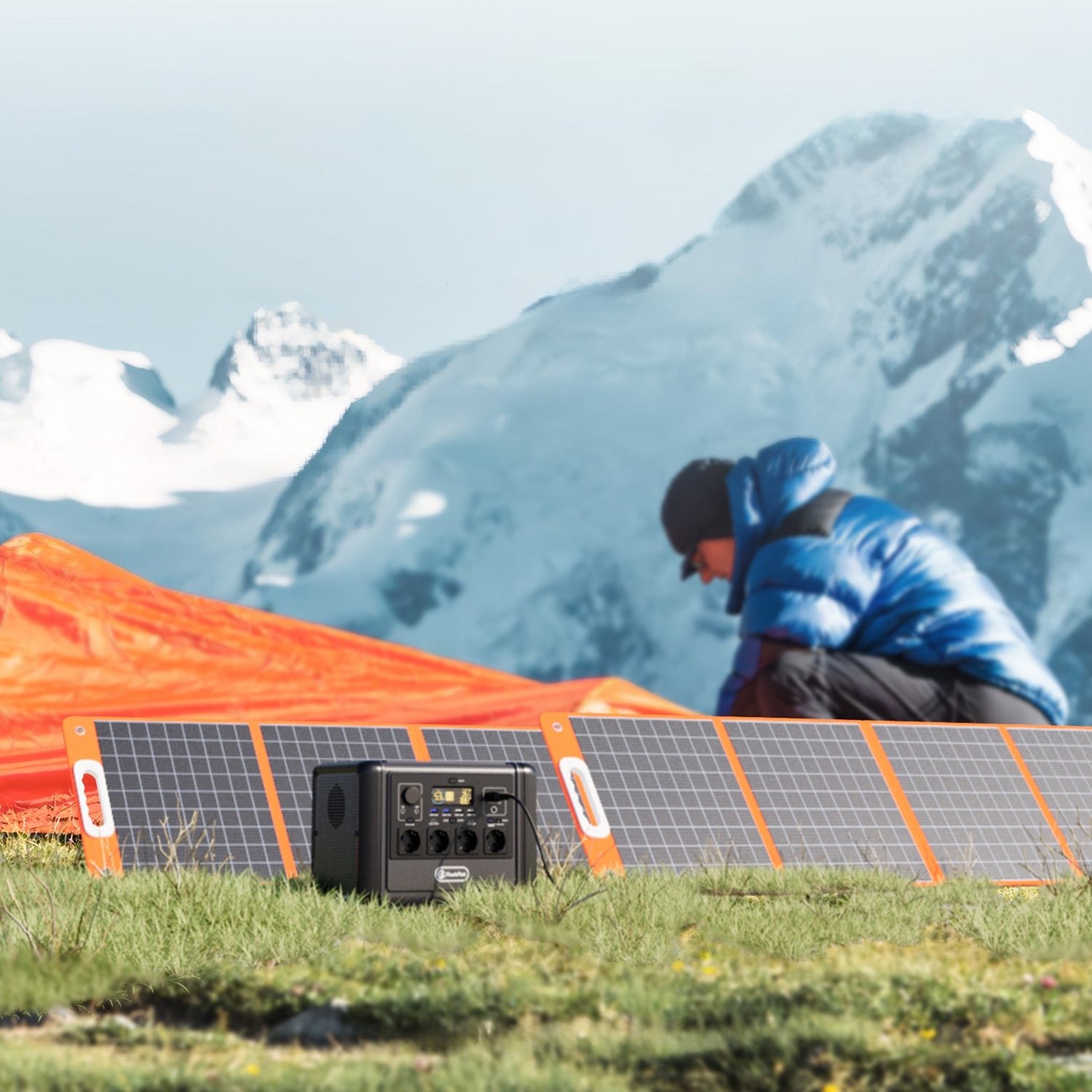
Short answer: the FlashFish TSP60 is a 60W foldable monocrystalline solar panel, but cloudy camping conditions can reduce actual charging input sharply. Use it as a light, weather-dependent top-up for suitable FlashFish stations, not as a fixed refill schedule.
Product facts that matter
The FlashFish product-source bundle lists the TSP60, also identified as TSP18V60W, as a 60W foldable monocrystalline panel with 18V DC output, 3.34A DC output current, 45W max USB-C, 18W max USB-A and 1.9kg weight. The bundle also says conversion depends on direct sunlight angle, temperature, weather and charging time.
That last sentence is the key expectation-setter. A panel rating is not the same as the number you will see all day at a campsite, especially under cloud, shade, poor angle or low winter sun.
Why cloudy weather changes the plan
The European Commission's JRC PVGIS exists to estimate solar radiation and photovoltaic performance for specific locations. Its user manual also explains that peak module power is declared under standard test conditions. Campsite reality is less controlled: the panel may be on grass, partly shaded, moved by wind, tilted poorly or used outside peak sun hours.
For that reason, a good TSP60 plan starts with priorities. Use solar first for low-draw devices and battery maintenance during the day. Do not make food cooling, work deadlines or emergency communication depend on a fixed cloudy-day input number.
Setup checklist
- Place the panel where it sees open sky, not under trees, awnings or vehicle shade.
- Face the front side toward the sun and adjust the angle during the day when practical.
- Check the power station's input voltage, current and watt limit before connecting.
- Use the correct connector for the station and avoid forcing a plug that feels wrong.
- Keep the panel dry enough for the product instructions and never immerse it in water.
- Do not bend, step on, pierce or disassemble the panel.
- Plan a backup charging method for essential devices.
Fit table for common FlashFish pairings
| Product | Relevant database facts | How TSP60 fits | Limit to remember |
|---|---|---|---|
| TSP60 | 60W panel, 18V DC, 3.34A, 45W max USB-C, 18W max USB-A, 1.9kg | Lightweight solar top-up and direct USB charging where conditions allow | Actual output changes with sun, angle, weather and temperature |
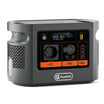
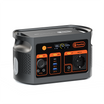
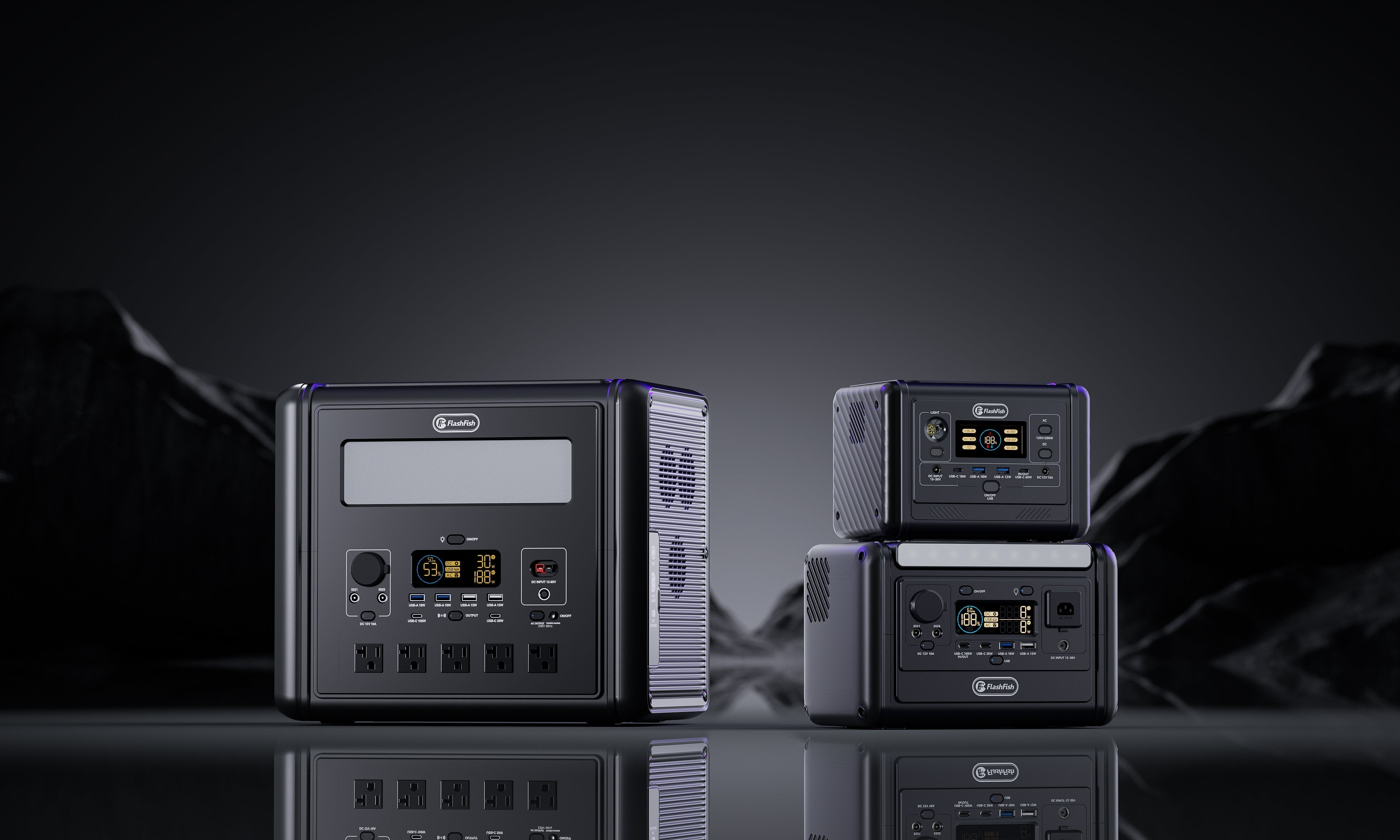
| E200 | 151Wh station, 40W max solar/DC charging input, 200W modified sine AC output | TSP60 can be discussed as a light solar pairing only after connector and input checks | E200 input limit is lower than the panel rating, so do not expect 60W into the station |
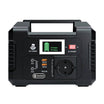
| E103 | 179.2Wh station, 90W max DC charging input, 12V-30V input range, 300W pure sine AC output | Panel voltage is in the right discussion range, but cable fit still needs checking | The database does not provide E103 battery chemistry or peak output, so do not infer them |
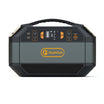
| T1200S | 768Wh LiFePO4 station, 400W max solar input, 1200W continuous AC output | TSP60 is a small top-up panel for a much larger battery | Useful for daylight maintenance or small replenishment, not a fast refill expectation |
When FlashFish fits
- You want a compact solar panel for phones, USB devices or light battery top-up.
- You can reposition the panel through the day and keep it out of shade.
- The station input range, connector and watt limit have been checked.
- You treat cloudy-weather output as variable and keep a backup power plan.
When it does not fit
- You need a fixed recharge time for a trip schedule.
- The campsite is shaded for most of the day.
- The station connector or input range has not been verified.
- You need to recharge a large battery quickly from one small panel.
- You plan to leave the panel in conditions that conflict with the manual's care notes.
Common mistakes
- Reading 60W as a constant real-world output number.
- Using the panel flat on the ground when the sun angle has changed.
- Forgetting that a station input limit can be lower than the panel rating.
- Assuming a connector in the box fits every FlashFish station ever sold.
- Letting shade from a tent, vehicle, branch or chair cover part of the panel.
Frequently asked questions
Will TSP60 produce 60W on a cloudy day?
Do not plan that way. The 60W rating is a panel specification, while real campsite output depends on sunlight, angle, temperature, shade and time of day.
Can TSP60 recharge an E200?
It can be considered only after checking connector fit and the E200 input limit. The E200 database summary says 40W max solar/DC charging, so the station input limit matters.
Can TSP60 recharge an E103?
The E103 has a 12V-30V DC input range and 90W max DC input in the product-source bundle. Still check the connector and cable before relying on the pairing.
Is TSP60 enough for T1200S?
It is a small top-up panel for a 768Wh station. It may help with light replenishment, but it should not be framed as a fast refill plan for that battery size.
Can I leave the panel in rain?
Follow the product instructions. The product-source bundle says not to immerse the panel in water and not to clean it with water; use the care guidance before exposing it to wet conditions.
Sources and evidence notes
- FlashFish product-source bundle, accessed 7 July 2026, for TSP60, E200, E103 and T1200S specifications and usage notes.
- Shopify discovery cache, accessed 7 July 2026, for active Europe product URLs.
- European Commission JRC PVGIS, accessed 7 July 2026, for solar radiation and PV performance context.
- PVGIS 5 user manual, accessed 7 July 2026, for standard test condition and angle-related planning context.



Leave a comment
Este site está protegido pela Política de privacidade da hCaptcha e da hCaptcha e aplicam-se os Termos de serviço das mesmas.