




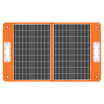
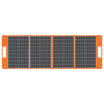


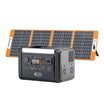



Evidence boundary: this is a pre-use screening method, not a pump test, temporary-wiring guide or flood-control plan. If water has reached electrical equipment or fixed wiring, do not improvise a supply.
Use PUMP before connecting anything
| PUMP gate | Evidence to collect | Stop condition |
|---|---|---|
| P — Pump identity | Exact model, regional voltage/frequency, P1 or input watts, plug, controller and installation manual. | No readable label, wrong regional supply or an installation not covered by the pump manual. |
| U — Unseen start demand | Manufacturer start current, locked-rotor value or a qualified inrush measurement for the complete pump/control set. | Only running watts are known, or a trip occurs during a controlled dry-location test. |
| M — Moisture and supply path | Dry station location, protected cable route, verified RCD/earthing arrangement and no water-exposed plug, socket or wiring. | Water, condensation, damaged cable, improvised back-feed or unknown protection behaviour. |
| P — Plan the duty and fallback | Minutes per cycle, cycles per hour, alarm, supervision, battery reserve and a non-battery flood response. | The plan depends on fixed runtime, unattended operation or the station as the only flood barrier. |
Why a 300W pump example is not a yes
DAB's 50Hz catalogue lists the VERTY NOVA 200 M at 1x230V and P1 maximum input of 0.3kW. That is useful because it gives a concrete European running-input class. The same catalogue row does not give the motor-start value used by this screen.
| Comparison row | DAB example | FlashFish T2000 evidence | Decision |
|---|---|---|---|
| Regional supply | 1x230V, 50Hz | Current Europe page describes a 230V/50Hz option; exact delivered label still matters. | Verify both labels, not the URL alone. |
| Running input | P1 maximum 0.3kW | 2000W continuous AC rating | Running watts clear the first screen only. |
| Motor start | Not provided in the evidence used here | 4000W peak is listed | Do not match an unknown start event to a peak headline. |
| Energy | Depends on cycling and inflow | 1536Wh rated capacity | Build a duty-cycle plan; do not promise hours. |
| Wet-area path | Installation-specific | No pump or flood approval established | Qualified review remains mandatory. |
The defensible conclusion is narrow: this example's running input is not the obvious blocker. The unknown start event, controls, protection, moisture and duty cycle decide whether the setup can move beyond paper screening.
Build a duty-cycle sheet, not a runtime promise
- Record the exact pump input in watts.
- Observe or obtain the expected minutes per cycle under representative conditions.
- Record cycles per hour and identify the highest plausible inflow period.
- Multiply watts by hours of actual operation for a load-side Wh estimate.
- Add conversion, standby and reserve margin without treating one percentage as universal.
- Define the battery level, alarm or elapsed time that triggers the separate fallback.
For example, 300W running for ten minutes per hour equals 50Wh of load-side energy per hour before conversion and standby. That arithmetic does not predict a storm: inflow, cycling, blockages, start events and battery condition can all change the outcome.
Common failure points the watt figure hides
- A float switch or controller changes the connected load and start sequence.
- A long or unsuitable cable creates a different supply path from the one the pump manual expects.
- The station is moved closer to water to reach the cable.
- The pump cycles more often than the planning sample.
- A protective trip is treated as permission to reset repeatedly.
- The household has no alarm, evacuation plan or professional flood fallback.
When T2000 may fit—and when it does not
When it may fit
- The exact 230V/50Hz pump and T2000 labels agree.
- Documented or qualified start evidence fits with margin; peak output is not used as a substitute for evidence.
- The full control, plug, cable, RCD/earthing and dry-location path has qualified approval for the intended setup.
- The duty-cycle worksheet leaves a meaningful energy reserve and the setup is supervised as required.
- A separate flood and outage response remains available.
When it does not fit
- The pump label, start demand, controller or regional supply is unknown.
- Any station, plug, cable or fixed electrical equipment is wet, damaged, hot, arcing or repeatedly tripping.
- The plan requires an improvised temporary connection, back-feeding or bypassing protection.
- The battery is expected to prevent property damage without an alarm, human response or alternate pump plan.
Next step: Compare the T2000 with your completed PUMP evidence sheet. A large nameplate gap is useful, but only after the regional, start, moisture and duty gates are closed.
FAQ
Does a 300W pump automatically fit a 2000W T2000?
No. The 300W figure may be only a maximum running-input value. Motor start demand, voltage and frequency, controls, duty cycle, cable path, protection and the exact regional T2000 configuration remain separate gates.
Can I use the T2000 next to a sump or flood water?
Do not assume that. Keep the power station and every connection in a dry, stable, ventilated location allowed by the exact manual. If water has reached wiring, plugs, sockets or equipment, stop and obtain qualified assessment rather than improvising a supply.
How do I estimate sump pump energy without promising runtime?
Record actual input watts, observed minutes per cycle and cycles per hour, then multiply those values over a defined period. Add conversion and standby margin, but keep the result as a planning range because water inflow, start demand, temperature and battery condition can change it.
Can I leave a T2000 running a sump pump unattended?
This article does not support unattended operation. Supervision, alarms, pump controls, the exact manuals, local electrical requirements and a separate response plan all matter. If failure could cause major property damage, use a professionally designed backup approach.
What is the most important fallback during a flood risk?
A separate household flood and outage plan: alarms, emergency contacts, safe exit routes, independent lighting and professional help. A portable battery should never be the only barrier between a building and serious water damage.
Sources and evidence notes
- FlashFish Europe T2000 page and local product database — bounded station specifications and current ACTIVE product path.
- DAB Pumps 50Hz catalogue — VERTY NOVA 200 M regional running-input example, not start evidence.
- DAB drainage-pump range — manufacturer use-case context.
- Electrical Safety First flood advice — water-exposure stop conditions and qualified assessment.
- UK Government Prepare power-cut guidance — wider household preparedness.
Editorial viewpoint: a 300W label is not a pump decision. PUMP makes the missing start event, wet-area path and consequence of failure as visible as the station's watt rating.
Compare alternatives only after measurement: Review current FlashFish portable power station classes for measured backup loads. A larger battery does not repair a missing electrical or flood plan.
Evidence checked . Human review is required for exact EU labels/manuals, regional pump and electrical requirements, qualified wet-area review, author/reviewer credentials, links, metadata, image crop and rendered FAQ/schema parity before publication.





Leave a comment
All comments are moderated before being published.
Este site está protegido pela Política de privacidade da hCaptcha e da hCaptcha e aplicam-se os Termos de serviço das mesmas.