

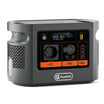



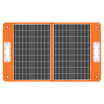
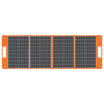


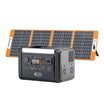

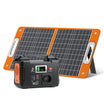

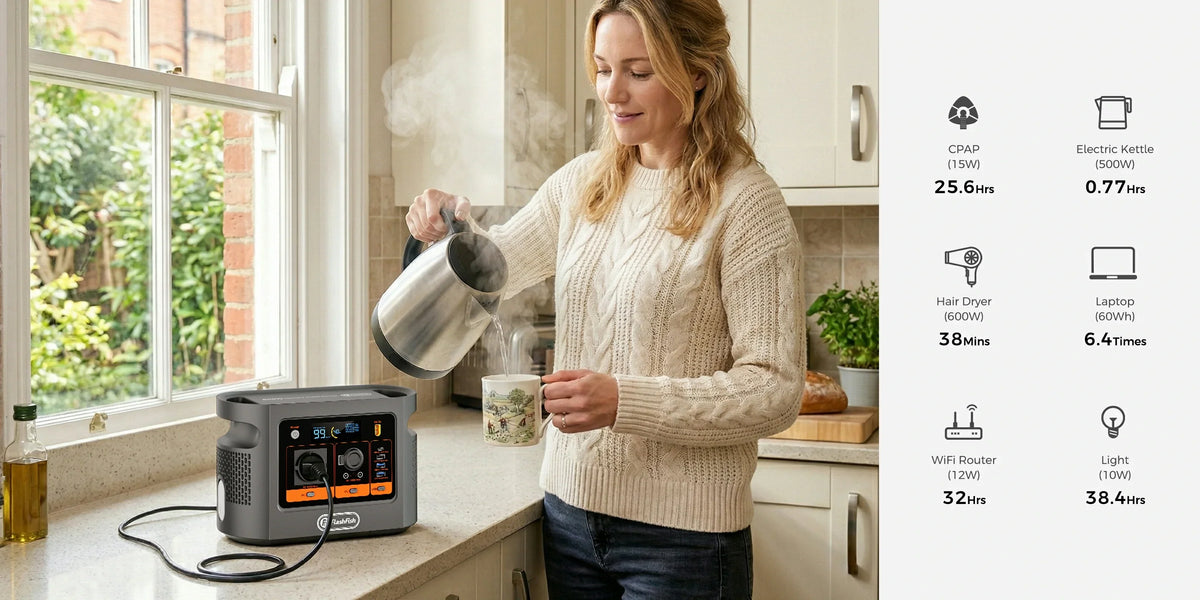
Short answer: the FlashFish E106B can be a plausible power source for a checked low-power soldering station and laptop, but the decision is conditional. An 85W Weller WE1010 and a 65W Lenovo USB-C adapter are comfortably below the E106B's 600W continuous AC ceiling on headline ratings. That 150W sum is only a first screen, not measured wall demand, tested compatibility or a runtime result.
The harder questions are whether the exact repair tool needs protective earth or a defined ESD arrangement, whether the laptop can use E106B's 100W USB-C1 path, how every simultaneous load behaves, and whether hot tools, cables and ventilation can be managed safely. Use the REPAIR checklist before treating the setup as ready.
In this guide: evidence limits, a worked label screen, the REPAIR method, fit and non-fit rules, session-energy measurement and five practical questions.
What the published evidence establishes
| Item | Published field | What it can decide | What remains open |
|---|---|---|---|
| FlashFish E106B | 230V/50Hz Europe AC; 600W shared continuous AC; 384Wh nominal; one AC outlet; USB-C1 up to 100W | Basic regional-voltage, continuous-load and port-path screen | Peak AC, protective-earth/RCD behaviour, delivered energy and runtime |
| Weller WE1010 Set 230V | 230V, 85W station; 70W iron; adjustable 100-450C; ESD-safe description | One exact temperature-controlled station example | Operation on this portable source and the complete bench's earth/ESD design |
| Lenovo 65W USB-C travel adapter | 100-240V input; USB-C output up to 20V/3.25A | One exact AC-adapter and 65W USB-C profile example | Laptop acceptance, cable capability and measured wall input |
The station's 85W rating plus the adapter's 65W output rating equals 150W, which is 25% of E106B's 600W continuous AC ceiling. Those figures are not directly equivalent measurements: the adapter's output rating is not its measured AC input, and the soldering station cycles its heater. Use the arithmetic only to reject an obvious overload, then measure the real setup.
Use REPAIR before connecting the bench
- R — Read every exact label. Record the station model, regional voltage, maximum or rated input, laptop charger, microscope, task light, fume extractor and any powered test instrument.
- E — Establish earth and ESD requirements. Follow the tool manual. Do not assume a portable AC outlet reproduces the protective-earth or RCD behaviour of a building supply.
- P — Pick each power path. Reserve AC for equipment that genuinely needs AC. A compatible laptop may use USB-C1 up to 100W, but only after its accepted Power Delivery profile and cable are verified.
- A — Add simultaneous demand with headroom. Count everything powered at once and measure the highest realistic repair state, not only idle.
- I — Inspect placement. Keep the station ventilated, use the manufacturer's iron stand, separate hot tools from the power station and cables, and keep the work dry and visible.
- R — Record session energy and retain a reserve. Log watt-hours for the real repair workflow before estimating duration. Keep a no-power fallback for unfinished work.
Three field-repair load cards
| Load card | Initial screen | Decision |
|---|---|---|
| WE1010 85W + 65W laptop adapter | 150W from unlike headline ratings; below 600W | Plausible for measurement, but earth/ESD, wall demand and session energy remain unresolved |
| WE1010 85W + compatible laptop on 100W USB-C1 + 20W task light | Different AC and DC paths; 205W of output ceilings | Check laptop PD and cable, actual simultaneous draw and whether the light has a supported path |
| Hot-air rework tool + preheater + laptop + extractor | Model-specific ratings may be far above the simple iron example | No category-based approval; read every label and choose a larger, documented setup if headroom or protection is uncertain |
These cards are decision examples, not measurements or typical repair loads. A soldering iron, hot-air station and board preheater are different load classes even when all are described as electronics-repair tools.
Earth, ESD and protection are separate gates
Weller describes the WE1010 system as ESD safe, and official technical data for the platform identifies a protection-class requirement. That does not make the complete temporary bench ESD controlled. A mat, wrist strap, instrument and soldering station must follow their own manufacturer instructions and a competent bench design.
The authoritative E106B record used here does not state protective-earth bonding, RCD compatibility or a tested fault-clearing arrangement. Do not invent those properties from the socket shape or pure-sine description. If a tool's safety depends on protective earth, a defined RCD arrangement or local workplace requirements, stop and obtain qualified guidance for the exact source and equipment.
Measure work, not just idle watts
A temperature-controlled station may draw more while heating and less while holding temperature. Laptop demand changes with charging state and workload. Add the extractor, lighting and instruments, then record watt-hours over a representative session that includes heat-up, active soldering and laptop use.
Nominal 384Wh is not delivered AC energy. Inverter loss, battery reserve, temperature, battery condition and intermittent heater demand all affect duration. Enter the measured average into the portable power station runtime calculator only as a planning step, never as a promise.
When E106B fits—and when it does not
E106B can fit the plan when: the exact regional tools are documented, total measured demand stays comfortably below 600W, laptop USB-C or AC requirements are verified, earth and ESD needs are resolved, the work area is dry and supervised, and measured energy plus reserve covers the intended session.
It does not close the decision when: the bench uses high-power hot air or a preheater, protection or earthing is uncertain, the tool is damaged or modified, cable routing puts hot tips near the station, the load repeatedly trips protection, or the job cannot tolerate an interruption. A portable station is not a substitute for a designed workshop electrical installation.
Compare E106B ratings with your completed REPAIR load card. If the complete bench needs more documented output, energy or connection options, compare Europe power stations after checking the complete bench.
Common mistakes
- Adding a charger's DC output rating to an appliance's AC input rating and calling the result measured wall demand.
- Assuming a pure-sine outlet defines protective-earth, RCD or ESD behaviour.
- Using the soldering iron's element rating while forgetting the control station, laptop, extractor, light and instruments.
- Letting a hot iron, tip-cleaning waste or cable rest against the power station or ventilation path.
- Daisy-chaining extension devices or leaving a cable reel wound under load.
- Turning 384Wh into a fixed runtime without measuring the real session.
FAQ
Is the 85W Weller WE1010 compatible with E106B?
Its 230V and 85W published fields pass a basic voltage and continuous-watt screen for the 230V/50Hz, 600W E106B Europe output. That is not a compatibility test. Verify the exact manuals, protective-earth and ESD requirements, plug, condition and measured operation.
Can the laptop use E106B USB-C instead of its AC adapter?
Possibly, if the laptop accepts a USB Power Delivery profile at or below E106B USB-C1's documented 100W maximum and the cable supports that profile. Connector shape alone is not enough; check the laptop and cable documentation.
Does the 150W example mean the bench will draw 150W?
No. It adds an 85W station rating to a 65W adapter output rating, which are unlike fields. Actual AC input varies with heater cycling, laptop demand and conversion loss. Measure the complete setup at the chosen power path.
Will E106B provide the earth connection needed by my soldering station?
The local E106B record does not provide enough information to confirm protective-earth or RCD behaviour. Follow the exact tool manual and obtain competent advice when the station, ESD system or workplace depends on a defined earthing arrangement.
How long will a repair session last?
No fixed duration can be supported from 384Wh alone. Record watt-hours over a representative session, include every powered tool, allow for conversion loss and reserve, and repeat the measurement when the device list or work changes.
Conclusion
E106B has ample headline continuous output for the named 85W station and 65W laptop-adapter example, but watts are only the first gate. A defensible field bench also resolves the exact power paths, protective-earth and ESD needs, hot-tool layout, real simultaneous demand, session energy and fallback.
After completing those checks, compare Europe power stations after checking the complete bench.
Sources and evidence boundary
Station facts come from the current FlashFish Europe E106B page and its manual-derived local record. The named tool and charger examples come from Weller WE1010 data and Lenovo's 65W USB-C adapter support page. Connection cautions follow Electrical Safety First. No hands-on bench test, safety approval, ESD validation, compatibility result or runtime claim is made.



Leave a comment
Este site está protegido pela Política de privacidade da hCaptcha e da hCaptcha e aplicam-se os Termos de serviço das mesmas.