

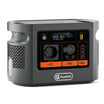
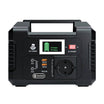

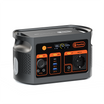


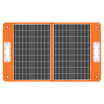
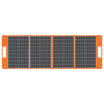


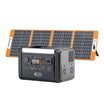

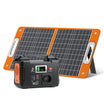

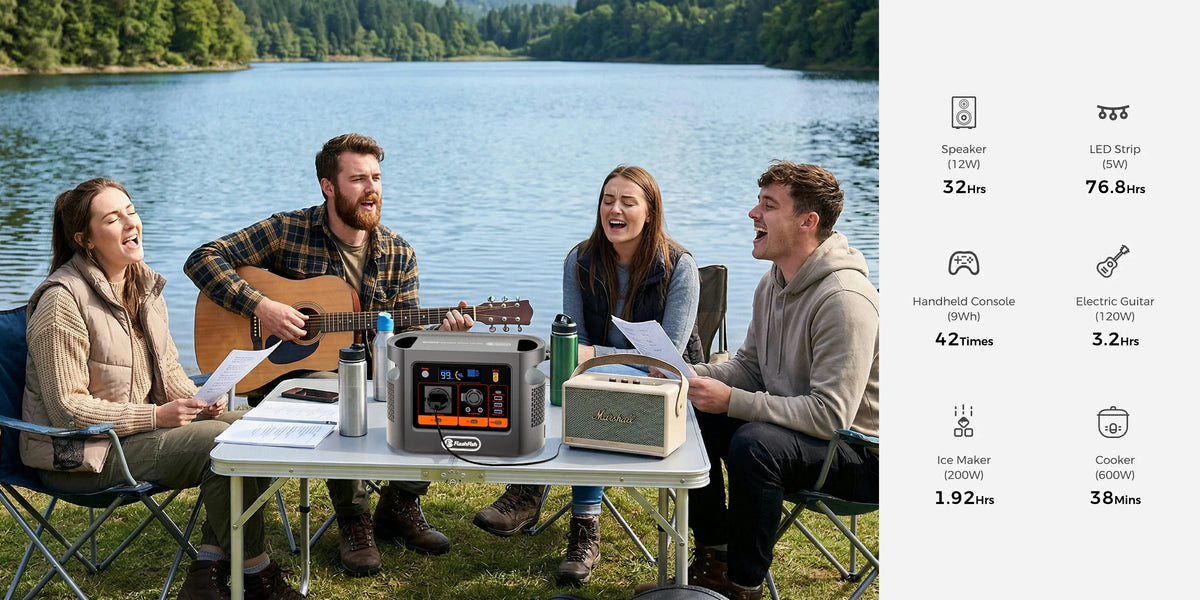
Short answer: FlashFish E106B has a documented 384Wh nominal battery, one 600W shared AC output and a 12V DC group limited to 120W. Those figures make a small astronomy kit worth screening, but they do not approve a direct connection. A mount, dew controller and laptop must each pass input, connector and combined-load checks, followed by a measured supervised session.
The shared-12V trap
The decision starts with the power path, not the sum of headline battery capacities. For example, Celestron lists the Advanced VX mount at 12V DC, 3.5A, tip positive. Its Smart DewHeater Controller 2X accepts 12V and can handle up to 120W or 10A. The mount supply rating corresponds to 42W; adding that conservative rating to the controller ceiling gives 162W. This exceeds E106B’s shared 120W DC ceiling. It is a screening calculation, not a measured demand. It means a reader must not assume both can simply occupy the station’s DC ports at full rated demand.
| Equipment | Published or required field | Check before use |
|---|---|---|
| E106B 12V outputs | 12V, 10A, 120W maximum shared | Sum all DC devices and verify connector, polarity and supplied cables. |
| Advanced VX mount | 12V DC, 3.5A, tip positive | Read the exact delivered mount label and use an approved power path. |
| Smart DewHeater Controller 2X | 12V; up to 120W or 10A | Count heaters and any powered accessory; controller rating is a ceiling. |
| Laptop | Model-dependent USB-C PD or original AC adapter | Check the exact input protocol and the total AC or USB load. |
The STAR LOAD method
- S — Specify the exact mount, controller, heater bands, laptop and any camera or mini computer. Photograph every input label.
- T — Trace the intended AC, USB-C and 12V paths separately. A barrel plug shape does not prove voltage, polarity or current fit.
- A — Add simultaneous maximum or required supply ratings against the correct shared port ceiling. Do not double-count a controller and accessories powered through it.
- R — Record heater settings, slews and laptop workload during a supervised rehearsal; average tracking draw alone misses demanding phases.
- LOAD — Log the session’s energy use and ending battery state, keep a weather and return-trip reserve, and stop if a manual or label disagrees.
Three planning cases
Mount alone
The Advanced VX label gives a clear 12V and polarity check, but connector dimensions and approved cable still need confirmation. A voltage match is only the first gate.
Mount plus heavy dew control
The conservative published ceilings can exceed E106B’s shared DC allowance. Ask the equipment makers about the exact supported wiring and measure actual duty before relying on one DC group.
Mount, heater and laptop
The laptop may use E106B USB-C1 up to 100W if its PD profile and cable agree, or its original AC adapter if the regional AC fields match. Neither path removes the need to account for other simultaneous loads and nominal-versus-delivered energy.
When E106B fits, and when it does not
Potential fit: every exact label and cable is verified, the DC group remains below its shared ceiling under the intended configuration, the laptop has a documented compatible path, and a supervised rehearsal leaves a useful reserve.
Do not rely on it: polarity or connector is uncertain, the nameplate screen already breaches 120W DC, a laptop demands an unsupported PD profile, or a field session requires an unmeasured overnight duration. A different verified setup or separate approved source may be necessary.
Check E106B output limits before building a kit and record each device’s manual revision before buying cables or travel accessories.
Field checklist
- Keep all equipment dry and route cables away from feet, tripod movement and sharp edges.
- Retain original adapters and avoid improvised polarity converters.
- Measure a representative slew, dew-control and laptop session at home.
- Write down a stop time and reserve threshold before leaving for a dark site.
- Recheck the exact regional station output label, not just the product name.
FAQ
Can E106B directly power a Celestron Advanced VX mount?
The published 12V output and mount input are only a first screen. Current, polarity, connector, cable and the 120W shared DC limit require verification on the exact units. No direct connection was tested.
Can the dew-heater controller and mount share E106B DC output?
Do not infer that from their separate 12V labels. The controller permits up to 120W and the mount specifies a 12V, 3.5A supply; a conservative nameplate screen exceeds E106B’s shared 120W DC ceiling. Actual draw and wiring require manufacturer guidance.
Should the laptop use USB-C or AC?
Check the laptop’s required USB-C PD profile and cable first. E106B lists USB-C1 up to 100W; an AC-only laptop needs its original adapter and a separate AC load check.
How many hours will the astronomy kit run?
No fixed duration follows from 384Wh nominal capacity. Slewing, heater duty, laptop workload, conversion loss and cold conditions vary. Measure a representative session and keep a reserve.
Does a 12V barrel plug prove compatibility?
No. Matching voltage does not establish polarity, connector dimensions, current or accessory approval. Stop when any field is missing.
Conclusion
The 120W shared DC ceiling is the decisive constraint in this three-device example. Treat every device as a separate electrical and energy question, then test the approved configuration under supervision. Compare Europe stations against the finished load sheet if the verified kit exceeds E106B’s available paths.
Sources and limits
Product ratings come from the FlashFish manual-derived E106B record and current EU listing. The mount and heater-controller requirements come from Celestron Advanced VX specifications and Celestron controller specifications. No astronomy equipment was connected; there is no compatibility, dew-control or runtime test.



Leave a comment
Este site está protegido pela Política de privacidade da hCaptcha e da hCaptcha e aplicam-se os Termos de serviço das mesmas.