








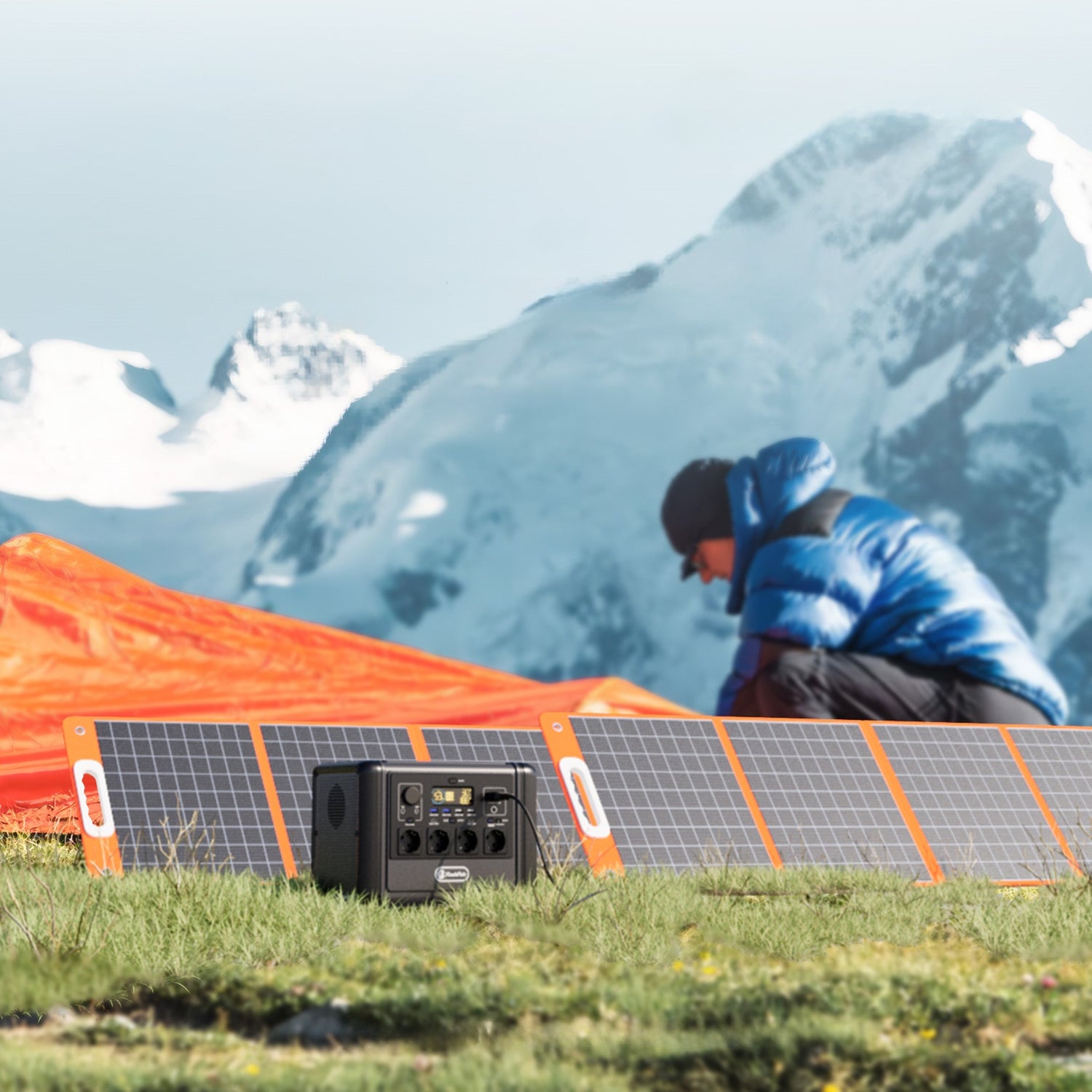
Short answer: a small solar generator is a good camping fit when your main loads are phones, camera batteries, LED lights, headlamps and small USB devices. It becomes the wrong fit when the plan depends on heaters, kettles, compressor cooling, high-watt AC loads or fixed daily solar refill.
Start with the camping device list
This checklist is for campers who want quiet, compact power for small electronics rather than a large backup system. The practical question is not "Can a small solar generator power my trip?" The better question is "Which exact devices must be charged, how often, and what will I stop using if the weather is poor?"
For phones, cameras and lights, the best plan is usually a small battery that leaves home charged, plus a portable panel used as a top-up. The panel is helpful, but it should not be treated as a certain daily refill in shade, rain, winter sun or a crowded campsite.
Scenario planning table
| Camping item | What to check | Small solar generator fit | Common mistake |
|---|---|---|---|
| Phones | USB-C or USB-A charger rating and number of phones | Good fit when charging is spread through the day | Charging every device at once and exceeding shared port limits |
| Camera batteries | Camera charger input label and spare battery count | Good fit when chargers are low watt and flexible | Assuming every camera charger works well from a modified sine AC socket |
| LED lights and headlamps | USB charging need and nightly usage | Good fit when lights are low power and charged before dark | Leaving lights plugged in continuously without a plan |
| Laptop or tablet | USB-C watt requirement or AC charger watts | Possible fit with the right station output | Buying a station before checking the charger label |
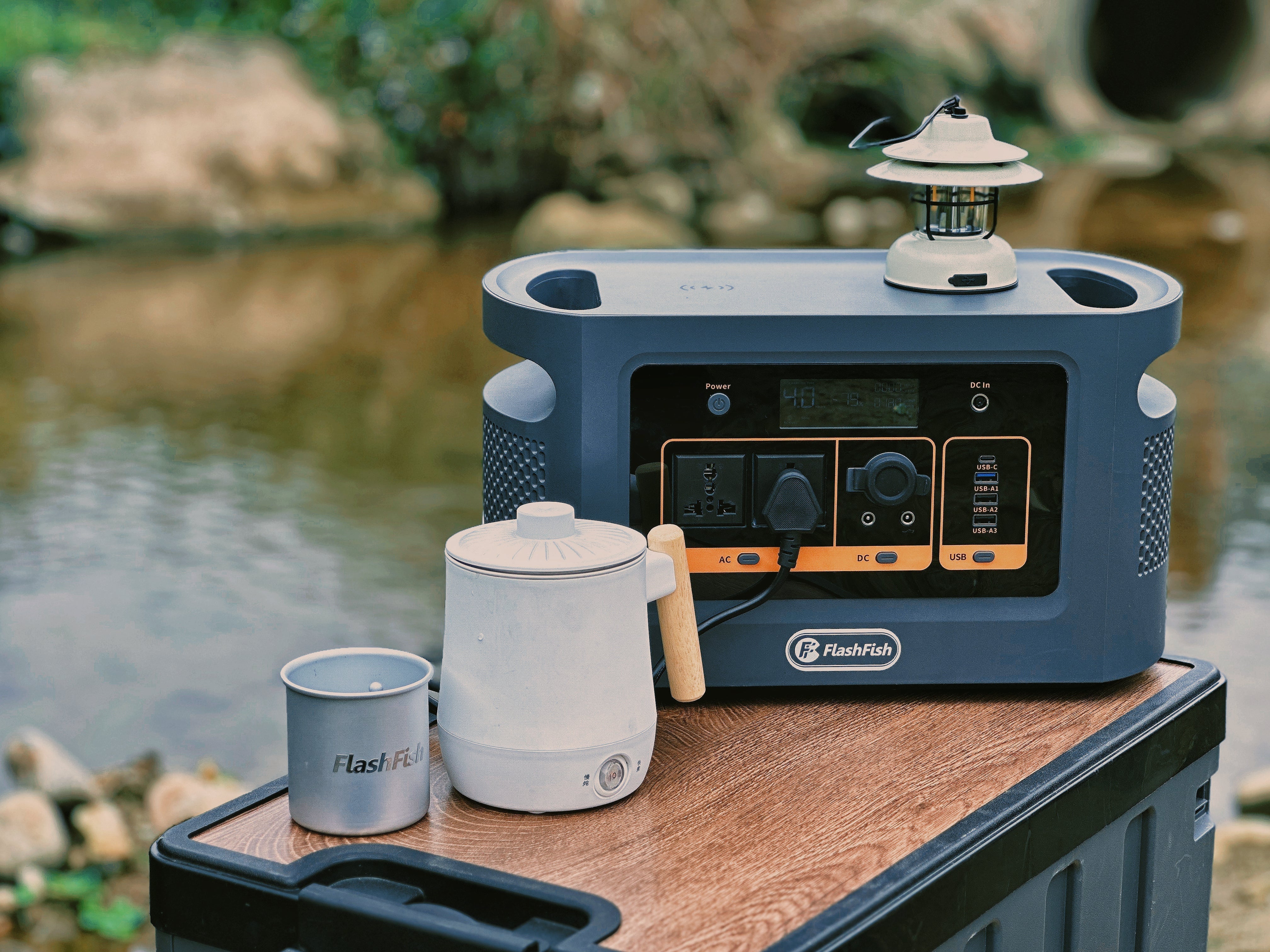
| Cool box, kettle or heater | Continuous and startup watts | Usually not the reason to choose a compact kit | Treating low-power and high-power camping loads as the same category |
Step-by-step checklist
- Charge the station from the wall before leaving. Start with stored energy; use solar as the extension plan.
- Write the charger labels down. A camera charger, phone charger and laptop charger may need very different outputs.
- Prefer USB where it fits. USB-C or USB-A can be cleaner for small electronics than using an AC adapter, provided the watt rating matches.
- Keep AC for devices that actually need AC. If AC is used, check waveform and output limits.
- Check the panel and station input match. Verify voltage, connector, polarity and max input. Do not improvise adapters.
- Plan for poor sun. The European Commission's PVGIS material exists because solar production depends on location, horizon, sunlight and losses.
- Keep cables visible and dry. Campsite electrical use requires extra care because mobile equipment and outdoor conditions add risk.
FlashFish compact kit context
| Option | Manual-derived facts | Best camping role | Boundary |
|---|---|---|---|
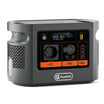
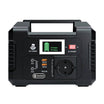
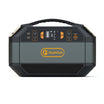
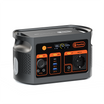
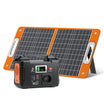
| E200 | 151Wh, 200W modified sine AC output, 400W peak, 40W max solar/DC charging, 1.85kg | Phones, camera batteries, LED lights and light AC use where modified sine output is acceptable | Not for high-watt appliances or sensitive AC gear that needs pure sine output |
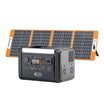
| E103 | 179.2Wh, 300W pure sine AC output, 90W max DC input, 60W USB-C, 3.0kg | Small electronics plus a modest laptop plan where 60W USB-C is enough | Battery chemistry and peak output are not provided in the product database |
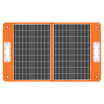
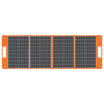
| TSP60 | 60W monocrystalline foldable panel, 18V DC output, 45W USB-C, 18W USB-A, 1.9kg | Portable top-up for compact camping electronics after compatibility checks | Not a battery and not a fixed recharge-time promise |
When FlashFish fits
- Your camping power goal is mostly phones, cameras, lights and small USB devices.
- You can pre-charge before the trip and use solar as a top-up.
- You are willing to reduce loads when the weather is poor.
- You want a compact, low-noise alternative to relying on a campsite socket for every small device.
When it does not fit
- You need heating, cooking, compressor cooling or several AC appliances.
- You cannot verify the charging labels or connector match.
- You need certain daily solar refill regardless of weather or shade.
- Your equipment is safety-critical and needs a dedicated, approved backup plan.
Common mistakes
- Buying by solar panel watts alone and ignoring battery Wh.
- Assuming a 60W panel produces 60W continuously outdoors.
- Using AC adapters for everything when USB output would be more appropriate.
- Forgetting that shared USB ports and AC sockets have limits.
- Leaving the campsite with no wall-charge reserve and hoping solar fixes the plan.
Frequently asked questions
Is a small solar generator enough for phones and cameras?
Usually yes when the chargers are low power and you start with the battery charged. Write down the charger labels and keep a margin.
Can TSP60 recharge a compact power station in one day?
Do not treat that as a fixed result. Solar output changes with sunlight, angle, shade, temperature and system losses.
Should I choose E200 or E103 for camera charging?
Choose by charger type. E200 is lighter with modified sine AC; E103 has higher capacity, pure sine AC and 60W USB-C, but the database does not provide its battery chemistry or peak output.
Can I charge phones directly from TSP60?
The product database lists USB outputs on TSP60, but direct solar charging depends on stable sunlight and device behavior. A charged power station is usually the steadier camping buffer.
What should I avoid plugging into a small kit?
Avoid high-watt heating, cooking, compressors, pumps and unknown AC loads unless the exact labels and startup behavior are checked against the station's limits.
Sources and evidence notes
- FlashFish product-source bundle, accessed 9 July 2026, supports manual-derived E200, E103 and TSP60 specifications and blank-field boundaries.
- 2026-07-07 Shopify discovery cache and 2026-07-09 Shopify Ping support active Europe URLs for E200, E103, TSP60 and relevant collections.
- European Commission JRC PVGIS 5 user manual, accessed 9 July 2026, supports solar variability and production-planning caution.
- Camping and Caravanning Club campsite electricity guide, accessed 9 July 2026, supports campsite cable and electrical-use caution.
- Electrical Safety First overloading sockets guidance, accessed 9 July 2026, supports avoiding overloaded leads and heat warning signs.
Soft next step: build your device list, then compare it with TSP60 and the FlashFish compact power-station options before choosing a kit.



Leave a comment
Este site está protegido pela Política de privacidade da hCaptcha e da hCaptcha e aplicam-se os Termos de serviço das mesmas.