

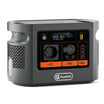
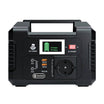

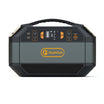
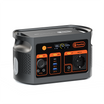


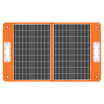
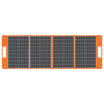


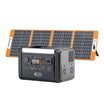

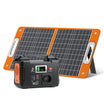

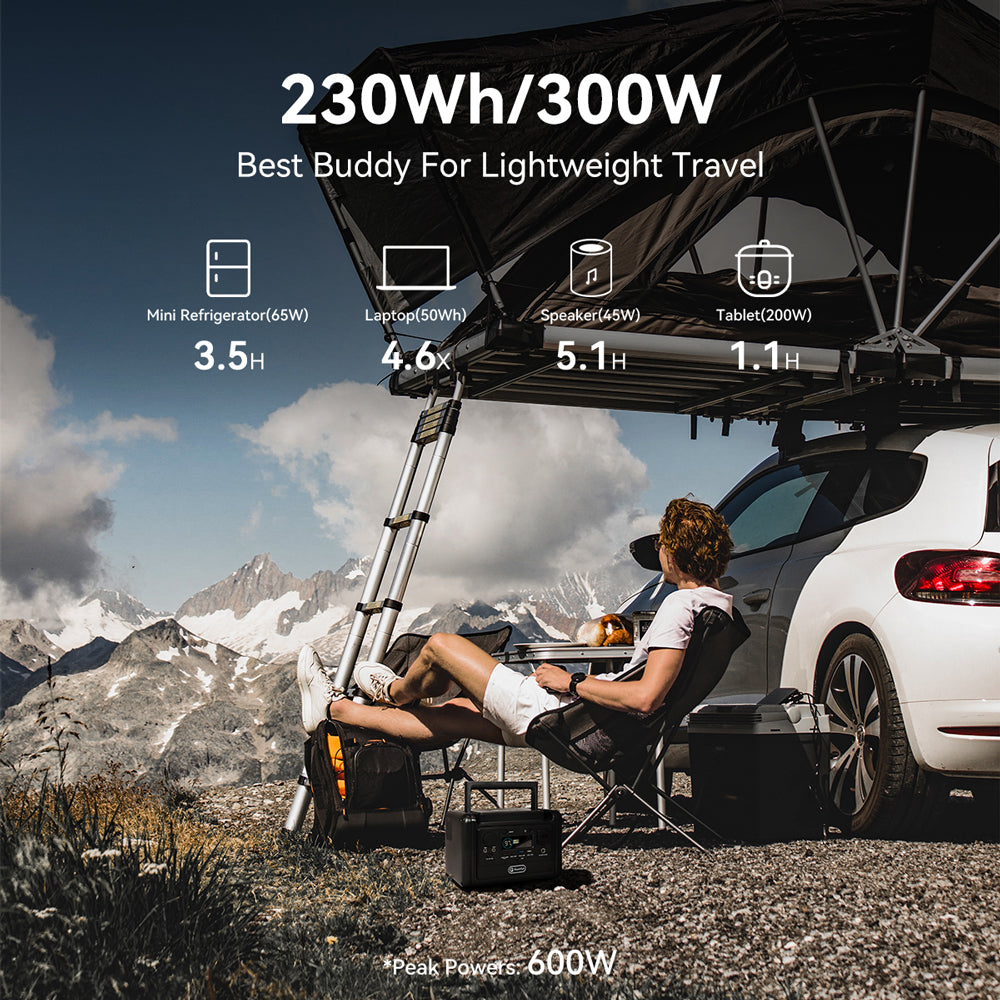
Short answer: choose T300PRO when a verified car-camping load stays inside 300W continuous AC and 230Wh nominal energy, and its smaller 4.5kg, 256mm-long case is the more useful fit. Choose E106B when the trip genuinely needs 600W continuous AC, 384Wh nominal energy or a second documented USB-C output—and about 5.2kg is acceptable. Both expose a 100W USB-C path and a 12V/120W shared DC group, so bigger is not automatically better.
Common documented fields
| Decision field | T300PRO | E106B | Buyer meaning |
|---|---|---|---|
| Nominal energy | 230Wh | 384Wh | E106B has the larger planning envelope; neither figure is delivered runtime |
| Continuous AC | 300W pure sine; 600W peak recorded | 600W pure sine; peak not provided locally | Use continuous output and exact startup evidence, not a guessed E106B peak |
| USB-C | USB-C1 up to 100W; USB-C2 up to 30W | USB-C1 up to 100W; USB-C2 up to 30W | Verify device and cable profiles; headline port watts do not force a model choice |
| 12V group | 120W maximum shared | 120W maximum shared | A cool box, pump or other 12V load must fit voltage, current, connector and group limits |
| Mass | 4.5kg | About 5.2kg | T300PRO saves about 0.7kg before cables and panels |
| Dimensions | 256 x 169 x 169mm | 306 x 171 x 202mm | T300PRO uses less packing volume; measure the actual storage location |
Use CAMP-PATH instead of choosing from wattage alone
- C — Continuous load. Add every AC device that can run together and identify startup demand separately.
- A — Available energy. Measure or estimate representative Wh, then retain conversion and reserve margin.
- M — Mobility and space. Measure the boot, drawer, seat base or carry route and include all cables.
- P — Port paths. Assign each device to verified USB-C, USB-A, 12V or AC without double-counting.
- PATH — Plan the recharge and fallback. Treat solar and charging as variable; keep a lower-power fallback when the trip matters.
Exactly three car-camping profiles
Profile 1: phone, camera batteries, lights and one 100W-class USB-C laptop
T300PRO is the cleaner first screen when the complete energy ledger fits 230Wh with reserve and no AC load exceeds 300W. It offers the same headline 100W USB-C ceiling at lower mass and smaller size. Confirm the laptop and cable profiles; 100W is a ceiling, not an always-delivered rate.
Profile 2: the same electronics plus a verified AC device above 300W
T300PRO is a non-fit on continuous AC once the simultaneous verified load exceeds 300W. E106B may be a candidate up to its 600W continuous ceiling only after startup, waveform, regional label and total energy are confirmed. The missing local E106B peak field must stay missing.
Profile 3: USB and 12V devices whose measured trip energy approaches 230Wh
E106B's 384Wh nominal envelope may justify the extra 0.7kg and larger case. If the load comfortably fits 230Wh with reserve, the extra capacity may simply be unused weight. Neither nominal figure predicts delivered Wh.
Why car access does not remove the portability decision
A car shortens the carry, but the station still competes with water, food, sleeping gear and emergency equipment. T300PRO is about 50mm shorter and 33mm lower, while E106B adds roughly 0.7kg before cables. Measure the packed case and lifting route. Do not place either station where luggage blocks ventilation, a loose object can strike it, or rain and condensation can reach connectors.
Use 12V and USB-C only when the whole path matches
Both products publish a 12V/120W shared DC group and a 100W USB-C1 ceiling. That apparent tie does not prove the same connector layout, polarity, sharing behaviour or device compatibility. A 12V cool box or pump still needs exact voltage, current, startup and connector evidence. A USB-C laptop still needs a compatible Power Delivery profile and cable. Direct DC or USB-C may be simpler than AC, but only when documentation supports the path.
Choose T300PRO, E106B—or neither
| Lean T300PRO | Lean E106B | Choose neither yet |
|---|---|---|
| The verified trip stays inside 300W continuous and 230Wh nominal with reserve | The verified trip needs more than 300W continuous or more than the smaller energy envelope | Startup demand, regional label, connector, polarity or device input is unknown |
| Smaller dimensions and 4.5kg are materially useful | 384Wh and 600W solve a documented need worth about 5.2kg | The plan depends on a fixed runtime or solar refill |
| One 100W and one 30W USB-C path cover the device roster | The same USB-C paths plus larger AC/energy headroom are needed | A medical, safety-critical or uninterrupted load depends on the station |
| Peak/start evidence is available for every relevant load | No decision depends on an unprovided E106B peak value | Weather, condensation or secure placement cannot be controlled |
Buyer checklist
- List every device and one approved path for each.
- Add simultaneous continuous watts and identify startup demand separately.
- Estimate representative Wh from measured use, not only adapter badges.
- Check USB-C source, cable and device profiles.
- Check every 12V connector, polarity, current and shared limit.
- Measure packed volume and include cables, adapters and a panel.
- Confirm the exact delivered Europe label and current manual.
- Plan dry placement, ventilation and a lower-power fallback.
Check T300PRO when the measured trip fits the smaller 300W envelope. Choose the larger model only when the completed device and energy sheet proves that its extra headroom will be used.
FAQ
Which model is lighter?
T300PRO is listed at 4.5kg and E106B at about 5.2kg. Compare the complete packed kit, not only the station.
Which model has more nominal energy?
E106B lists 384Wh versus 230Wh for T300PRO. Nominal Wh does not equal delivered energy or fixed runtime.
Do both provide 100W USB-C?
Both records list a USB-C1 port up to 100W. The device and cable must support the same negotiated profile.
Can both run a 12V cool box or pump?
Both list a 12V/120W shared group, but exact voltage, current, startup, connector, polarity and food- or water-system requirements still decide.
Is E106B automatically better because it is larger?
No. It is useful only when the measured load needs its extra AC or energy envelope; otherwise T300PRO may save weight and space.
Conclusion
T300PRO is the carry-and-space-first choice when the measured trip fits 300W and 230Wh with reserve. E106B is the headroom-first choice when 600W or 384Wh solves a proven need. CAMP-PATH keeps both honest: Continuous load, Available energy, Mobility, Ports and a verified charging Path. Check E106B when the device list needs more documented AC or energy headroom.
Sources and evidence limits
- FlashFish Europe T300PRO page and authoritative local record.
- FlashFish Europe E106B page and authoritative local record.
- FlashFish Europe Support Center.
- Camping and Caravanning Club electricity guidance.
Evidence checked 29 September 2026. No side-by-side device, charging, solar, noise, reliability or runtime test was performed.



Leave a comment
Este site está protegido pela Política de privacidade da hCaptcha e da hCaptcha e aplicam-se os Termos de serviço das mesmas.