

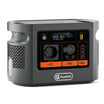
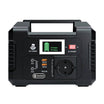

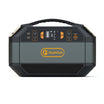
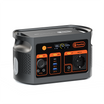




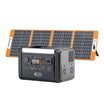

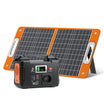

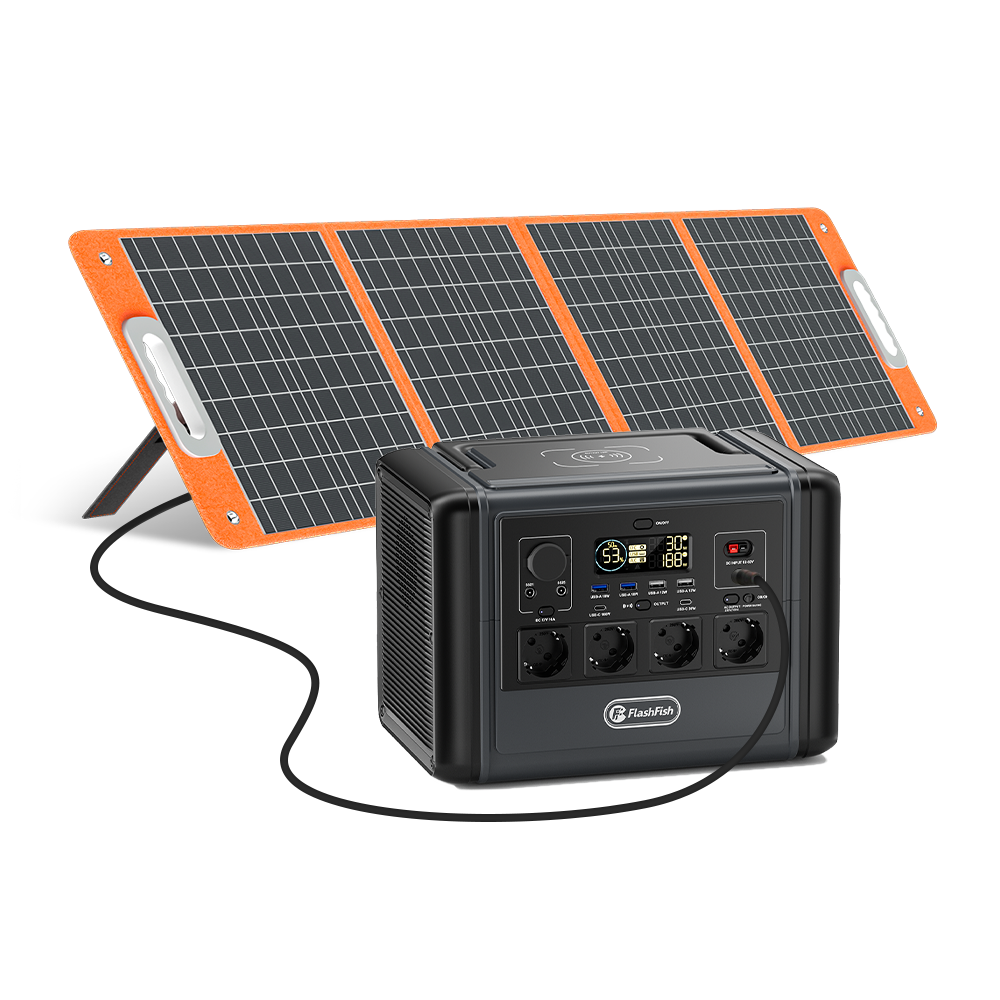
Short answer: FlashFish T1200S is the cleaner fit for campers who want a value-focused 768Wh LiFePO4 station for phones, lights, laptops, camera batteries, small fans and moderate AC loads. Jackery Explorer 1000 Plus sits in a larger 1264Wh class with a 2000W inverter and expansion path on Jackery's official UK page, so it can fit buyers who want more headroom and ecosystem growth. This is a load-class comparison, not a claim that one brand wins every situation.
The useful question is not "Which name is better?" It is "Which capacity, output and portability class matches the trip?" European campers should write down their device labels, plan for campsite safety, and avoid using battery marketing numbers as fixed runtime promises.
Quick comparison table
| Decision point | FlashFish T1200S | Jackery Explorer 1000 Plus | Buyer takeaway |
|---|---|---|---|
| Battery class | 768Wh LiFePO4 from the FlashFish product specifications. | Jackery UK page lists 1264Wh LiFePO4 and expansion up to about 5kWh with add-on batteries. | Jackery offers more capacity and expansion; T1200S keeps the kit smaller and simpler. |
| AC output | 1200W continuous AC and 2400W peak from the FlashFish bundle. | Jackery page describes a 2000W pure sine wave inverter. | High-output appliances favor Jackery's class; moderate camping loads can fit T1200S after label checks. |
| Solar input | Up to 400W solar input from the FlashFish bundle. | Use Jackery's current documentation for SolarSaga and expansion details. | Solar estimates should include weather, panel angle, shade and station input limits. |
| Weight and packing | 12.45kg from the FlashFish bundle. | Check current Jackery page for unit and battery-pack weights before purchase. | For car camping, either can work; for repeated carrying, weight and handles matter. |
| Best fit | Budget-led weekend camping and selected backup loads. | Higher-output, expandable camping and home-backup ecosystem. | Choose by load list, not by brand recall alone. |
Where FlashFish T1200S fits
- Moderate camping electronics: phones, camera batteries, lights, tablets, laptops, fans and compact campsite loads.
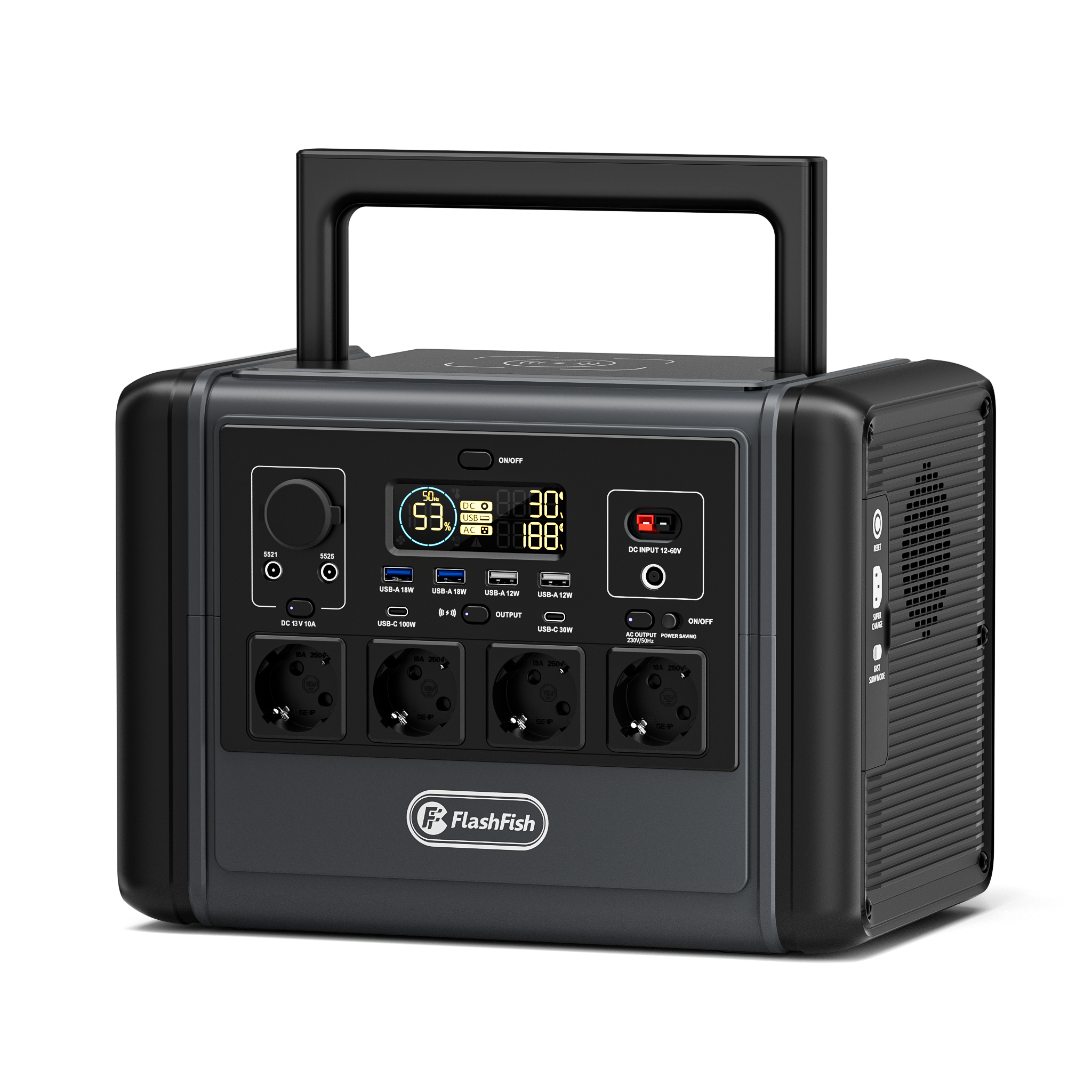
- USB-C-first packing: the FlashFish product specifications lists a 100W USB-C output, useful for modern laptops and tablets.
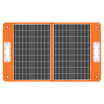
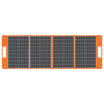
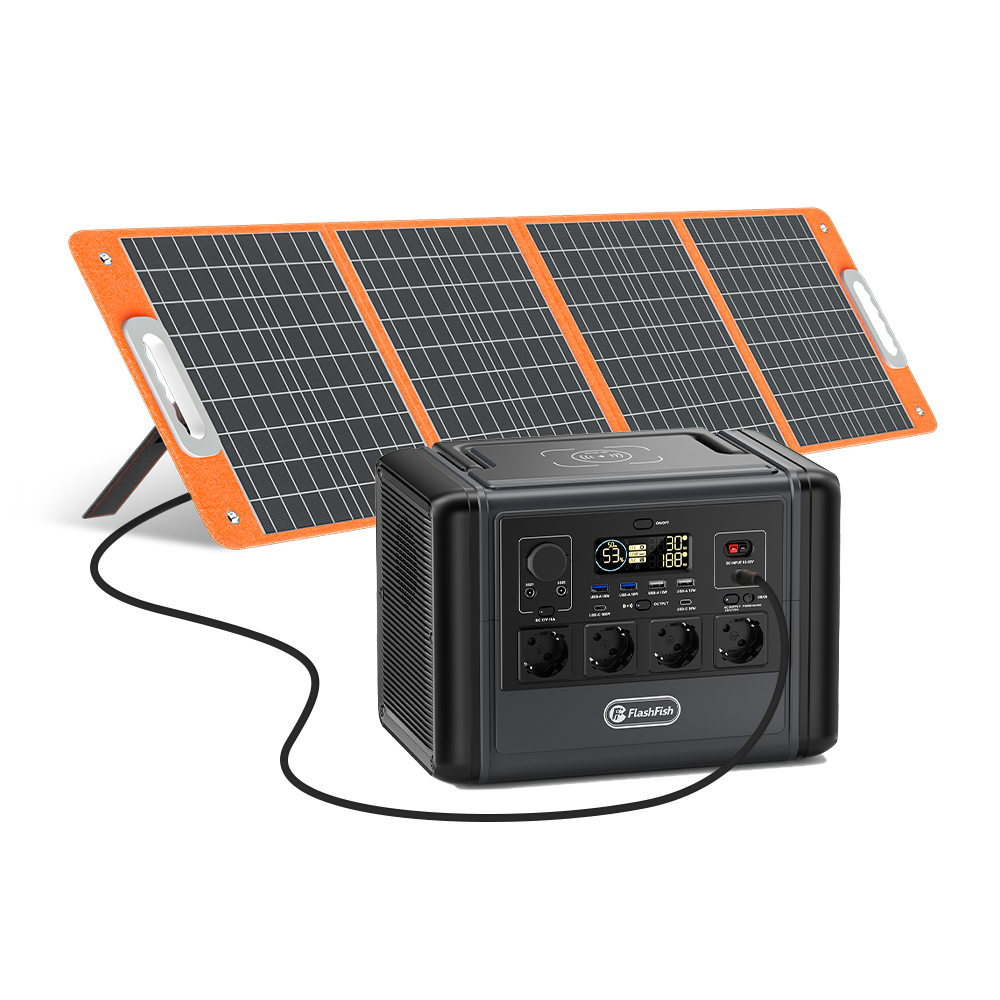
- Solar pairing: T1200S can pair naturally with the FlashFish TSP100 portable solar panel when voltage, cable and input limits are checked.
- Value-alternative research: it gives shoppers a Jackery alternative to review when they do not need a 1264Wh expandable system.
Where Jackery may fit better
- You want a larger 1kWh-plus capacity class and more AC output headroom.
- You plan to use Jackery battery packs or SolarSaga accessories as part of one ecosystem.
- Your device list includes loads that sit too close to T1200S output limits.
- You value Jackery's broader review footprint and ecosystem documentation more than a leaner value setup.
Camping load worksheet
- List every device and charger you will bring.
- Write down watts from the label or manual.
- Add only the devices that might run at the same time.
- Keep the total below the station's continuous output, not the peak output.
- Reduce runtime expectations for inverter loss, idle draw, temperature and cycling loads.
- For campsite electricity or inverter use, follow normal 230V safety precautions.
When FlashFish fits and when it does not
| T1200S fits when... | T1200S does not fit when... |
|---|---|
| The trip is built around lights, laptops, phones, camera gear, small fans and moderate AC loads. | You need an expandable 5kWh-style system or a 2000W AC output class. |
| You can plan from device labels and accept weather-dependent solar top-up. | You want fixed runtime numbers for cool boxes, heaters, kettles or compressor loads without testing. |
| You prefer a simpler value alternative to a premium ecosystem. | You already own Jackery accessories or need its expansion path. |
FAQ
Is T1200S a Jackery Explorer 1000 Plus replacement?
No. It is better framed as a value alternative for selected camping loads. Explorer 1000 Plus has higher listed capacity, output and expansion options; T1200S can make sense when the load list is moderate.
Can T1200S run a camping cool box?
Only after checking the cool box's running watts, startup behavior and food-safety needs. Do not assume fixed runtime from capacity alone.
Is a larger station always better for camping?
No. Larger capacity can help, but it can also add cost, weight and unused headroom. A clear device list is a better starting point than buying the biggest station possible.
Can I use solar to refill T1200S every day?
Maybe, but only with the right panel setup and weather. Solar output varies with shade, angle, season and station input limits, so the article should not promise a fixed refill schedule.
Which blog claim should editors avoid?
Avoid saying FlashFish is universally better than Jackery. The defensible claim is narrower: T1200S can be a practical value alternative for moderate camping loads.
Sources and notes
- FlashFish product specifications for T1200S manual-derived specs: 768Wh, LiFePO4, 1200W continuous AC, 2400W peak, 400W solar input, 100W USB-C and 12.45kg.
- FlashFish Europe T1200S product page and 2026-06-24 FlashFish Europe product listing for active EU product status and inventory.
- Jackery Explorer 1000 Plus official UK page for competitor capacity, inverter and expansion positioning.
- Camping and Caravanning Club campsite electricity guide for campsite electricity and inverter safety context.
- European Commission JRC PVGIS for solar-output variability context.



Leave a comment
Este site está protegido pela Política de privacidade da hCaptcha e da hCaptcha e aplicam-se os Termos de serviço das mesmas.