

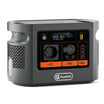
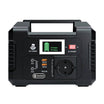

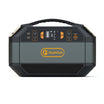
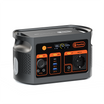


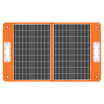
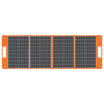


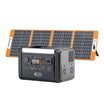

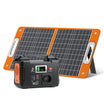

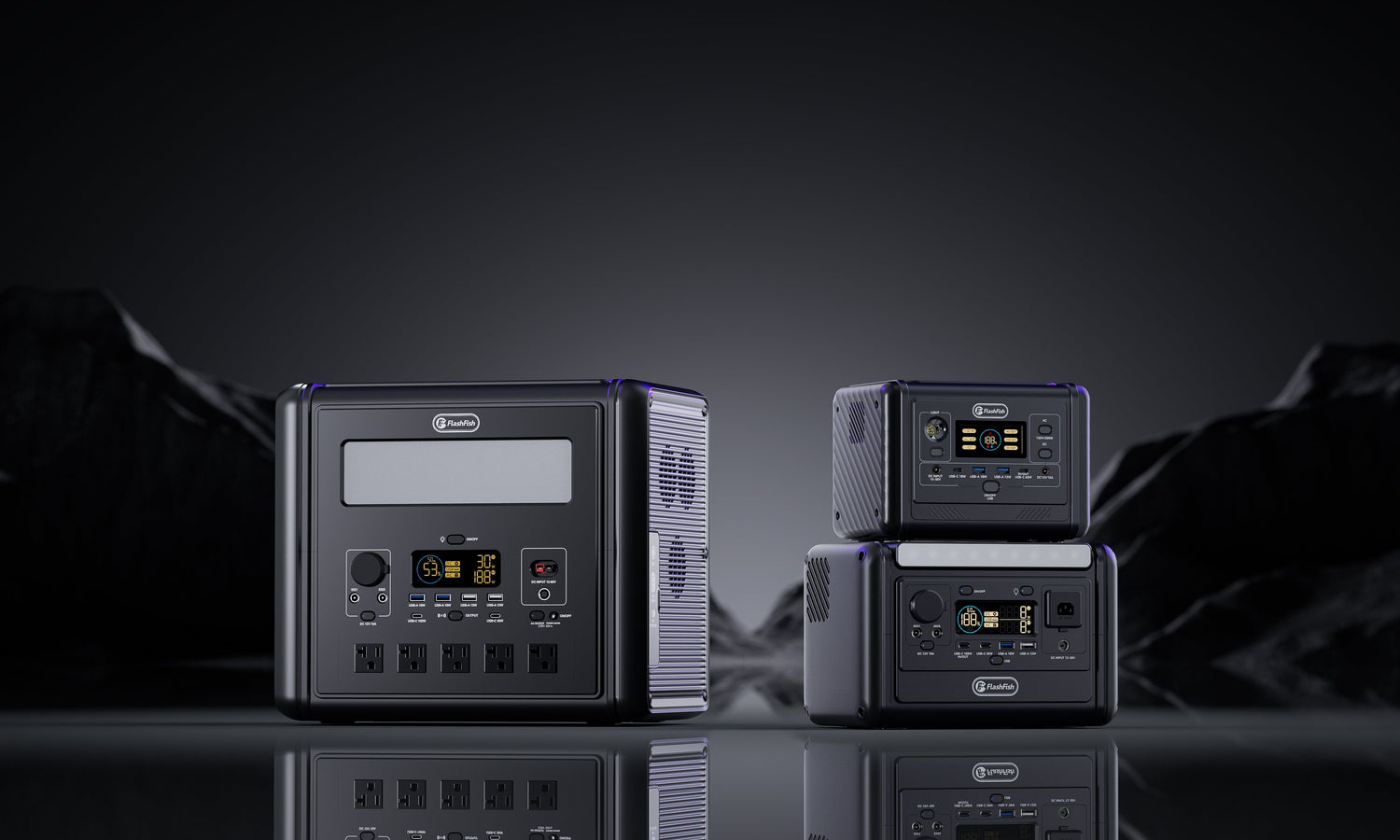
Short answer: choose FlashFish T2000 when a lighter 1,536Wh, 2,000W-class station fits your measured loads. Choose Anker SOLIX F2000 when the official Anker specifications you are buying in your market give you useful extra capacity, higher listed continuous output, higher solar input, app features or expansion support that justify the extra size and weight.
Important comparison boundary
This is not a universal winner article. It compares official specifications and selected-load fit. The Anker SOLIX F2000 source checked for this draft is Anker's official product page, and the editor should recheck the current Europe SKU, sockets, bundle, price and warranty page before publication. Prices are excluded because promotions and country settings change quickly.
Official-specification table
| Specification | FlashFish T2000 | Anker SOLIX F2000 | What it means |
|---|---|---|---|
| Rated capacity | 1,536Wh | 2,048Wh | Anker lists more stored energy before losses. |
| Battery chemistry | LiFePO4 | LiFePO4 | Both are listed as LiFePO4. |
| Continuous AC output | 2,000W | 2,400W | Anker lists more continuous AC output. |
| Peak / surge line | 4,000W peak | 2,800W AC surge line on the checked specification table | Peak and surge terms may use different test definitions; do not compare them as identical. |
| Solar input | 600W maximum, 12-80V, 10A | 1,000W maximum, 11-60V MPPT | Anker lists higher solar input; panel compatibility still matters. |
| USB-C | 100W maximum USB-C listed in the FlashFish database | Three 100W USB-C ports listed by Anker | Anker lists more high-power USB-C positions. |
| Weight | 19.2kg | 30.5kg | T2000 is much lighter by listed weight. |
| Expansion / app | Not used as a claim in this draft | Anker lists app connectivity and expansion to 4,096Wh | Useful if those features matter and are included in the purchased SKU. |
Where T2000 can be the better fit
The FlashFish T2000 is the stronger fit when your real load plan fits 2,000W continuous output and 1,536Wh capacity, and when a listed 19.2kg unit is easier to move, store or carry. That weight difference can matter for car camping, event work, small workshops and anyone who must move the station without help.
T2000 also keeps the comparison simple for selected plug-in loads: add the watts, check startup demand, estimate watt-hours, and decide whether the lighter unit gives enough margin. If it does, the extra capacity and features of a larger competitor may not be necessary for your use case.
Where Anker SOLIX F2000 may fit better
Anker's official page lists 2,048Wh capacity, 2,400W continuous AC output, 1,000W solar input, three 100W USB-C ports, app connectivity and expansion support. Those are meaningful advantages if the buyer needs more stored energy, more solar charging headroom, more high-power USB-C ports or expansion in the same product family.
The tradeoff is weight and verification. The checked Anker page lists 30.5kg, and a Europe-focused article should confirm the exact regional SKU, sockets, included accessories, price and warranty terms before publication.
Selected-load decision examples
| Use case | Main check | T2000 logic | Anker F2000 logic |
|---|---|---|---|
| Router, laptop and lighting during a power cut | Total watts and required hours | Likely enough output; capacity plan decides | More capacity may add margin if the extra weight is acceptable |
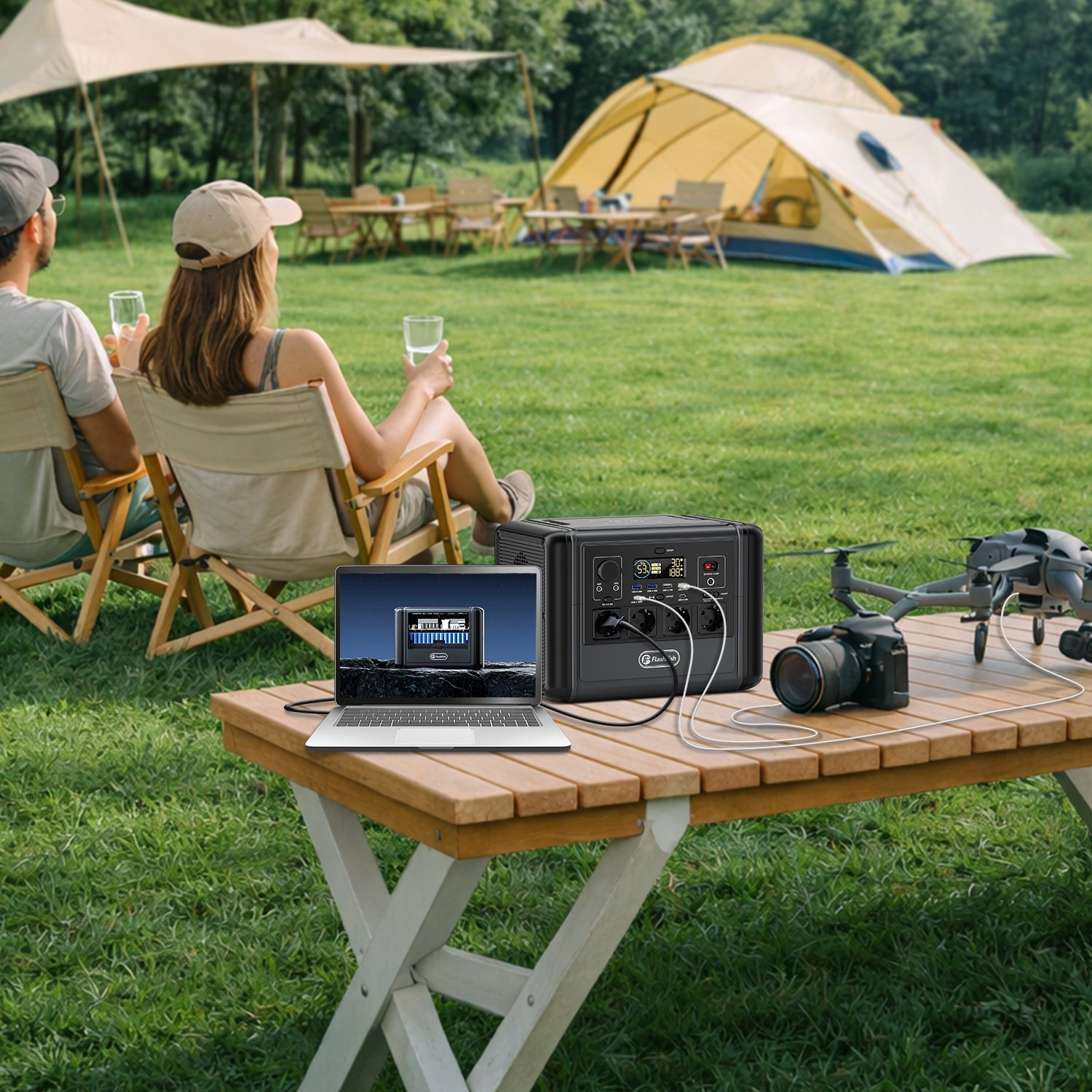
| Camping creators with laptop, camera and drone chargers | USB-C needs, AC chargers and carry weight | Lighter listed weight and 100W USB-C can be attractive | More USB-C positions and capacity may fit larger creator kits |
| Tool-battery chargers and small work loads | Charger input labels and simultaneous use | Works when the combined load stays within 2,000W | More continuous output may help if the checked chargers need it |
| Solar-heavy recharge plan | Panel voltage, current and watts | 600W input can fit moderate portable panel plans | 1,000W input can matter if the buyer owns compatible panels |
How to compare without overstating the result
- List the devices you need to run at the same time.
- Read each input label or manufacturer manual.
- Check startup demand for pumps, compressors and motor loads.
- Estimate average watts x hours rather than relying on a single appliance example.
- Compare capacity, continuous output, solar input, ports, weight and support terms.
- Check current country-specific SKU details before buying.
When FlashFish fits
- You want a lighter 2,000W-class station for selected loads.
- Your plan fits 1,536Wh before conversion and standby losses.
- You do not need app control or expansion as a purchase requirement.
- You prefer to keep the comparison focused on measured loads and portability.
When FlashFish does not fit
- You need more than 1,536Wh rated capacity in one station.
- You need a listed 2,400W continuous output ceiling for your checked load plan.
- You need a 1,000W solar-input ceiling or the specific Anker expansion path.
- You need more 100W USB-C ports than the T2000 configuration provides.
Safety notes for either station
GOV.UK's power-cut guidance points readers toward essentials such as lighting, communication and preparation. Electrical Safety First warns against overloaded sockets and unsafe extension setups. Those cautions apply to both brands: a larger battery does not make cables, adaptors or appliance labels irrelevant.
Frequently asked questions
Is T2000 an Anker SOLIX F2000 alternative?
Yes for buyers comparing portable LiFePO4 stations for selected loads, provided T2000's 1,536Wh capacity and 2,000W continuous output fit the load plan.
Which has more capacity?
Anker lists 2,048Wh. The FlashFish product-source bundle lists T2000 at 1,536Wh.
Which is lighter?
The FlashFish database lists T2000 at 19.2kg. The checked Anker official page lists SOLIX F2000 at 30.5kg.
Why are prices not compared?
Country, bundle and promotion settings change quickly. A fair price section needs a same-day, same-market capture for both products.
Why not call one product the best?
The right choice depends on measured loads, required hours, solar plan, carry weight, current regional SKU and after-sales terms.
Sources and evidence notes
- FlashFish product-source bundle, accessed 6 July 2026, for T2000 specifications.
- Shopify discovery cache, accessed 6 July 2026, for T2000 active Europe product URL.
- Anker SOLIX F2000 official product page, accessed 6 July 2026, for competitor specifications and feature claims.
- GOV.UK Prepare: power cuts, accessed 6 July 2026, for selected-essential outage planning context.
- Electrical Safety First: overloading sockets, accessed 6 July 2026, for socket and extension safety guidance.



Leave a comment
Este site está protegido pela Política de privacidade da hCaptcha e da hCaptcha e aplicam-se os Termos de serviço das mesmas.