








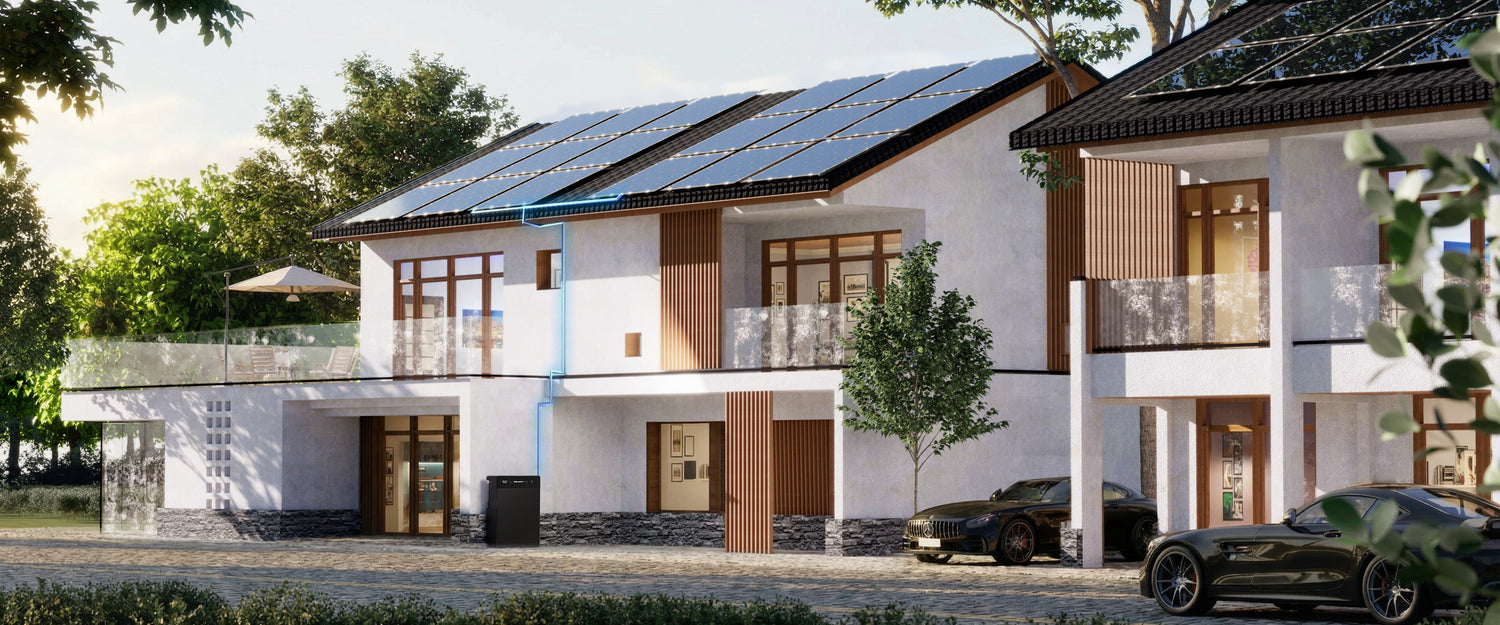
Short answer: balcony solar produces electricity; battery storage saves some of that electricity for later; and a renter must separately check the building, landlord, electrical connection and local rules. Similar-looking products can have very different roles, so understanding the terms is more useful than starting with a product name.
Why these terms matter before you buy
A product page may mention PV input, storage capacity, off-grid output and self-consumption in the same paragraph. These are related, but they are not interchangeable. The practical question is whether a system matches your property, permission status, meter and intended loads.
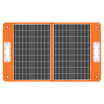
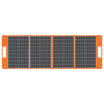
SolarPower Europe describes plug-in PV as a small household solar segment, commonly associated with balconies. Its European overview also stresses that standards and installation guidance matter. The European Commission notes that solar installations may be placed on balconies or terraces, while national criteria and building suitability still shape what is practical.
Core balcony solar and storage terms
| Term | Plain-English meaning | Question for a renter |
|---|---|---|
| Photovoltaic (PV) panel | A panel that converts sunlight into DC electricity. | Where can it be mounted without unsafe loading, shading or prohibited alterations? |
| Plug-in solar | A small PV system designed to feed solar electricity into a household installation through an approved connection method. | Which equipment, registration and connection rules apply at this address? |
| Balcony solar | A common label for compact PV installed on a balcony, terrace or similar space. | Does the landlord or building management permit mounting and cable routing? |
| Battery storage | A battery that stores electrical energy for use later. | Is the battery intended for a fixed solar system, portable use, or both? |
| Self-consumption | Using solar electricity in the home instead of exporting it. | Are the daytime and evening loads large enough to use the stored energy sensibly? |
| State of charge (SoC) | The estimated percentage of energy remaining in the battery. | Can the user set a reserve level for evening or outage use? |
| Battery capacity (Wh or kWh) | The rated amount of energy the battery can store. 1kWh equals 1,000Wh. | Is the capacity proportionate to daily loads, available solar and physical space? |
| Rated output (W) | The continuous power the output is designed to supply. | Does the total wattage of selected loads remain within the relevant output rating? |
| Peak output | A short-duration higher output intended for startup demand, not continuous operation. | Is the appliance's normal running load within the continuous rating? |
| PV input limit | The voltage, current and wattage window accepted from solar equipment. | Do the proposed panels and wiring stay within every input limit? |
| Inverter | Electronics that convert DC battery or PV electricity into AC electricity. | Is the inverter role grid-connected, off-grid, or limited to dedicated outputs? |
| Off-grid AC output | An AC output intended to power selected loads independently of household grid export. | Which sockets or circuits does it supply, and what must never be back-fed? |
| Round-trip efficiency | The share of energy available after charging and discharging losses. | Has the plan allowed for conversion losses instead of treating rated capacity as fully usable? |
Three concepts renters often mix up
Solar generation is not the same as storage
Panels generate when light conditions allow. A battery shifts some energy to a later time. A larger battery does not create more solar energy, and a larger panel does not remove battery or inverter limits.
Off-grid output is not household grid export
An off-grid outlet can serve selected devices directly. Feeding electricity into household wiring is a different function with separate equipment and rules. Never improvise a back-feed connection.
Technical fit is not property permission
A system can be electrically plausible while still being unsuitable for a particular balcony, lease or building. Check fixing points, structural loading, weather exposure, cable routes, fire access, landlord terms and local requirements before ordering equipment.
A practical renter planning sequence
- List the devices you actually want to support and record their watts and daily use.
- Separate daytime solar use, evening use and occasional outage use.
- Ask the landlord or building manager about mounting, visible changes and shared-property restrictions.
- Check the country and local requirements for registration, connection and qualified installation.
- Confirm panel voltage/current, battery input limits, output role, cable route, weight and dimensions.
- Ask a qualified professional to review any grid-connected or fixed electrical work.
Where the FlashFish SR5000 fits into the vocabulary
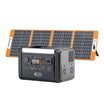
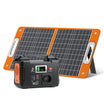
The FlashFish SR5000 balcony solar storage system is a fixed-system planning example rather than a compact portable station. The local FlashFish product database lists 5,120Wh capacity, LiFePO4 chemistry, 2,400W rated off-grid AC output, 59kg weight and dimensions of 520 x 181 x 715mm.
Those numbers help explain capacity, output and placement terms. They do not answer whether a specific rental property permits the system. That decision still requires an address-specific review of mounting, electrical connection, building terms and applicable rules.
Common mistakes
- Choosing battery capacity before estimating actual evening loads.
- Comparing watts with watt-hours as though they measure the same thing.
- Assuming a product marketed for balconies can be installed on every balcony.
- Ignoring the combined weight of storage, panels, mounting and other equipment.
- Using predetermined bill-reduction or payback figures without tariff, usage and solar-yield data.
Frequently asked questions
Is balcony solar the same as a balcony battery?
No. Balcony solar normally refers to the PV generation system. A battery is an additional storage component that can save some generated energy for later.
Does a larger battery always improve self-consumption?
No. It must be matched to available solar generation and household loads. An oversized battery may spend long periods partly empty.
Can renters install balcony storage without asking anyone?
Do not assume so. Lease terms, building rules, structural conditions, electrical requirements and national or local processes can all matter.
What is the difference between watts and watt-hours?
Watts describe power at a moment. Watt-hours describe an amount of energy over time. Both are needed when sizing a system.
Can off-grid AC output power an apartment circuit?
Not by improvising a connection. Use only the approved output arrangement described by the manufacturer and obtain professional review for fixed electrical work.
Sources and evidence notes
- SolarPower Europe: Plug-In Solar PV, accessed 2 July 2026. European market and terminology context; not product endorsement.
- European Commission: Solar energy in buildings, accessed 2 July 2026. Building-placement and national-criteria context.
- FlashFish product-source bundle, accessed 2 July 2026. SR5000 technical values extracted from supplied product manuals; original documents remain the final check for installation-critical details.



Lasă un comentariu
Acest site este protejat de hCaptcha și hCaptcha. Se aplică Politica de confidențialitate și Condițiile de furnizare a serviciului.