








Short answer: cell balancing is a battery-management function intended to reduce an addressable mismatch among cells in a series pack, often a state-of-charge difference. Passive methods commonly dissipate charge from selected cells; active methods redistribute charge. Neither label proves battery quality, usable energy, lifetime, repairability or the internal design of a particular portable power station.
Use BALANCE: define the Basis of the mismatch, distinguish Active and passive methods, identify the pack Limit, require Attributable product evidence, keep No-DIY boundaries, separate Capacity and resistance problems, and Escalate abnormal behaviour to the manufacturer.
Start by naming the mismatch
| Observed difference | What it may reflect | What balancing may address | What it does not prove |
|---|---|---|---|
| Different cell state of charge | Unequal charge among series cells | A documented algorithm may reduce the difference | That every voltage difference is SoC imbalance |
| Different total capacity | Manufacturing variation, age or degradation | May align a charge endpoint in a defined strategy | Restored lost capacity |
| Different impedance | Cells respond differently under load | Not corrected by charge redistribution alone | That the high- or low-voltage cell is simply over- or undercharged |
| Early pack cutoff | One cell reaches a protection boundary first | Could improve only if an addressable mismatch is the cause | A user-serviceable fault or a safe bypass |
Texas Instruments separates state-of-charge, total-capacity and impedance differences. A voltage gap under load can reflect both state of charge and resistance, so voltage alone does not diagnose the cause. Its paper explicitly notes that a balancing algorithm cannot correct resistance imbalance.
Passive balancing dissipates; active balancing redistributes
Analog Devices describes passive balancing as bringing cells toward a similar state of charge by dissipating excess charge through a bleed resistor. The method is comparatively simple and cost-effective, but the removed energy becomes heat rather than useful charge elsewhere in the pack.
Active balancing uses a more complex circuit to move charge between cells or between a cell and the larger stack. In a suitable design it can make more of the stack's charge available, but the word active is not a universal product ranking. Transfer current, timing, efficiency, controls, cell matching and thermal design still matter.
The weakest cell can set a pack boundary
Cells in series carry the same pack current, but they do not always reach voltage limits at the same time. During discharge, a weaker or lower-charge cell can reach the low limit while other cells retain charge. During charging, a cell can reach an upper limit first. Protection must respect the first cell that reaches a boundary, which can leave energy in the rest of the stack.
Balancing may reduce an addressable state-of-charge difference and help cells reach an endpoint more uniformly. It cannot turn a damaged, low-capacity or high-resistance cell into a healthy matched cell. That is why a symptom, a balancing label and a repair conclusion must remain separate.
Three examples show the evidence boundary
- Passive top balancing: a design may switch a resistor across a higher-charge cell near a defined charge stage. Charge is dissipated as heat; this does not mean the pack gained energy.
- Active charge transfer: a design may move charge from a stronger cell toward a weaker cell or the stack. That can reduce usable-charge mismatch, but the actual benefit depends on the implementation.
- Higher impedance under load: one cell's voltage may sag more even at a similar state of charge. Moving charge does not repair that resistance difference, so manufacturer diagnosis is needed.
What buyers can and cannot learn from a product page
A product page may publish nominal energy, output limits, warranty language or a general BMS claim. Those facts are useful, but they do not automatically disclose passive versus active topology, balancing current, start threshold, cell-voltage access, calibration, repairability or the relationship between balancing and a displayed percentage.
The authoritative FlashFish local product database does not publish one universal balancing method, current, threshold or user procedure across models. This article therefore treats those fields as unknown. It also does not transfer chemistry from a title or one product to another when the local record is blank.
Buyer evidence checklist
- Ask whether the manufacturer documents the exact model's balancing method or only states that a BMS is present.
- Keep nominal Wh, usable delivered Wh, cycle test, warranty and balancing claims in separate rows.
- Look for a regional manual, model identifier, evidence date and defined test conditions.
- Treat cell-level telemetry or service access as unknown unless the exact product documentation provides it.
- Do not use a balancing claim to excuse swelling, odour, unusual heat, physical damage or repeated faults.
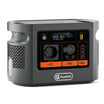
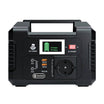
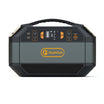
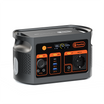
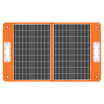
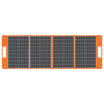
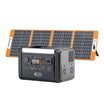
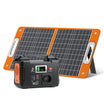
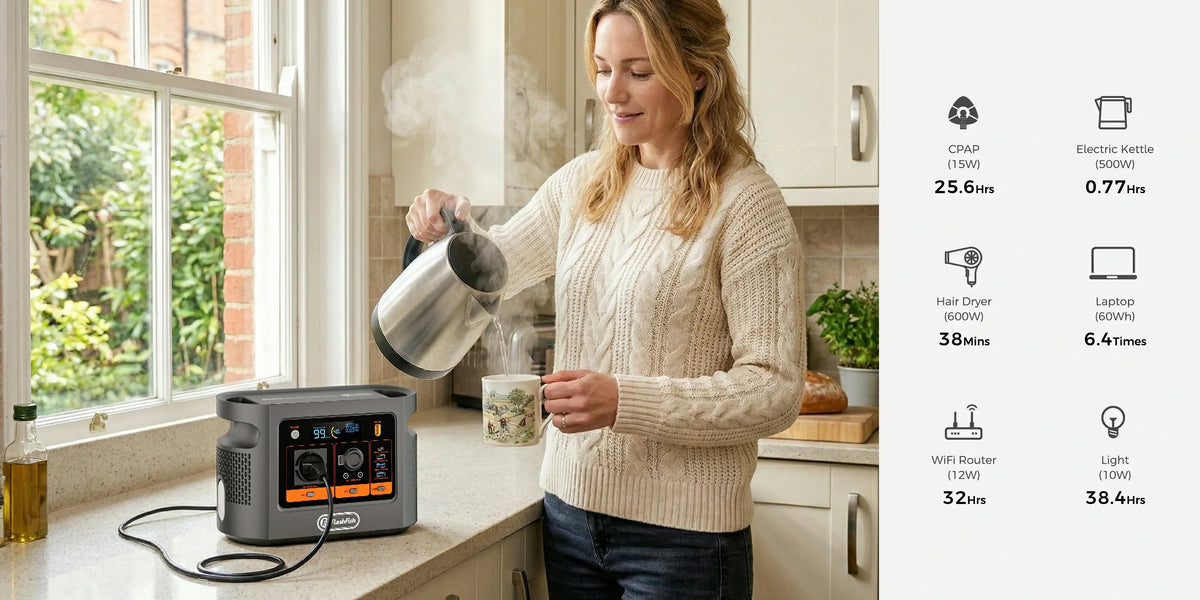
Compare published station energy and outputs without assuming a balancing method. External buyer facts can be compared now; undocumented internal features should stay blank.
Do not turn an explainer into a repair procedure
Portable power stations are integrated, protected products. Do not open the case, probe cells, attach an external balancer, bypass protection, rewire the pack or change an undocumented cutoff. These actions can expose hazardous energy and defeat the product's designed safeguards.
If the station shows repeated faults, abnormal heat, odour, swelling, impact damage or liquid exposure, stop using it as directed by its instructions and contact the manufacturer. A displayed percentage or early cutoff is not enough to diagnose a cell or prescribe balancing.
Frequently asked questions
What does battery cell balancing do?
It aims to reduce an addressable difference between cells in a series pack, commonly a state-of-charge difference. The exact method, timing and threshold are product-design facts that need manufacturer evidence.
What is the difference between passive and active balancing?
Passive balancing commonly dissipates excess charge from selected cells as heat. Active balancing transfers charge between cells or between a cell and the pack through a more complex circuit.
Does active balancing always make a power station better?
No. Method alone does not establish pack quality, usable energy, lifetime or safety. Balancing current, timing, thermal design, cell matching, protection strategy and the actual use case matter.
Can balancing repair a weak or damaged cell?
No general repair conclusion follows. Texas Instruments notes that balancing cannot correct resistance imbalance, and capacity loss, damage or protection events require manufacturer assessment rather than a user balancing procedure.
Can I manually balance a portable power station battery?
Do not open, probe, bypass or rewire a sealed station. Use documented user procedures only and contact the manufacturer when behaviour, heat, odour, swelling, damage or repeated faults raise concern.
Conclusion: balancing is one controlled function, not a quality shortcut
Cell balancing can manage a defined mismatch, but its value depends on what is mismatched and how the pack is designed. Keep product-specific claims tied to product-specific evidence. Use the Europe buying guide and mark undocumented internal features as unknown.
Sources and evidence boundaries
- Analog Devices for passive and active design concepts and weakest-cell limits.
- Texas Instruments for state-of-charge, capacity and impedance distinctions and algorithm limits.
- The FlashFish local product database and current Europe collection for bounded external product context; no internal balancing topology is inferred.
Evidence checked 3 September 2026. No pack, BMS or cell was physically inspected or tested.



Lasă un comentariu
Acest site este protejat de hCaptcha și hCaptcha. Se aplică Politica de confidențialitate și Condițiile de furnizare a serviciului.