

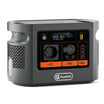
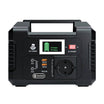

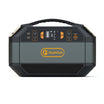
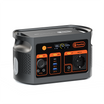






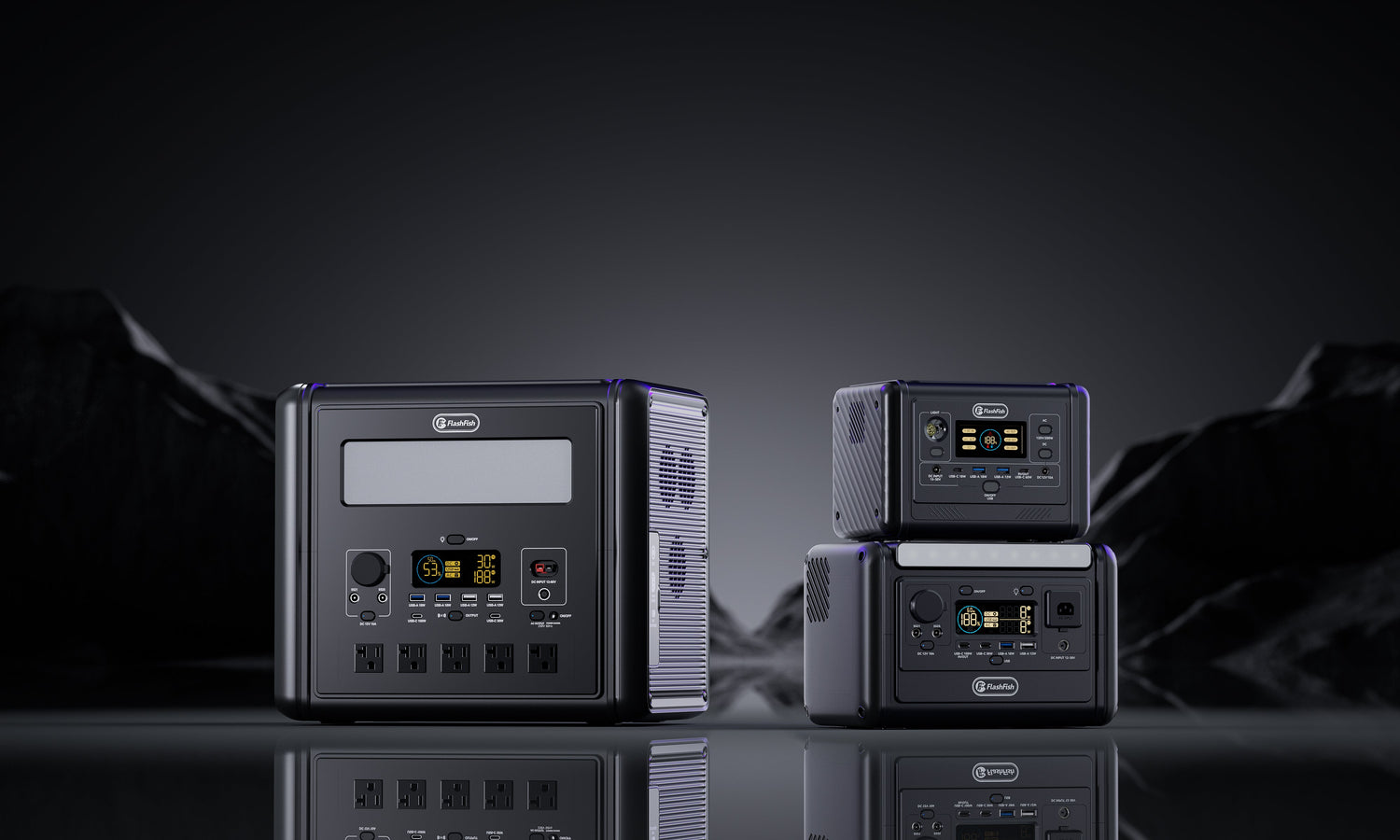
Short answer: do not put an end-of-life portable power station in household rubbish, do not open its battery pack, and do not assume it can be posted like an ordinary parcel. Stop using a unit that is damaged or behaving abnormally, record its exact model and condition, then ask the manufacturer, retailer, municipal waste authority or an approved collection scheme for the correct local handover route.
A portable power station combines a sizeable rechargeable battery with electrical equipment. That means the right route may depend on how the product is classified in your country, not simply on whether it is small enough to carry. The practical goal is a documented handover to an authorised operator while the enclosure remains intact.
First decide whether this is routine end-of-life or a safety problem
A working station that has reached the end of its useful life is different from one that is swollen, unusually hot, leaking, smoking, cracked after an impact or repeatedly showing a battery fault. Do not keep charging a suspect unit to see whether it recovers. Scottish Fire and Rescue Service advises that damaged or end-of-life lithium-ion batteries should not be used or charged and should not be placed in general waste.
| What you observe | Immediate decision | Next contact |
|---|---|---|
| Works normally, but no longer meets your needs | Switch off and plan a routine approved handover | Producer, retailer or municipal collection service |
| Visible damage, swelling, leakage, abnormal heat or odour | Stop use and charging; avoid handling beyond what safety requires | Manufacturer/retailer and local hazardous-waste or fire guidance |
| Smoke, fire, hissing or an immediate threat | Move away, warn others and follow local emergency instructions | Local emergency service |
This table is triage, not a repair diagnosis. Do not open the enclosure to inspect cells and do not attempt a home cell replacement. A seemingly discharged pack may still contain significant energy.
Why there is no single Europe-wide drop-off answer
EU Regulation 2023/1542 sets a common battery framework. Its collection provisions require separate collection and include free take-back principles for covered waste batteries. The European Commission describes the regulation as part of a more circular battery system. Those rules do not turn every shop or household battery box into an appropriate destination for an integrated portable power station.
The device may be directed through a producer-responsibility scheme, electrical-equipment collection route, specialist battery operator or municipal recycling centre. National implementation, product category and the pack's condition affect the practical instruction. An official UK consumer guide, useful here as a concrete waste-safety example rather than EU law, also warns that batteries in general waste can be damaged during processing and start fires.
- Find the exact model label and purchase record. Photograph the intact unit and label without exposing personal data.
- Ask the manufacturer's Europe support route or the retailer that supplied it whether they operate or nominate a take-back route.
- Check your municipality's official electrical-waste and battery pages. Describe the item as a complete portable power station and provide its approximate size and battery type if documented.
- If the unit is damaged, say so before visiting. A normal collection site may apply different isolation, booking or packaging rules.
- Keep the written instruction or booking confirmation with your handover record.
What to record before handover
| Record | Why it helps | Do not infer |
|---|---|---|
| Brand, exact model and serial | Lets support identify the product and documented battery | That all models use the same collection route |
| Purchase country and retailer | Points to the relevant producer or distributor scheme | That another country's scheme must accept it |
| Condition and fault history | Lets the operator plan safe acceptance | That an owner can diagnose cell damage |
| Battery chemistry and Wh, if documented | Helps the operator understand the item | That chemistry alone defines transport permission |
| Operator name, date and instructions | Creates a defensible disposal record | That a web forum or generic map pin is authorisation |
What not to do
- Do not put the station in household rubbish, kerbside recycling or an unattended general battery box.
- Do not open the case, disconnect the internal pack, puncture cells or bypass protection.
- Do not drain it by running an unsafe or unsuitable load.
- Do not leave it in a hot vehicle, exposed to rain or where children can reach it while awaiting instructions.
- Do not send it by ordinary post or courier without the carrier and authorised return party confirming the compliant method.
- Do not describe a swollen or damaged unit as normal goods merely to obtain a shipping label.
When FlashFish fits — and when it does not
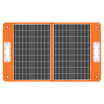
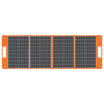
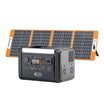
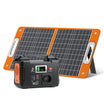
For an intact FlashFish unit, start with the exact model record and contact the seller or FlashFish support route used for the purchase. The current Europe portable power station collection can help identify present model names, while all FlashFish Europe products provides broader catalogue context. A sales page is not a disposal authorisation; ask for an explicit local handover instruction.
FlashFish may fit the process when the exact unit and purchase channel can be identified and support can direct the owner to an approved route. FlashFish content does not replace local authority advice when the unit is damaged, the owner is in a country with different collection arrangements, the seller cannot be identified, or transport is involved.
A five-minute owner checklist
- Power off the unit if it is safe to do so and disconnect loads and chargers.
- Record model, serial, condition, purchase country and retailer.
- Do not open or modify the pack.
- Ask an authorised route whether it accepts the complete power station and whether booking is required.
- State any damage before travel and transport only under the instructions received.
- Keep the handover confirmation for your records.
Frequently asked questions
Can a portable power station go in household rubbish?
No. A power station contains a rechargeable battery and electronic equipment. Use a retailer, producer, municipal collection point or other approved local route; the exact route depends on the product classification and national system.
Should I remove the battery before recycling a power station?
Not unless the exact manufacturer instructions and an authorised professional route explicitly require it. Most owners should keep the enclosure intact and must not open, puncture or dismantle the battery pack.
What if the power station is swollen, hot, leaking or damaged?
Stop using and charging it, keep people away from immediate risk, and contact the manufacturer, retailer, local waste authority or emergency service as appropriate. Do not put a damaged lithium battery in general waste or improvise transport.
Can I post an old power station back to the seller?
Do not assume ordinary parcel shipping is allowed. Large lithium batteries are regulated in transport. Ask the seller or authorised collection operator for a compliant return route and packaging instructions before moving or shipping the unit.
Does EU battery law create one identical recycling route in every country?
No. EU rules establish common responsibilities and collection principles, while practical collection points, producer schemes and instructions vary by country and sometimes municipality. Confirm the local route before travel.
Sources and evidence limits
- EUR-Lex: Regulation (EU) 2023/1542 — common EU battery responsibilities and collection provisions; local implementation still controls the handover.
- European Commission: new EU Batteries Regulation — circularity and end-of-life policy context.
- UK Government: batteries and electrical-waste recycling — a non-EU example of household-waste fire risk and collection routes.
- Scottish Fire and Rescue Service: lithium-ion batteries — damaged/end-of-life safety cautions.
This guide does not classify a specific unit, provide legal advice, authorise transport or replace local emergency, waste-operator or manufacturer instructions.



Lasă un comentariu
Acest site este protejat de hCaptcha și hCaptcha. Se aplică Politica de confidențialitate și Condițiile de furnizare a serviciului.