

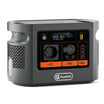
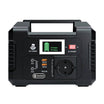

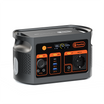






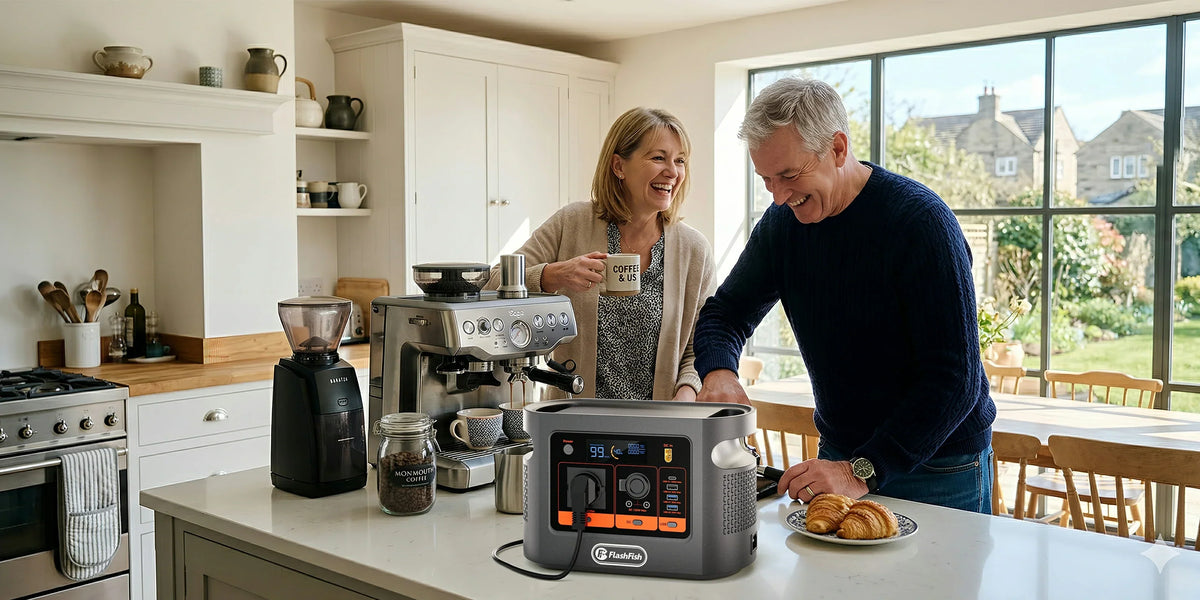
Short answer: do not fully discharge and recharge every portable power station just because the percentage looks wrong. Battery calibration is usually a model-specific gauge procedure, not a repair for lost capacity. Record the symptom, load, temperature and charge state; check the exact regional manual; perform only the manufacturer's authorised steps; then confirm whether the display behaviour changes. If no FlashFish model-specific procedure is available, contact support rather than borrowing another brand's buttons or full-cycle instructions.
Calibration changes the estimate, not the chemistry
| Term | Practical meaning | What it is not |
|---|---|---|
| State of charge | An estimate of remaining charge relative to the gauge's model of usable full-charge capacity | A direct laboratory measurement of every cell's remaining energy |
| Gauge calibration or learning | A product-specific process that may help the gauge align its estimate with observed battery behaviour | A universal zero-to-100 ritual for every portable station |
| Battery capacity | The battery's ability to store energy under defined conditions | Something a display reset can restore after degradation |
| Display percentage | A user-facing summary from the battery-management and gauge system | A warranty verdict, safety certificate or fixed-runtime promise |
Texas Instruments' current gauge documentation shows that a real engineering learning cycle depends on chemistry identification, programmed parameters, controlled charge/discharge rates, relaxation periods and logged register states. A finished consumer power station hides that engineering layer, so the correct end-user action must come from the station manufacturer.
Use CHECK before any calibration step
- C - Capture the symptom. Record percentage, input and output watts, load, temperature, time, error icons and what happened immediately before the change.
- H - Handbook for the exact model. Match the model, regional variant and document date. A generic family FAQ or another brand is not authority.
- E - Execute only authorised steps. Use the documented charger, environment and button sequence. Do not improvise a deep discharge, reset or battery opening.
- C - Confirm the outcome. Repeat the same benign load and conditions, then note whether the percentage behaviour improved, stayed the same or became worse.
- K - Keep a support record. Save photos, video, timestamps, model/serial details and the exact procedure used so support can distinguish a display issue from a protection or hardware fault.
Exactly three symptom examples
Example 1: percentage falls quickly under a heavy load, then recovers
Record the load, temperature and change before assuming the gauge is wrong. Voltage can move under load, and the estimate can respond to internal resistance and the gauge model. Remove the load safely, let the station return to normal conditions and follow the exact manual. Do not call the recovery a successful calibration.
Example 2: a new station's display seems inconsistent after its first partial charge
Jackery's current setup guide recommends a full initial charge for its products and describes a later 20-to-30-percent-to-full cycle as an optional setup step. EcoFlow's RIVER-family FAQ gives a different zero-to-100 procedure. That difference proves the action is product-specific; neither instruction authorises a full cycle on a FlashFish station.
Example 3: the percentage looks wrong after long storage or cold conditions
Move the station only within its documented temperature and storage instructions, record the starting state and use the original charger. If the exact manual does not supply a calibration process, stop and contact support. Do not heat, open or repeatedly deep-discharge the pack.
When calibration is the wrong next step
- Swelling, deformation, leakage, unusual heat, smell, smoke, crackling or physical damage.
- Water exposure, condensation or a wet connector.
- A repeated error code, protection shutdown or charger fault that the exact manual does not clear.
- A station that will not accept charge from the original charger under permitted conditions.
- A procedure copied from another model, country version, brand or forum post.
- Any step that requires opening the enclosure, bypassing protection, probing cells or modifying wiring.
These are stop-and-support conditions, not opportunities to force a zero-percent cycle.
When a FlashFish station fits the CHECK process - and when it does not
| The CHECK process fits when | It does not authorise action when |
|---|---|
| The exact model and regional manual are identified | The only instruction belongs to Jackery, EcoFlow or another FlashFish model |
| The station is undamaged, dry and inside documented conditions | There is swelling, heat, moisture, damage or a repeated protection fault |
| The symptom can be reproduced with a benign, documented load | The test requires deep discharge, enclosure access or an unsupported reset |
| FlashFish support confirms the exact procedure and expected result | The user expects calibration to restore capacity, cycle life or battery health |
Request the exact FlashFish model's regional calibration guidance. Until it is supplied, the product database does not support a universal FlashFish calibration cycle.
Frequently asked questions
Does calibration restore lost battery capacity?
No. Calibration can address how a gauge estimates or displays state of charge in a supported procedure; it does not recreate degraded battery capacity or repair damaged cells.
Should I always discharge a power station to zero to calibrate it?
No. Full discharge is not a universal instruction. Use only the procedure for the exact model and regional manual or support case.
Why can the displayed percentage change under load?
A gauge estimate can respond to load, voltage, temperature, internal resistance and its capacity model. A change is a symptom to record, not proof that calibration or repair is required.
Can I use another brand's reset buttons on a FlashFish station?
No. Button combinations and calibration methods are product-specific. An unsupported reset can change settings or create a new fault without solving the original issue.
When should I stop troubleshooting and contact support?
Stop for swelling, unusual heat, smell, leakage, smoke, water exposure, physical damage, repeated protection faults or a model procedure you cannot verify.
Sources and evidence limits
- Texas Instruments BQ27Z855 evaluation-module guide - chemistry, configuration and learning-cycle dependence.
- Texas Instruments gas-gauge application book - state-of-charge and learning-cycle concepts.
- Jackery first-use setup guide - one brand's own initial-charge and optional follow-up cycle.
- EcoFlow RIVER-series FAQ - a different product-family calibration action.
- FlashFish Europe Support Center - the correct route for an exact FlashFish procedure.
No FlashFish station was calibrated, opened, deeply discharged, repaired or tested. No capacity recovery, accuracy improvement or battery-health result is claimed.
Conclusion
A percentage problem is a troubleshooting symptom, not proof that the battery needs a full cycle. CHECK the evidence, exact manual and model-specific process first. If FlashFish documentation does not provide the procedure, contact FlashFish Europe support and preserve the record instead of borrowing another brand's calibration steps.




Lasă un comentariu
Acest site este protejat de hCaptcha și hCaptcha. Se aplică Politica de confidențialitate și Condițiile de furnizare a serviciului.