

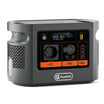
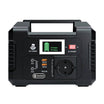

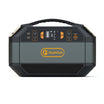
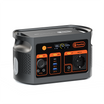


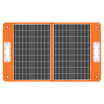
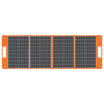


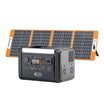

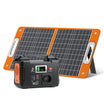


MPPT, or Maximum Power Point Tracking, is a solar-charge-control method that adjusts a panel's operating voltage and current to seek a productive point on its changing power curve. In a portable power station, MPPT can improve how available panel power is used within the station's limits. It cannot create sunlight, override voltage or current limits, fix the wrong connector or establish a recharge time.
The TRACK checklist
| TRACK check | Evidence to collect | Do not assume |
|---|---|---|
| Tracking | What the manufacturer says the controller tracks and under which conditions | All products use the same algorithm or efficiency |
| Ratings | Station input-voltage window, maximum current and maximum input power | One watt ceiling replaces voltage and current checks |
| Array | Panel Voc, Vmp, Isc, Imp, power and permitted series/parallel configuration | A nominal 12V or 100W name proves fit |
| Connectors and conditions | Connector family, dimensions, polarity, cable rating, temperature, shade and orientation | A plug that fits is electrically correct |
| Keep measured evidence | Actual harvested watt-hours over a useful window and conditions | Nameplate watts divided into battery Wh is a promised charge time |
How MPPT works in plain language
A photovoltaic panel does not produce one fixed voltage and current. Its available operating points form a changing curve, and the point that produces the most power moves with irradiance, temperature, shade and the connected system. An MPPT controller samples or estimates that curve and adjusts the electrical operating point.
Victron Energy's technical manual describes an MPPT charger that can take a higher nominal PV voltage and convert it for a lower-voltage battery while enforcing the controller's maximum PV-voltage and charge-current ratings. The general lesson is portable: tracking and conversion happen inside a rated envelope. The exact algorithm, limits and behaviour remain model-specific.
What MPPT can and cannot do
| MPPT can | MPPT cannot |
|---|---|
| Adjust the panel operating point as available voltage and current change | Create irradiance during cloud, shade or night |
| Convert within the controller's documented design envelope | Make excessive open-circuit voltage or current safe |
| Respond to a changing power curve | Repair a damaged cable, reversed polarity or wrong connector |
| Help use available panel power | Establish nameplate watts, controller efficiency or recharge time |
| Form one part of a solar charging system | Replace panel, cable, station and environmental compatibility evidence |
European Commission JRC PVGIS exists because solar radiation and photovoltaic performance vary by location, season, hour and weather. That variability remains outside the controller. A sophisticated tracker still receives only the power the array and conditions make available.
Three everyday examples
- Compatible single panel in strong sun: panel voltage, current, power, connector and polarity all fit the station. MPPT can seek a productive operating point, but the observed watts may still remain below the panel nameplate because test conditions are not reproduced.
- Passing clouds and partial shade: the available curve moves and harvested energy falls or fluctuates. MPPT may respond, but it cannot remove the shade. Reposition only within the panel and site instructions and measure a useful time window.
- Unknown multi-panel array: individual panel names look compatible, but series or parallel voltage, current, connector and polarity evidence is missing. Stop before connection; the presence of MPPT does not turn an undocumented array into a safe recipe.
Two bounded FlashFish input examples
| Station | Documented station-side solar/DC input | Still required before connection |
|---|---|---|
| FlashFish E106B | 12-30V, 10A, 200W max | Exact panel Voc, Vmp, Isc, Imp, connector, polarity, cable and permitted configuration |
| FlashFish T1200S | 12-50V, 10A, 400W max | The same complete panel and array evidence; do not infer a two-panel recipe from the higher watt limit |
These rows show why wattage alone is insufficient. A panel or array can sit below the watt ceiling while violating a voltage or current limit, and a connector can fit mechanically while polarity or wiring remains wrong. The local T1200S manual is from another AC region, so this article uses only the solar-input fields corroborated by the current Europe page and transfers no AC voltage or frequency.
Use the E106B input checklist to practise the full voltage-current-watts screen. If any electrical or connector field is missing, keep the result as unknown and ask the manufacturer or a qualified reviewer.
Browse current FlashFish portable solar panels after completing TRACK; a collection view is only a shortlist, so verify the exact panel record before connection.
Why nameplate watts do not equal harvested watt-hours
Panel watts are a power rating under defined test conditions. Watt-hours are energy accumulated over time. A 100W panel does not automatically deliver 100Wh each hour, because irradiance, temperature, orientation, shade, cable loss, controller behaviour and station state all change the result.
For planning, record harvested energy = the watt-hours actually accepted by the station over a defined time window and condition set. Use PVGIS for location and season context, then validate the portable setup safely. Do not turn a long-term solar estimate into a campsite promise.
Common MPPT mistakes
- Reading MPPT as a promise of the panel's nameplate power.
- Checking only watts and ignoring open-circuit voltage and current limits.
- Assuming a connector that physically fits has the correct polarity and rating.
- Combining panels in series or parallel without a manufacturer-approved array path.
- Dividing battery watt-hours by panel watts and calling the result a fixed recharge time.
When the MPPT badge helps—and when it does not close the decision
| It helps when | It does not close the decision when |
|---|---|
| The controller method and station limits are documented | Voc, current, connector or polarity evidence is missing |
| A compatible array can use the input window | The planned array exceeds a limit or lacks an approved configuration |
| Field variability is accepted and measured | A fixed yield or recharge promise is required |
| The complete cable path is verified | An adapter or extension is guessed from appearance |
| The buyer compares full systems | MPPT is treated as a standalone quality or safety ranking |
Safety and evidence boundary
Do not short-circuit a panel to create a current reading, probe exposed contacts, reverse polarity, bypass protection or improvise a multi-panel array unless you are qualified and following the exact equipment instructions. Stop with damaged, wet, hot, discoloured or undocumented cables and connectors.
This article explains decision fields; it is not a wiring diagram or installation approval. The safe next step is to match the exact panel datasheet and cable path to the exact station's current regional input instructions.
Frequently asked questions
What does MPPT mean in a portable power station?
Maximum Power Point Tracking is a solar-charge-control method that adjusts the panel operating point to seek useful power as voltage and current conditions change. It works only within the controller and station's documented electrical limits.
Does MPPT ensure the panel's rated watts?
No. Nameplate watts depend on defined test conditions. Real output changes with irradiance, shade, panel temperature, angle, dirt, cable loss and system limits. MPPT can optimise an available curve; it cannot create missing sunlight.
Will any solar panel work with an MPPT power station?
No. Verify the exact panel's open-circuit voltage, operating voltage, current and power against the station's limits, then confirm connector, polarity, cable and permitted array configuration. MPPT does not make an incompatible panel safe.
Is a higher MPPT input wattage always better?
Only when a compatible array, usable conditions and the buyer's energy plan can use it. Voltage and current limits, connectors, array rules, carry area, shade and cost can make a smaller documented input the more appropriate system.
Can I estimate solar recharge time from panel watts alone?
Not responsibly. Use measured or location-aware harvested energy, station input limits, controller and cable losses, battery state, temperature and reserve. A panel's nameplate rating divided into battery watt-hours is only a theoretical shortcut.
Conclusion: MPPT is one part of a valid solar system
MPPT can seek a productive panel operating point, but it cannot replace electrical compatibility, connectors, safe configuration or realistic weather evidence. Use TRACK before comparing solar-ready stations, then use the Europe buying guide before comparing complete solar-ready station kits.
Sources and further reading
- Victron Energy BlueSolar MPPT technical manual for controller operation and rating logic.
- European Commission JRC PVGIS for solar-resource and photovoltaic-performance variability.
- FlashFish Europe E106B page and local database for the 12-30V, 10A, 200W input example.
- FlashFish Europe T1200S page and local database for the 12-50V, 10A, 400W input example.
Evidence checked 10 September 2026. No controller or panel was opened, wired, probed or field-tested for this article, and no compatibility, efficiency, yield or recharge-time assurance is made.





Lasă un comentariu
Acest site este protejat de hCaptcha și hCaptcha. Se aplică Politica de confidențialitate și Condițiile de furnizare a serviciului.