








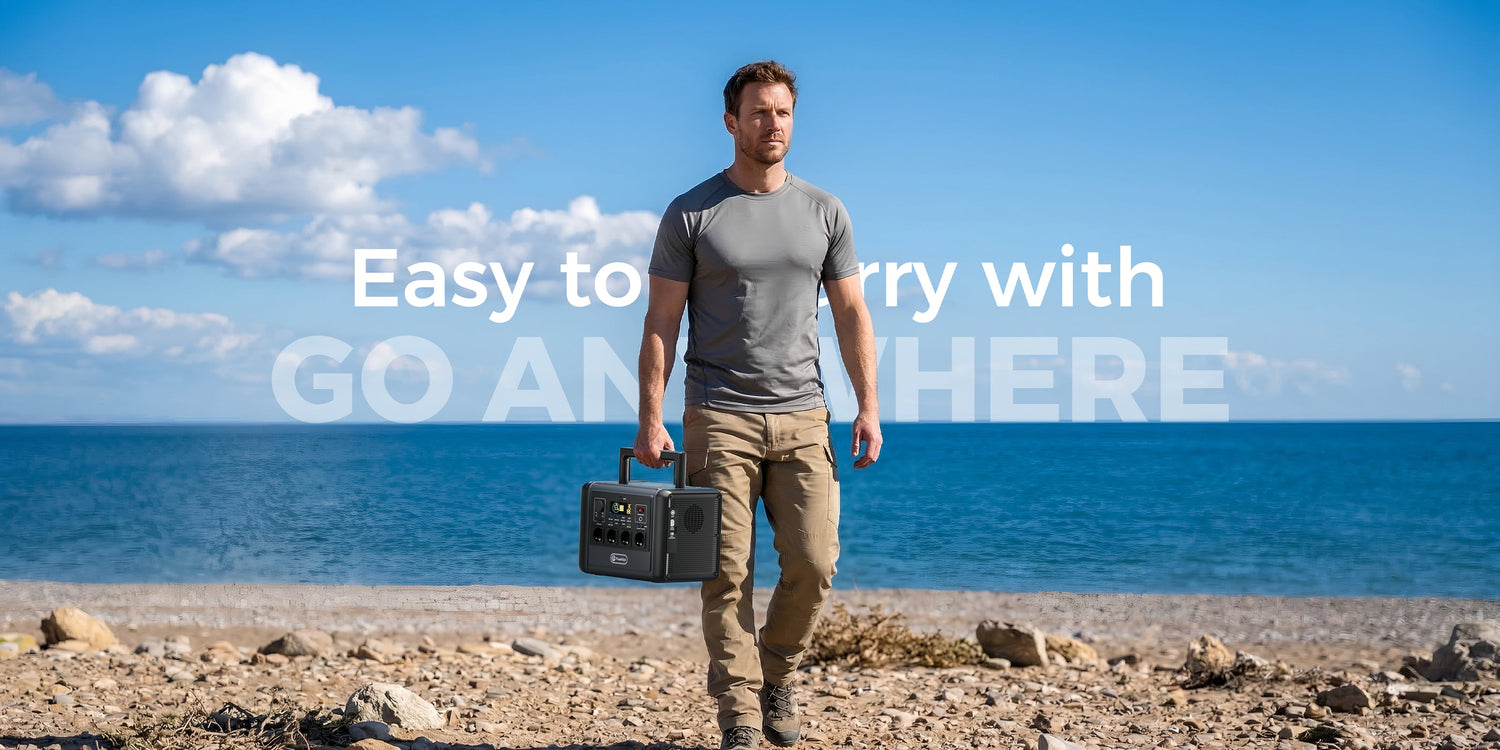
Can the FlashFish T1200S Run a Portable Ice Maker at Camp?
Short answer: a documented 120W European portable ice maker sits well below the T1200S 1200W continuous AC rating, but that is only a label screen. A useful campsite decision also needs evidence for compressor starting, total load, energy over repeated cycles, dry stable placement, ventilation and whether the exact ice maker is permitted in the proposed location.
Use the ICE screen: Identify the exact regional appliance, Check continuous and starting demand, and test Energy plus environment separately. This guide is a pre-use decision method, not a report of an ice-making test.
Start with the ICE answer card
| Gate | Evidence to collect | Pass to the next gate when | Stop condition |
|---|---|---|---|
| Identify | Exact model, country version, volts, hertz, input watts and manual | Appliance and T1200S regional evidence agree | Missing or conflicting label, plug-only workaround or manual excludes the location |
| Check load | Running watts, documented start demand and every simultaneous load | Total continuous load has headroom and start evidence is compatible | Start behaviour is decisive but unknown, or combined load reaches the station limit |
| Energy and environment | Measured Wh, reserve, flat dry surface, 10cm airflow for the example appliance, potable water and supervision | The measured session fits and every location rule can be met | Outdoor/indoor conflict, dampness, blocked vents, unstable placement or unverified all-day energy |
What the T1200S evidence establishes
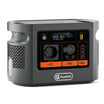
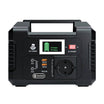
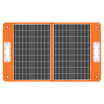
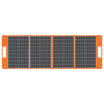
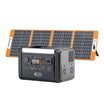
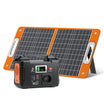
The current Europe page for the FlashFish T1200S states 230V/50Hz pure-sine AC, 1200W continuous output, a 2400W peak figure and 768Wh nominal capacity. The current Shopify snapshot lists the model ACTIVE with a live Europe URL and available inventory.
That creates an output and energy envelope. It does not establish an appliance start profile, a fixed runtime, safe water handling or permission to use a domestic appliance outdoors. The local manual-derived T1200S record is from another 120V/60Hz region, so use the delivered EU label and exact regional instructions for the final check.
One 120W ice maker passes only the first screen
CASO documents its IceChef Compact at 220-240V, 50Hz and 120W. The current manual describes a compressor appliance, requires a firm flat horizontal surface, unobstructed airflow with 10cm clearance and potable water. Most importantly for a campsite plan, it limits intended use to enclosed spaces and says not to use the appliance outdoors or expose it to rain.
The 120W label is comfortably below 1200W. It does not provide the compressor's start-current waveform, prove that the T1200S peak specification uses a matching duration, or override the indoor-only condition. If startup is material and the appliance maker does not publish it, obtain suitable evidence rather than multiplying the running watts by a generic surge factor.
Three examples show where the decision changes
| Example | What is known | Decision |
|---|---|---|
| CASO IceChef Compact label only | 120W, 220-240V, 50Hz; below T1200S continuous output | Passes only the regional running-watt screen |
| Ice maker plus a 900W coffee appliance | 1,020W from labels before other loads | Little headroom remains; startup and all other loads become decisive |
| Enclosed-space ice maker on an outdoor table | Electrical watts may fit, but the manual excludes outdoor areas and rain | Do not proceed in that location; a larger station would not solve the conflict |
Measure energy instead of promising ice-making hours
Portable ice makers cycle. Their energy use can change with ambient temperature, water temperature, ventilation, ice removal and compressor behaviour. Multiplying 120W by elapsed time is a conservative arithmetic check only; it is not a measured duty cycle. Record accumulated watt-hours over a representative session with the exact appliance, then add reserve for conversion losses, temperature and other loads.
Do not translate a manufacturer's kilograms-per-day ice claim into battery runtime. Ice output is an appliance performance statement under its conditions, while watt-hours are an electrical energy measurement. They answer different questions.
Water and placement are independent gates
Electrical Safety First stresses keeping electrical equipment and connections dry around gardens and water. Camping guidance likewise warns that domestic appliances may not be designed for damp outdoor conditions. A portable station does not make an indoor appliance weather-resistant and does not establish the protection behaviour of a campsite electrical installation.
Keep the station away from fill water, drain water, rain, condensation and wet ground. Do not cover it as a weather workaround because ventilation must remain open. Keep the appliance level, its air outlet clear and cables out of walkways. Stop for leakage, damage, hot plugs, unusual smell or sound, arcing or repeated trips.
When the T1200S may fit
- The exact European ice-maker label and manual match 230V/50Hz use.
- Running load, documented start demand and every simultaneous device fit with headroom.
- A representative measured session fits the energy budget with reserve.
- The manufacturer permits the intended dry, stable, ventilated and supervised location.
When it does not fit
- The plan uses a 120W category example instead of the reader's exact label.
- Compressor starting is decisive but no compatible evidence is available.
- The appliance is indoor-only and the proposed tent, awning or outdoor location conflicts with its instructions.
- Water, weather, unstable placement, blocked airflow or site rules cannot be controlled.
Check the T1200S specification against your completed ICE card.
FAQ
Can a 120W portable ice maker run from the T1200S?
It passes the first running-watt screen, not the full decision. Verify the exact model, regional label, compressor start evidence, total load, measured energy and location.
Does the 2400W peak figure prove compressor compatibility?
No. The station peak and appliance start event must be defined on compatible time bases. Do not substitute a generic multiplier for manufacturer or suitable measured evidence.
How long will 768Wh run an ice maker?
The sources do not establish a fixed runtime. Measure accumulated energy for the exact appliance under a representative session and keep reserve.
Can I use an indoor portable ice maker inside a tent?
Do not assume so. The documented CASO example is intended for enclosed spaces and excludes outdoor areas and rain. Follow the exact appliance instructions, campsite rules and qualified local guidance.
What should stop the setup?
Stop for conflicting labels, unknown decisive startup demand, dampness, unstable placement, blocked ventilation, damaged or hot connections, repeated trips or a prohibited location.
Decision
The T1200S has ample continuous-output headroom for the documented 120W example, but a defensible camp answer requires all three ICE gates. If the appliance manual excludes the location, a larger station is not the remedy. If only the measured load or energy class is wrong, compare current FlashFish stations after measuring your exact campsite load.
Sources and evidence boundaries
- FlashFish Europe T1200S page — current regional station specifications and availability context.
- CASO IceChef Compact product page and current operating manual — one exact 120W appliance and its enclosed-space, ventilation and placement rules.
- Electrical Safety First garden guidance — water and outdoor electrical boundaries.
- Camping and Caravanning Club guidance — damp-condition and domestic-appliance limitations at camp.



Lasă un comentariu
Acest site este protejat de hCaptcha și hCaptcha. Se aplică Politica de confidențialitate și Condițiile de furnizare a serviciului.