

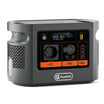
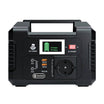

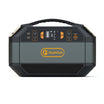
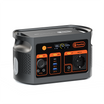




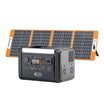

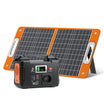

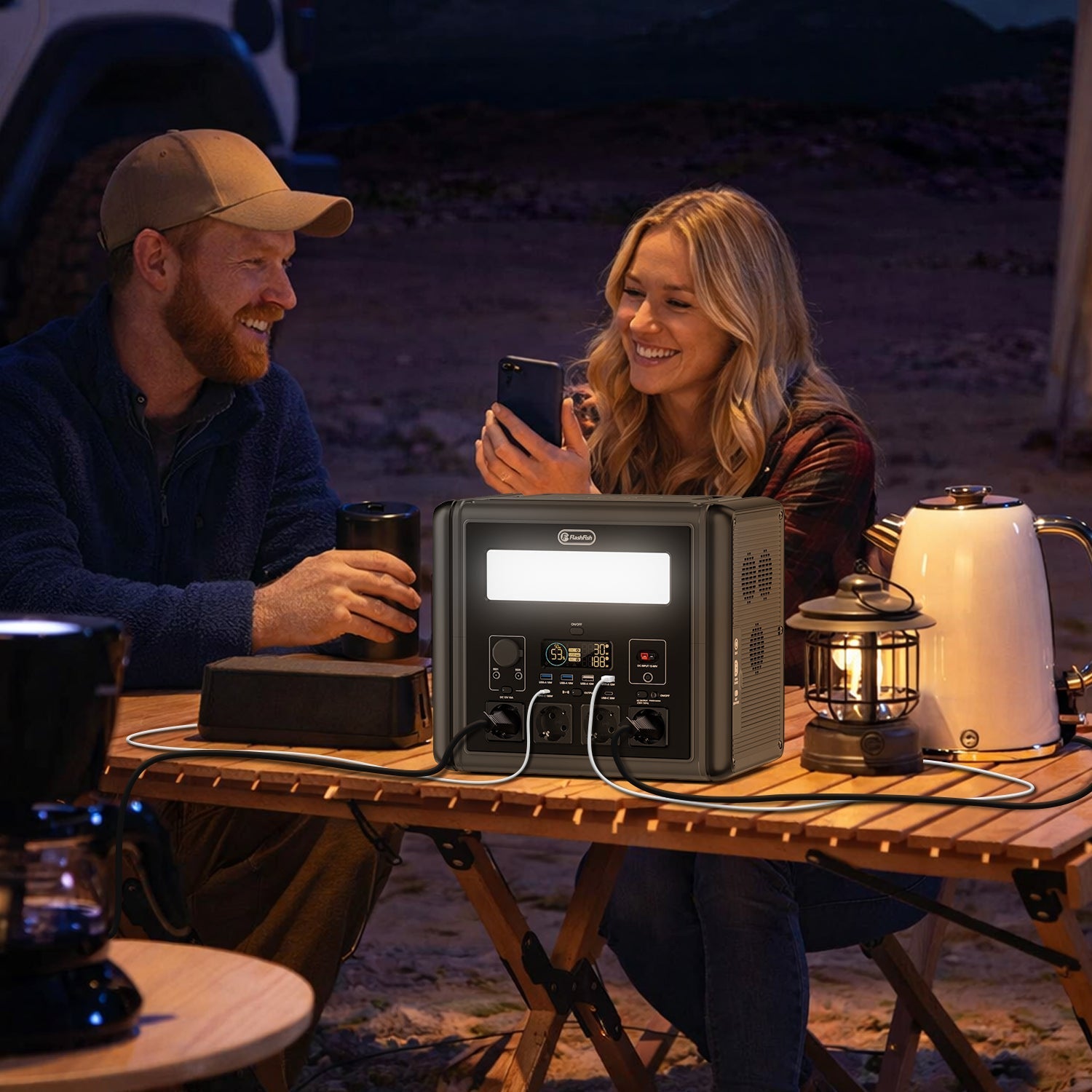
Short answer: T2000 can be evaluated for a fridge or freezer whose running and startup demand fit its 2,000W continuous and 4,000W peak ratings. Do not plan from watts alone. Measure temperature, keep doors closed, prioritise food safety and treat any operating-time calculation as an estimate rather than a fixed result.
Start with food safety, not the battery
The UK Food Standards Agency advises keeping fridge and freezer doors closed as much as possible during a power cut. It states that a fridge should stay cold for up to four hours and a full freezer may keep food frozen for up to 48 hours, or 24 hours when half full, while clearly identifying these as estimates affected by appliance and room conditions.
The same guidance recommends fridges at 5°C or below in normal use and says food can remain stored below 8°C during an outage. A fridge thermometer provides better evidence than guessing from how cold the door feels.
T2000 facts relevant to the decision
| Specification | Database value | Planning role |
|---|---|---|
| Capacity | 1,536Wh | Starting point for an energy estimate after losses |
| Continuous AC output | 2,000W | Compare with normal combined running watts |
| Peak output | 4,000W | Potential startup headroom, not normal operating power |
| Waveform | Pure sine | Relevant for compressor and electronic-control compatibility |
| Weight | 19.2kg | Plan a stable, ventilated location before the outage |
Appliance information to collect
- Find the fridge or freezer input label and manual.
- Record running watts and any documented startup demand.
- Note whether one appliance or both will be connected.
- Use a plug-in energy meter during normal operation if the appliance maker permits it.
- Record room temperature, fridge temperature and freezer condition.
- Inspect every plug, cable and extension before an outage.
Why an exact operating time is not responsible
A compressor cycles on and off. Its duty cycle changes with ambient temperature, thermostat setting, door opening, food load, insulation and appliance age. Startup demand also differs by model. Battery conversion and standby losses further reduce usable AC energy.
For planning only, estimate average appliance watts over time and calculate 1,536Wh × a conservative loss factor ÷ measured average watts. Recalculate if a second load is added. Temperature monitoring remains the decision tool for food, even while the appliance is powered.
Power-cut action checklist
| Stage | Action | Reason |
|---|---|---|
| Before | Cool appliances normally, freeze water containers where appropriate, test thermometer and document loads | Creates thermal reserve and known inputs |
| Outage starts | Keep doors closed and confirm the wider electrical situation | Preserves cold air and avoids unnecessary load |
| Connect T2000 | Use a dry, ventilated location and approved connection path | Protects the station and cables |
| During use | Monitor appliance behaviour, station load and internal temperature | Detects changing conditions |
| Energy becomes limited | Prioritise the appliance with the highest food-safety value | Avoids spreading limited energy across low-priority loads |
Where T2000 fits and where it does not
Good fit: a measured fridge or freezer load within the output ratings, a stable place for the 19.2kg station, sound cables and a temperature-based food plan.
Not a good fit: unknown startup demand, damaged equipment, wet placement, improvised connection to household wiring, or a plan that depends on one exact number of hours.
Electrical precautions
- Do not daisy-chain extension leads.
- Keep every cable within its marked rating.
- Fully unwind cable reels when required for their rated current.
- Stop if plugs or cables show heat, smell, scorching or damage.
- Do not feed a portable station into a building socket or fixed circuit.
Common mistakes
- Using one online fridge wattage instead of the actual appliance label.
- Ignoring compressor startup demand.
- Opening the door repeatedly to check food.
- Powering non-essential loads before temperature-sensitive food.
- Using a duration estimate instead of a thermometer and food-safety guidance.
Frequently asked questions
Can T2000 run every household fridge?
No. Check the specific appliance's running input, startup demand, waveform requirements and condition.
How long will T2000 run my freezer?
There is no universal figure. Measure the appliance's average energy use and account for duty cycle, startup, temperature and conversion losses.
Should I power the fridge immediately?
Keep doors closed first and assess the outage. Use a thermometer and prioritise according to current food-safety guidance and available energy.
Can I connect both a fridge and freezer?
Only after adding their simultaneous running watts and checking startup overlap. Energy will also be shared between them.
Does powering the appliance make all food safe?
No. Food safety depends on its temperature history and condition. Follow the relevant food authority's advice.
Sources and evidence notes
- FlashFish product-source bundle, accessed 4 July 2026, for T2000 specifications.
- UK Food Standards Agency: Food safety in a power cut, accessed 4 July 2026, for cold-storage and temperature guidance.
- Electrical Safety First: extension leads and cable reels, accessed 4 July 2026, for connection precautions.





Lasă un comentariu
Acest site este protejat de hCaptcha și hCaptcha. Se aplică Politica de confidențialitate și Condițiile de furnizare a serviciului.