

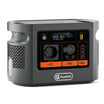
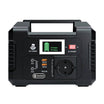

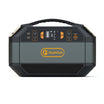
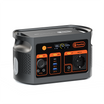


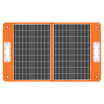
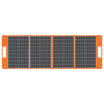


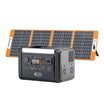

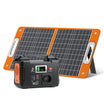

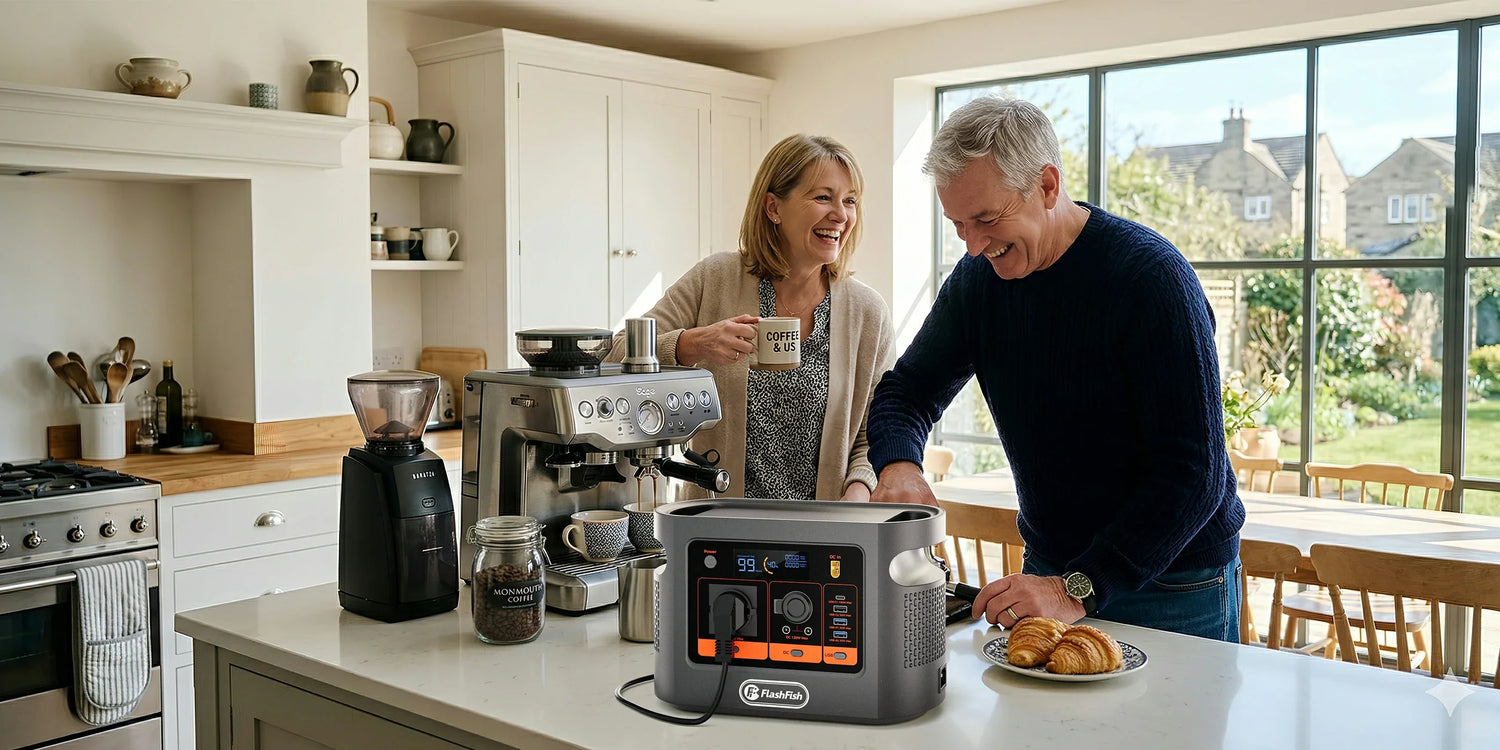
Disclosure: FlashFish publishes this comparison. It uses current manufacturer specifications and local product records, not a hands-on side-by-side test. The Anker product here is the AC-equipped A1722 C300, not C300 DC.
Quick comparison: documented rows only
| Decision row | FlashFish E106B | Anker SOLIX C300 AC | What it changes |
|---|---|---|---|
| Rated energy | 384Wh | 288Wh | E106B starts with 96Wh more catalogue energy; usable output is not tested here. |
| Continuous AC | 600W pure sine | 300W, 600W surge listed | E106B accepts a higher running-AC class on paper; device start and region still matter. |
| Highest documented USB-C | 100W output | 140W bidirectional | C300 AC has the stronger single USB-C interface row. |
| Solar/DC input | 12-30V, 10A, 200W max | 100W solar max | E106B has the larger documented solar-input ceiling; connector and voltage fit remain mandatory. |
| AC input | 250W max | 330W max | Anker has the higher documented wall-input ceiling; no recharge test is inferred. |
| Listed mass | 5.2kg | 4.1kg | C300 AC is 1.1kg lighter before cables and accessories. |
| Output layout | One AC, two USB-C, two USB-A, two DC5521 and one car output | Seven outputs documented on the current official comparison | Count the exact interfaces your kit needs; totals alone are not enough. |
| App and continuity evidence | No app or transfer-time value used from the verified local record | App and less-than-10ms UPS listed | Anker has the stronger documented platform row; neither claim is independently tested here. |
Battery chemistry, cycle life, warranty, price, noise and recharge time are deliberately absent. The E106B database chemistry field is blank even though the current page uses LiFePO4 wording, and evidence asymmetry is not a reason to fill the gap.
Use the WEEKEND card
| Letter | Question | Decision effect |
|---|---|---|
| W — Watts | What runs together, and what has a motor or start event? | Separates the 300W and 600W continuous AC classes. |
| E — Energy | How many load-side Wh does the measured plan require? | Tests whether 288Wh or 384Wh is the defensible starting class. |
| E — Exact interfaces | AC, 100W or 140W USB-C, USB-A, car output and shared limits? | Prevents an adapter-heavy or impossible connection plan. |
| K — Kit carry | Station, cables, adapters and panel total mass and volume? | Turns 4.1kg versus 5.2kg into a complete-kit decision. |
| E — Evidence and features | Which app, UPS, input and regional claims are actually documented? | Rewards verifiable features, not brand familiarity. |
| N — Non-fit | Which device, environment or continuity need makes either option unsuitable? | Stops the comparison before a risky recommendation. |
| D — Decide | Which two rows matter most for this trip? | Produces a use-case choice instead of one overall winner. |
Map three weekend device sets
1. USB-first work kit
A laptop whose adapter requests up to 140W can make C300 AC's bidirectional 140W USB-C row decisive, provided the laptop supports that profile. E106B's 100W USB-C remains suitable only when the actual laptop accepts that level or lower. Do not select from the charger headline without checking the computer.
2. Mixed lights, cameras and small electronics
When the list is mostly USB and low-watt AC devices, both output classes may pass. C300 AC then wins carry and app evidence; E106B offers the larger rated-energy class. Build the Wh sheet before deciding whether the extra 96Wh justifies the additional 1.1kg.
3. A 300-600W running AC device
A device above 300W continuous moves beyond C300 AC's documented running class. E106B may remain a candidate up to 600W, but an exact match leaves no sensible headroom and motor or heating loads still need start, duty, temperature and manual review. The 600W headline is not blanket compatibility.
Where each product has the clearer fit
E106B has the clearer fit when
- The declared plan needs more than 300W continuous AC but remains comfortably below 600W.
- The energy worksheet supports the 384Wh class and the extra mass is acceptable.
- A verified panel and cable can use the larger 200W solar/DC input envelope.
- The buyer does not depend on an app or documented UPS transfer value.
C300 AC has the clearer fit when
- A lighter 4.1kg station materially improves the complete weekend kit.
- A compatible laptop or accessory benefits from the 140W bidirectional USB-C port.
- The measured AC list stays within 300W continuous with appropriate start margin.
- Current app control or the documented UPS row matters and manufacturer evidence is sufficient for the intended non-critical use.
When FlashFish fits—and when it does not
When E106B may fit
- The exact regional device list passes watts, start, ports, energy and environment gates.
- The larger rated-energy and continuous-AC rows solve a real need rather than an imagined future load.
- The buyer accepts 5.2kg plus the full cable or panel kit.
When E106B does not fit
- The trip depends on fixed runtime, weather resistance, medical continuity or unattended critical backup.
- The key requirement is app control, a documented transfer time or USB-C above 100W.
- A device sits at 600W or has unknown start behaviour and no margin.
Next step: Compare E106B against your completed WEEKEND device card. If C300 AC wins the rows you actually need, that is the more honest choice.
FAQ
Is FlashFish E106B more powerful than Anker SOLIX C300 AC?
On current documented continuous AC output, E106B is rated at 600W and C300 AC at 300W. That does not make E106B universally better: the exact device, startup behaviour, ports, carry burden, input method and platform features still decide the fit.
Which has more rated battery energy?
E106B lists 384Wh and C300 AC lists 288Wh. Rated Wh is a catalogue comparison, not measured usable AC energy or a runtime promise.
Which is better for a USB-C laptop?
C300 AC documents a 140W bidirectional USB-C port, while E106B documents a 100W primary USB-C output. A laptop that genuinely requests more than 100W may favour the Anker interface; many laptops will not use the full headline, so check the charger and device specifications.
Which is easier to carry for a weekend?
Anker's current official comparison data lists C300 AC at 4.1kg, while the FlashFish record lists E106B at 5.2kg. Carry the complete kit in the decision: cables, adapters and any panel can matter as much as the station difference.
Is E106B a good Anker C300 AC alternative?
It can be when the buyer values the larger rated-energy and continuous-AC class and accepts the higher mass and thinner app or continuity evidence. C300 AC may fit better when lighter carrying, 140W USB-C, app control or documented UPS behaviour matters more.
Sources and evidence notes
- FlashFish Europe E106B page and local product database — current path and bounded E106B rows; chemistry remains unresolved in the database.
- Anker Germany C300 A1722 page — current official C300 AC specifications and platform evidence.
- Anker Europe C300 family overview — C300 AC versus C300 DC model boundary.
- Electrical Safety First appliance ratings — exact-label discipline.
Editorial viewpoint: an alternative is credible only when it concedes the rows the competitor wins. WEEKEND treats higher watts, lighter carrying, stronger USB-C and app evidence as different advantages—not ingredients for a manufactured overall score.
See the wider range: Review current FlashFish compact and larger power station classes after deciding whether energy, output, ports or carrying is the binding constraint.
Evidence checked . Human review is required for exact EU models, competitor recheck, E106B chemistry resolution, author/reviewer credentials, links, metadata, image crop and rendered FAQ/schema parity before publication.



Lasă un comentariu
Acest site este protejat de hCaptcha și hCaptcha. Se aplică Politica de confidențialitate și Condițiile de furnizare a serviciului.