

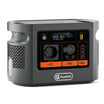
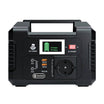

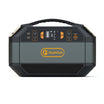
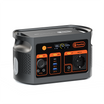




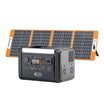

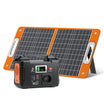

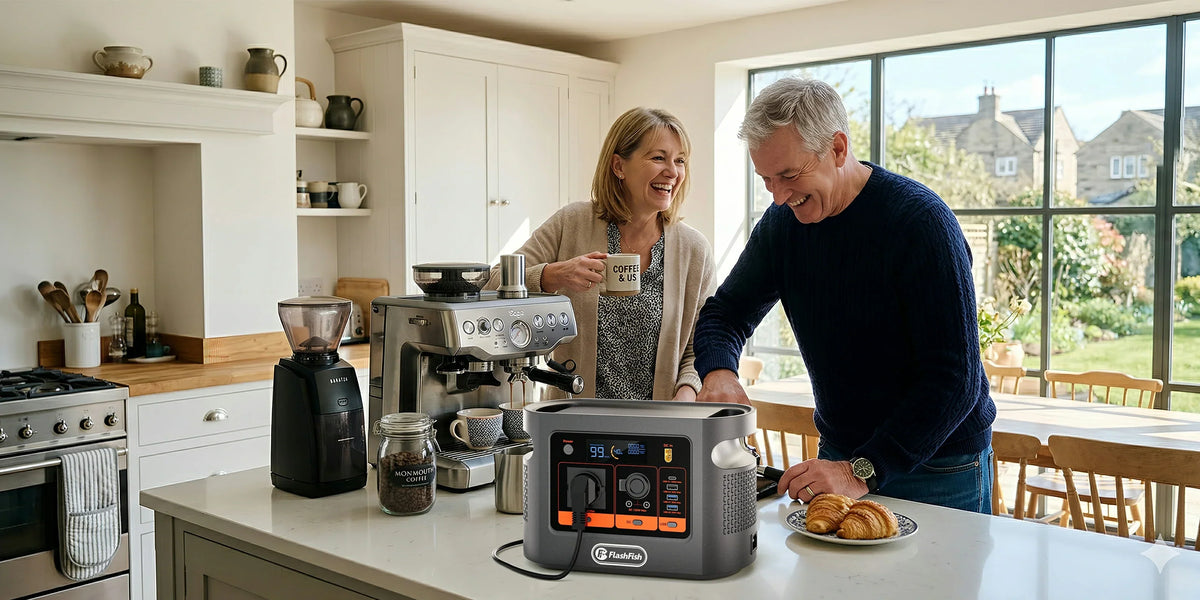
Short answer: E106B is the lighter published option for a modest, known laptop-and-camera kit; DJI Power 500 has more nominal energy and more high-power ports. E106B lists 384Wh, about 5.2kg, one 600W shared AC outlet, one 100W USB-C and one 30W USB-C. DJI lists 512Wh, about 7.3kg, two AC outlets and two 100W USB-C ports. Decide from your exact input paths and carry distance, then measure the work session.
Like-for-like specification screen
| Decision field | FlashFish E106B EU | DJI Power 500 regional DYM500H |
|---|---|---|
| Nominal battery energy | 384Wh | 512Wh |
| Listed mass | about 5.2kg | about 7.3kg |
| AC outlets | One; 600W shared maximum | Two; manual states 800W rated and up to 1000W maximum continuous above 20% battery |
| USB-C outputs | One up to 100W; one up to 30W | Two, each up to 100W with suitable PD device |
| Chemistry evidence | Not provided in authoritative local record | DJI states LFP |
| Evidence status | Manual-derived FlashFish record plus EU listing | DJI specification page and current manual; no shared field test |
The 128Wh energy advantage for DJI and the 2.1kg listed mass advantage for E106B are simple differences between manufacturer numbers. Neither describes delivered AC energy, charging losses or time at a job site. DJI’s manual distinguishes 800W rated AC from a conditional 1000W maximum continuous output; a buyer should keep that footnote next to the comparison, not erase it.
The WORK BAG decision method
- W — Write the full kit list: laptop, camera batteries, monitor, light, network device and every original adapter.
- O — Order the loads by required path: AC, USB-C PD or another supported output. Two laptops needing around 100W USB-C are a different problem from one laptop plus a phone.
- R — Rate simultaneous and start-up demand from labels and manuals, including adapters and a margin for unmeasured phases.
- K — Keep a measured watt-hour log from a representative work block and a reserve for return travel or safe shutdown.
- BAG — Balance carry mass, port count and energy only after every critical load has a verified connection path.
Three mobile-work kits
One PD laptop, phone and compact camera charger
E106B may be the lighter shortlist if the laptop accepts its documented USB-C profile and the remaining devices fit the available ports. Do not assume a 100W port always delivers 100W to any cable.
Two demanding USB-C laptops
DJI’s two published 100W USB-C outputs provide a stronger paper match than E106B’s 100W plus 30W pairing. Confirm simultaneous operation and each laptop’s PD input requirements with the current manuals.
AC adapter, screen and camera charging on a long field day
DJI’s second AC outlet and 512Wh nominal energy can be useful, but the extra listed 2.1kg matters on foot. Measure the real kit and do not turn the nominal 128Wh difference into promised working hours.
When FlashFish fits, and when it does not
E106B may fit when one AC path and its 100W/30W USB-C layout cover the exact kit, the load stays within documented limits, and lower carry mass matters.
E106B is a weaker fit when two devices each require a documented 100W USB-C path, two separate AC connections are essential, or the measured job energy requires a larger reserve. DJI deserves credit for those published differences, subject to its regional labels and operating conditions.
Inspect the current E106B Europe configuration while filling out the WORK BAG list. Check current availability and checkout details separately because this is not a dated price comparison.
What this comparison cannot establish
No E106B-DJI side-by-side test was performed. The evidence does not rank delivered energy, inverter efficiency, noise, reliability, charging time, laptop compatibility or customer support. E106B chemistry is not given in the authoritative local record, so it remains unclaimed here. Battery level and regional version matter for DJI’s higher AC figure.
FAQ
Which station has more nominal energy?
DJI Power 500 lists 512Wh versus E106B at 384Wh. That is a 128Wh nameplate difference, not a measured delivered-energy or runtime difference.
Is DJI Power 500 always a 1000W station?
DJI specifies 800W rated AC in its manual and up to 1000W maximum continuous AC above 20% battery. Check the exact regional DYM500H unit and operating conditions.
Which is easier to carry to a mobile job?
E106B is listed around 5.2kg and DJI around 7.3kg, a 2.1kg listed difference. Carry preference also depends on accessories and trip distance.
Can either power two USB-C laptops at full advertised output?
DJI lists two 100W USB-C outputs. E106B lists USB-C1 up to 100W and USB-C2 up to 30W. Actual negotiation depends on each laptop and cable.
Which one is better value?
This comparison excludes changing prices. Compare current country-specific checkout totals only after the port, weight and energy requirements are settled.
Conclusion
Use ports to eliminate impossible setups, measured work energy to size the reserve, and carry mass to settle the remaining trade-off. Compare current FlashFish Europe power stations if the E106B port layout or energy reserve fails your load sheet.
Sources and limits
FlashFish values come from its manual-derived product record and current EU listing. DJI values come from its official specification page and user manual v1.07. Manufacturer specifications are not a controlled independent test.



Lasă un comentariu
Acest site este protejat de hCaptcha și hCaptcha. Se aplică Politica de confidențialitate și Condițiile de furnizare a serviciului.