








Short answer: most European buyers with a real power need now should choose from documented products now, not postpone a purchase only because sodium-ion batteries are advancing. Sodium-ion is credible and promising, especially for cold conditions and supply-chain diversification, but the current buying decision still depends on a complete retail product: capacity, output, weight, operating limits, support, availability and price.
This is a technology-readiness analysis, not a cell or power-station test. No sodium-ion product was charged, discharged, weighed or compared in a laboratory for this article.
What has changed, and what has not
The International Energy Agency's February 2026 analysis says sodium-ion is entering a more serious scale-up phase. It highlights cold-weather performance and reduced dependence on lithium as genuine advantages. The same analysis also reports that global sodium-ion production in 2025 was less than 1% of lithium-ion production and that lower energy density and less-developed supply chains remain material constraints.
That combination matters. A chemistry can be technically credible without being the best available consumer product in every category. The IEA's batteries report describes lithium-ion, including LFP, as the dominant current storage platform. The European Commission JRC technology report likewise treats sodium-ion as an evolving technology with development barriers, not a finished replacement for every lithium-ion use.
| Buyer question | Sodium-ion evidence today | LiFePO4 evidence today | What to verify on a product |
|---|---|---|---|
| Can I buy it now? | Emerging and application-specific | Widely commercialised | Europe product URL, stock, delivery country and support |
| Will it be lighter? | Do not assume; current energy density is generally lower | Established but product weight varies | Whole-unit kilograms and watt-hours |
| Will it cost less? | Potential depends on scale, materials and lithium prices | Current scale and supply chains are mature | Dated delivered price and complete feature set |
| Will it handle cold? | Promising at cell level and in selected applications | Use documented model temperature limits | Charge, discharge and storage ranges for the exact model |
| Will it last longer? | No universal consumer answer | Model-specific cycle claims are available | Cycle definition, remaining-capacity threshold and warranty |
Use the WAIT framework
W: define the work you need done
Start with the job, not the chemistry. List the largest continuous load, startup behaviour, daily energy, carry distance, expected temperature and charging options. A phone-and-camera weekend has different priorities from a 1,200W campsite appliance plan or a multi-day home-backup reserve.
If the need is immediate, an available product with documented limits is more useful than a future chemistry without a model, date or support route.
A: require an available, supportable product
A launch announcement is not a buyer-ready station. Look for a Europe product page, complete electrical specification, manual, battery and temperature data, weight, included equipment, warranty terms, repair/support route and actual availability. Treat a cell-maker announcement or vehicle battery result as context until a portable power station integrates it.
I: judge the integrated product, not one cell metric
Portable power stations combine cells, a battery-management system, inverter, charging hardware, cooling, enclosure, firmware and ports. A chemistry-level energy-density or temperature result does not determine the complete station's weight, noise, charging speed, usable output or service life.
- Compare whole-unit watt-hours per kilogram, not cell density alone.
- Compare continuous output and the ports your devices actually use.
- Check the model's own charge/discharge limits.
- Separate cycle-life wording from warranty duration.
- Give support, replacement parts and regional documentation real weight.
T: wait only for a trigger you can name
A rational wait needs a falsifiable trigger. Examples include a manufacturer naming a Europe launch date, publishing a complete specification, showing a material cold-weather benefit for your use case, or offering a verified weight or delivered-price advantage. “Sodium-ion is coming” is not enough.
| Your situation | Decision | Reason |
|---|---|---|
| Need power for a trip or backup plan this season | Buy from documented current models | The use case is real and the future alternative is not yet specified |
| Need unusually strong cold-weather operation | Compare exact models or wait for documented sodium-ion options | Temperature performance may be a meaningful trigger |
| No near-term need and existing equipment works | Wait and review the market later | Avoids buying capability before it is useful |
| Only reason to wait is an expected lower price | Do not assume | Cell-material potential may not translate into lower retail cost |
What the current FlashFish records establish
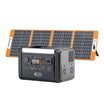
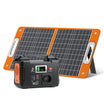
The authoritative local database records the FlashFish T1200S as a 768Wh, 1,200W continuous LiFePO4 station and the FlashFish T2000 as a 1,536Wh, 2,000W continuous LiFePO4 station. Both records state 3,500+ cycles to above 80% remaining capacity. Those are model-level facts that buyers can compare with their loads.
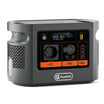
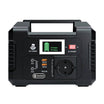
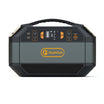
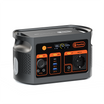
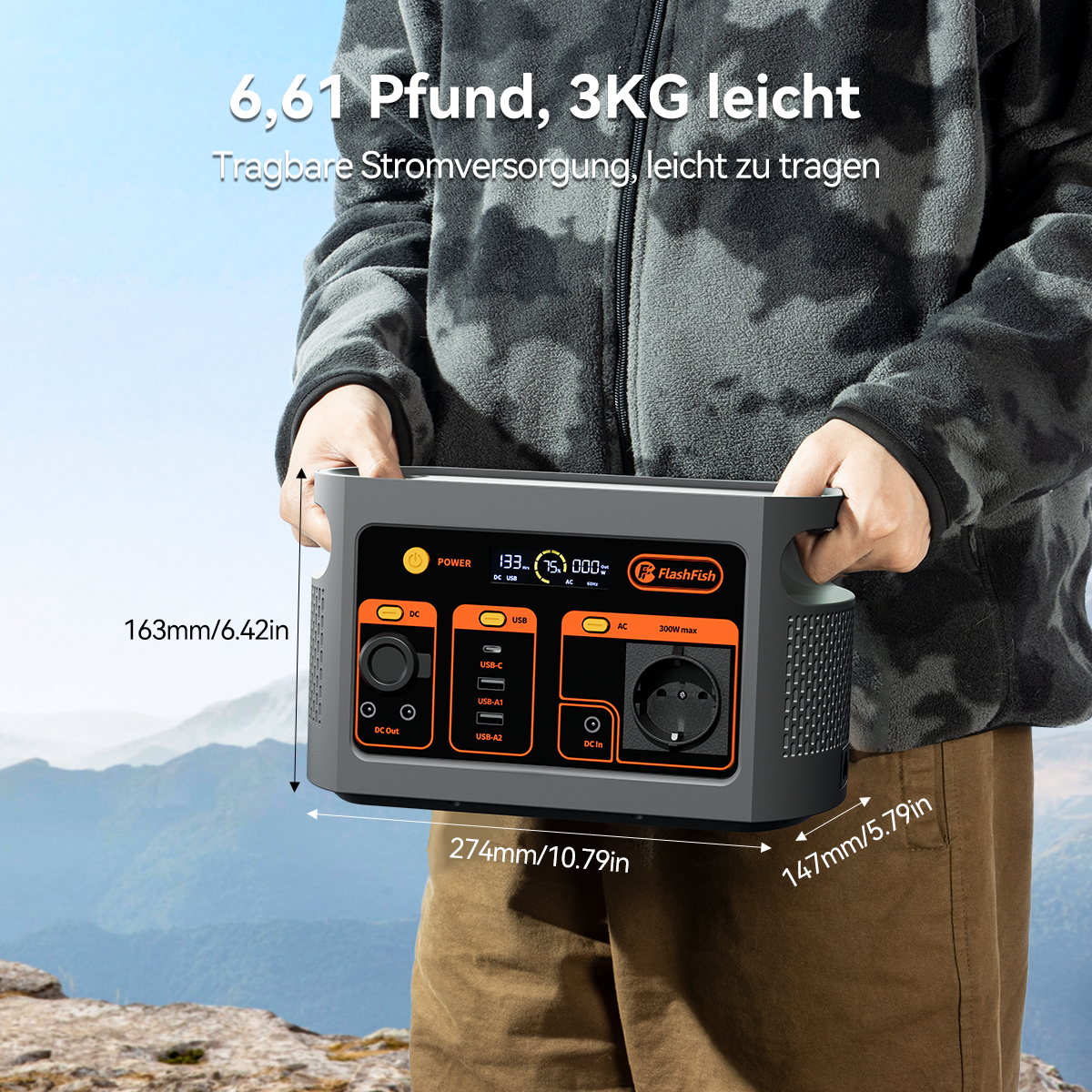
The checked FlashFish database does not provide a verified sodium-ion portable power station. This article therefore makes no claim about a FlashFish sodium-ion launch date, price, capacity, cycle life or availability. The featured E103 image is a current LiFePO4 product example; it is not a sodium-ion product or test.
When a documented LiFePO4 station fits now
- You have a near-term camping, work or backup need with a clear load list.
- An active Europe model documents the capacity, output, weight and temperature limits you need.
- Current support, delivery and price matter more than an unpriced future chemistry.
- You can accept the weight and performance trade-offs of the selected model.
When it does not fit: waiting can be sensible
- Your existing setup already covers the need and a purchase would be speculative.
- Cold-weather performance is central and no current model meets the documented requirement.
- A credible manufacturer has published a near-term Europe model, date and complete specification that directly improves your use case.
- You are willing to evaluate early-product support, availability and independent evidence after launch.
Frequently asked questions
Are sodium-ion batteries already common in portable power stations?
No. Scale is increasing, but the IEA reported 2025 sodium-ion production at less than 1% of lithium-ion production.
Is sodium-ion automatically cheaper than LiFePO4?
No. Manufacturing scale, materials, product design, support and lithium prices all affect the retail result.
Does sodium-ion work better in cold weather?
Recent cells show promising cold performance, but use the exact product's documented charge, discharge and storage limits.
Is LiFePO4 outdated?
No. LFP remains a mature, widely used chemistry with a deep current supply chain.
Should I delay a needed purchase for sodium-ion?
Usually not solely because of headlines. Wait only for a defined product trigger that materially improves your use case.
Does FlashFish sell a sodium-ion power station?
The checked authoritative product database does not provide a verified FlashFish sodium-ion model.
Sources and evidence boundary
- IEA sodium-ion market analysis — 2026 scale, opportunity and constraint context.
- IEA Batteries and Secure Energy Transitions — current lithium-ion/LFP market context.
- European Commission JRC battery technology report — development and research context.
- FlashFish product-source bundle and Europe store records — verified current FlashFish chemistry and model boundaries.
Human review must confirm the latest market and FlashFish model records before publication.



Lasă un comentariu
Acest site este protejat de hCaptcha și hCaptcha. Se aplică Politica de confidențialitate și Condițiile de furnizare a serviciului.