

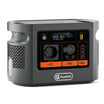
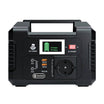

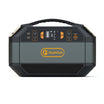
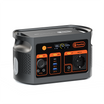


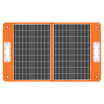
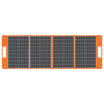


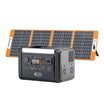

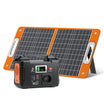

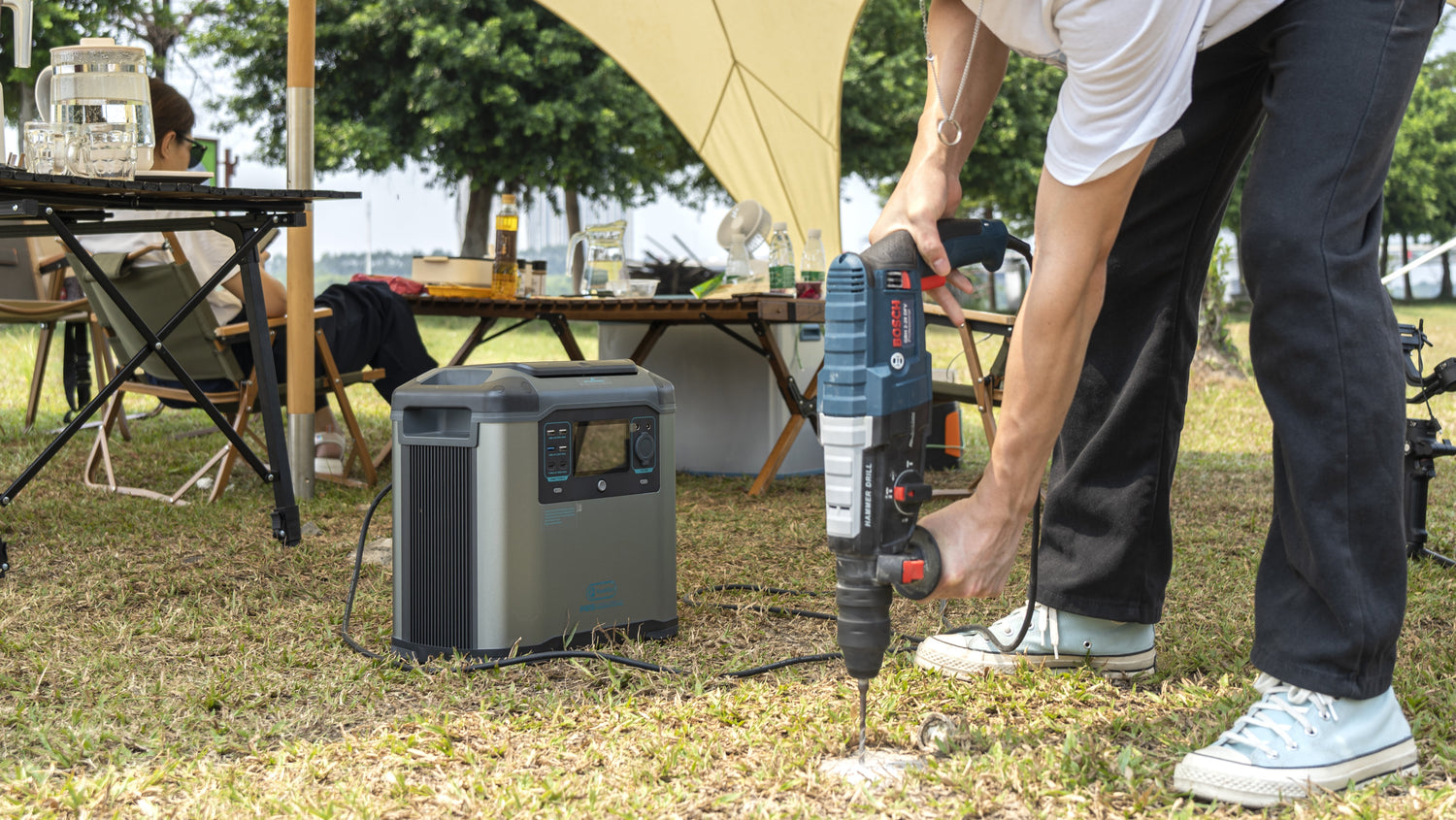
Short answer: a portable power station is best treated as a selected-load tool. It can help keep chosen essentials running for a limited time, but it does not replace a fixed home battery, transfer-switched generator system or professionally designed property backup plan.
The useful question is not "can it back up my home?"
The better question is: which specific loads matter, how many watts do they draw at the same time, and how many watt-hours do they need before normal power returns? GOV.UK notes that many power cuts are short-lived, but longer and wider outages can happen. That is why a practical plan starts with essentials, not with a promise to cover every circuit.
For a household, selected loads might mean a router, phones, lights, a laptop, a radio, a small fan or a specific low-power device. It usually does not mean a hard-wired boiler, heat pump, electric hob, shower, multiple heaters or every socket in the building.
Three backup categories compared
| Option | What it is good for | Main limitation | Decision check |
|---|---|---|---|
| Portable power station | Selected plug-in loads, camping, small work setups and short outage essentials | Finite battery capacity and inverter output | Add only the devices you will plug in directly |
| Balcony or fixed storage system | Stored solar energy and more regular household energy management | Installation rules, grid connection design and local requirements | Check system design, mounting, output route and local rules |
| Professionally designed property backup | Supplying chosen building circuits through proper switching equipment | Higher cost, installation work and compliance burden | Use a qualified installer and local electrical requirements |
A selected-load planning method
- Write down the devices you actually need during an outage.
- Separate essential communication, light and information loads from comfort loads.
- Read each device label or manual for input watts.
- Add only the loads that will run at the same time.
- Check startup demand for motors, pumps, compressors and some power supplies.
- Estimate watt-hours from average watts multiplied by the hours needed.
- Leave a margin for conversion loss, standby use, temperature and battery ageing.
- Keep cables, plugs and adaptors within their ratings.
How FlashFish models fit this framework
| FlashFish model | Local database facts | Where it can fit | Where it does not fit |
|---|---|---|---|
| T1200S | 768Wh LiFePO4 battery, 1,200W continuous AC output, 2,400W peak, 400W solar input, 12.45kg | Portable selected-load use where the load plan fits 1,200W and 768Wh before losses | Large heating, whole-property circuits or appliances with unsupported startup demand |
| T2000 | 1,536Wh LiFePO4 battery, 2,000W continuous AC output, 4,000W peak, 600W solar input, 19.2kg | Higher-power selected loads and longer plug-in backup plans than smaller stations | Permanent building backup, hard-wired appliances or unverified medical-equipment plans |
| SR5000 | 5,120Wh LiFePO4 battery, 2,400W rated off-grid AC output, 3,600W peak for 10 seconds, 59kg | Designed storage planning where a larger stationary system is appropriate | Casual portable use or any installation that has not been checked against local rules |
When FlashFish fits
- You have a short list of plug-in loads and their input ratings.
- The simultaneous load stays below the station's continuous output.
- The required energy fits the battery capacity with a conservative margin.
- You can place the station indoors in a dry, ventilated location and avoid overloaded extensions.
- You want a practical bridge for communications, small electronics or selected work and camping loads.
When FlashFish is not the right answer by itself
- You need to power every circuit in a property.
- You need automatic switchover for fixed wiring.
- You are planning for medical equipment without a plan from the care, clinical or equipment provider.
- You want to run heating, cooking or water systems that exceed the station and connection ratings.
- You need a design that depends on local grid, building or electrical rules.
Safety and outage planning notes
GOV.UK recommends keeping a torch, radio and power-cut contact route ready, and says medical or telecare equipment users should make a plan with their provider or manufacturer. National Grid also advises checking essential medical equipment battery backup with a competent person. A portable station can be part of that plan only when the relevant provider confirms the load and operating requirement.
Electrical Safety First warns against overloading sockets and extension leads, plugging one extension into another, and continuing to use hot, damaged or marked plugs. Treat every cable and adaptor as part of the load plan.
Frequently asked questions
Can a portable power station run an entire home?
Not as a normal portable-station plan. It can support selected plug-in loads within its output and capacity limits, but it is not a substitute for a professionally designed building backup system.
Is a bigger battery the same as more output?
No. Watt-hours describe stored energy. Watts describe output at a moment in time. A load must fit both the inverter rating and the energy budget.
Can I connect a portable station to house wiring?
Do not improvise this. Any connection to building wiring needs proper equipment, local compliance checks and qualified electrical advice.
Should I use one for medical equipment?
Only after confirming the requirement with the care, clinical or equipment provider. Do not rely on a consumer power station as the sole plan for critical equipment.
Why include SR5000 if this article is about portable stations?
It shows the boundary between portable selected-load planning and larger storage planning. It is a different class of product and should be evaluated with installation and local-rule checks.
Sources and evidence notes
- FlashFish product-source bundle, accessed 6 July 2026, for T1200S, T2000 and SR5000 specifications.
- Shopify discovery cache, accessed 6 July 2026, for active EU product URLs.
- GOV.UK Prepare: power cuts, accessed 6 July 2026, for power-cut preparation and medical-device planning boundaries.
- National Grid: tips to prepare for a power cut, accessed 6 July 2026, for phone charging and essential medical equipment battery notes.
- Electrical Safety First: overloading sockets, accessed 6 July 2026, for extension-lead and socket safety guidance.




Залишити коментар
This site is protected by hCaptcha and the hCaptcha Privacy Policy and Terms of Service apply.