

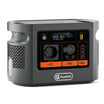
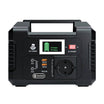

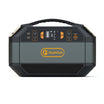
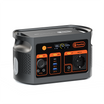


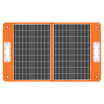
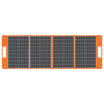


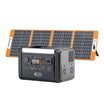

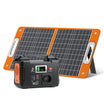


Short answer: a portable power station can support laptop work only when the laptop charger requirement, USB-C Power Delivery need, AC adapter watts, station output and trip energy plan all match. Do not choose from capacity alone. Check the laptop charger label first, then compare it with verified station ports and AC output.
This Europe checklist uses FlashFish E103, T1200S and T2000 as examples. It avoids fixed laptop runtime claims because screen brightness, CPU load, battery health, charging behaviour and conversion losses vary.
Start with the laptop charger label
Look for the charger output or USB-C Power Delivery requirement. A small ultraportable may use less than a creator laptop, gaming laptop or workstation. If the laptop requires more than the station's USB-C port can provide, AC charging through the original adapter may still be possible if the adapter's watts fit the station's continuous AC output and waveform requirements.
| Label to check | What it means | Buying decision |
|---|---|---|
| USB-C PD wattage | Power the laptop can request through USB-C. | Compare with station USB-C max output. |
| AC adapter input/output | What the wall adapter consumes and delivers. | Compare with continuous AC output and outlet type. |
| Device behaviour | Whether the laptop runs light office tasks or heavy rendering/gaming. | Heavy loads reduce practical energy window. |
| Simultaneous devices | Phone, router, monitor or lamp connected at the same time. | Add the loads; do not size from the laptop alone. |
FlashFish examples for laptop planning
| Model | Verified facts | How to read it for laptop work | Boundary |
|---|---|---|---|
| E103 | 179.2Wh, 300W pure-sine AC output, 60W USB-C max, 3kg. | Good candidate for lighter laptop and device work when 60W USB-C or AC adapter use is enough. | Product database does not provide battery chemistry or peak AC output. |
| T1200S | 768Wh LiFePO4, 1200W pure-sine AC, 2400W peak, 100W USB-C, 12.45kg. | Better for longer work sessions or mixed devices when the user accepts the larger weight. | Still not a runtime promise or full-apartment backup device. |
| T2000 | 1536Wh LiFePO4, 2000W pure-sine AC, 4000W peak, 100W USB-C, 19.2kg. | Useful for vehicle-based work, multiple laptops or broader selected loads. | Heavy for casual laptop-only travel. |
The laptop-power checklist
- Confirm laptop charging wattage: read the charger label and USB-C PD requirement.
- Choose USB-C or AC: if USB-C wattage is too low, check whether the AC adapter fits the station's AC output.
- Add other devices: include phone, camera battery, router, lamp or monitor loads.
- Leave energy margin: avoid planning to empty; real use varies with workload and conversion losses.
- Check portability: a 3kg compact station and a 19.2kg high-capacity station solve different travel problems.
- Inspect cables: use suitable USB-C and AC cables, avoid damaged connectors and avoid overloaded extension leads.
Common mistakes
- Assuming every USB-C port supports every laptop.
- Comparing Wh but ignoring USB-C wattage or AC adapter demand.
- Choosing a high-capacity model for a train or backpack scenario where weight matters more.
- Running laptop, monitor and router together without adding their load.
- Using a cheap or damaged USB-C cable and blaming the station.
- Expecting a fixed number of laptop charges from a Wh rating.
When FlashFish fits
FlashFish fits when the charger label, required ports, continuous output, battery reserve and carry weight all match the work plan. E103 can fit a compact laptop-and-phone kit. T1200S is more appropriate when 100W USB-C, more stored energy or mixed devices matter. T2000 is better reserved for vehicle-based or multi-device work where weight is acceptable.
When it may not fit
It may not fit if the laptop requires higher USB-C power than the available port, if the AC adapter demand is unclear, if the buyer needs airline travel approval, or if the use case is a critical business continuity plan with no fallback. In those cases, verify the laptop manufacturer's guidance and consider a larger or different power approach.
Frequently asked questions
Is 60W USB-C enough for every laptop?
No. It may suit many lighter laptops, but larger machines can require more. Check the laptop charger or manufacturer specification.
Can I charge a laptop from AC instead of USB-C?
Often yes, if the original adapter's input demand fits the station's continuous AC output and the outlet format is suitable.
Does higher battery capacity mean faster laptop charging?
No. Charging speed depends on port or adapter power negotiation; capacity affects the energy reserve.
Can E103 run a laptop and a router together?
Only if the combined watts fit the station output and the user accepts a variable energy window. Add the device labels before deciding.
Should I choose T2000 for laptop work?
Only when the broader load list or work duration justifies its 19.2kg weight. For a simple laptop kit, it may be more than needed.
Can I use any USB-C cable?
No. Cable rating matters for higher-watt USB-C charging. Use a cable suited to the laptop's power requirement.
Sources and further reading
- Electrical Safety First: extension leads and cable reels - supports cable and overload cautions.
- FlashFish product-source bundle and Europe Shopify snapshot, accessed 16 July 2026, for E103, T1200S and T2000 facts and active product URLs.
Human review note: before publication, confirm all Europe product URLs, USB-C values and the E103 missing-field wording. Do not add laptop runtime claims unless separately tested and sourced.





Залишити коментар
Усі коментарі модеруються перед публікацією.
This site is protected by hCaptcha and the hCaptcha Privacy Policy and Terms of Service apply.