

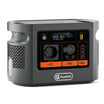
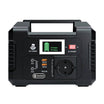

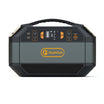
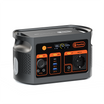


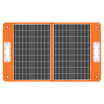
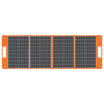


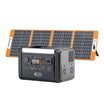

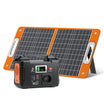


Short answer: the FlashFish T1200S is a plausible candidate for some CPAP setups because it has 768Wh of nominal energy and 1200W continuous pure-sine AC output. Those numbers are only the first screen. The exact CPAP, prescribed settings, humidifier or heated tube, manufacturer-approved power path, measured overnight energy and a separate fallback decide whether the plan is responsible.
Build a SLEEP card before packing
| SLEEP check | Evidence to record | Stop or escalate when |
|---|---|---|
| Sleep-service plan | Travel advice, treatment-continuity instructions and who to contact | The trip depends on changing therapy or has no fallback |
| Label and setup | Exact machine, regional supply, pressure mode, humidifier, heated tube and accessories | The model or complete configuration is unknown |
| Electrical path | Original AC supply or current manufacturer-approved DC route, voltage, current, connector and cable | A plug shape or headline watts is the only match |
| Energy | Watt-hours for a representative full-night setup, conversion route and reserve | The plan divides 768Wh by one label number and calls it a night count |
| Placement and fallback | Dry ventilated location, protected cable route, campsite permission and an independent contingency | Moisture, trip hazards, unattended use or a single failure point remains |
Compare your measured CPAP setup with the T1200S energy and output limits. Use the delivered European label and current instructions rather than transferring voltage or outlet details from another market.
Why CPAP is not an appliance-category yes or no
CPAP power demand is configuration-specific. ResMed's battery guide separates named device families, treatment pressure, humidification, tubing and conversion route. A mains power-supply rating is also a ceiling for that supply, not proof of the machine's average draw through an entire night.
The local T1200S record supplies useful station boundaries: 768Wh nominal energy, 1200W continuous pure-sine AC output, a 100W USB-C output and about 12.45kg mass. It does not name any CPAP, approved converter, night duration or clinical use. Treat the station facts and the therapy-device facts as two evidence sets that must meet end to end.
Verify the complete power path
The lowest-risk starting point is usually the CPAP manufacturer's current documentation for the exact machine. If it specifies the original regional AC supply, verify that supply against the delivered T1200S outlet and keep the conversion overhead in the energy test. If it specifies a DC converter, verify the converter model, input voltage and connector; do not assume a portable-station car outlet is equivalent to the vehicle source described in a manual.
For example, ResMed's Air11 DC/DC converter guide identifies model 390002 for Air11 devices and a suitable 12V or 24V vehicle auxiliary source. That is evidence that the route is device-specific. It is not evidence for connecting every CPAP to T1200S DC, and it is not permission to improvise a cable or use USB-C without explicit manufacturer instructions.
Three planning cases
- Exact CPAP through its original AC supply: confirm the regional input label, run the prescribed full configuration, measure watt-hours for a representative night and keep the station dry and ventilated. The 1200W station rating clears only the broad output screen; it says nothing about overnight energy.
- Air11 through its named DC converter: use the current Air11 converter guide to identify model and source requirements, then have the manufacturer or qualified reviewer confirm whether the delivered station's DC outlet is an acceptable source. Do not infer fit from 12V wording alone.
- Unknown travel CPAP or improvised cable: stop. Identify the exact device and obtain current manufacturer guidance before the trip. A small connector, low apparent watts or successful five-minute power-on does not establish a full-night plan.
Measure a representative night, not an idle minute
- Keep every prescribed setting and required comfort accessory unchanged unless the sleep service advises otherwise.
- Use the exact intended power path and a suitable measurement method.
- Record starting and ending battery percentage, accumulated watt-hours where available, and any alarms or interruptions.
- Repeat under realistic pressure, humidifier, heated-tube and ambient conditions when these vary.
- Budget below the nominal 768Wh figure to allow for conversion, station electronics, temperature and an explicit reserve.
A useful planning expression is: required overnight energy = measured machine watt-hours + conversion and station overhead + chosen reserve. Do not turn the result into a universal number of nights. Mask leaks, pressure changes, humidification, heated tubing, temperature and battery condition can move the result.
Plan continuity before campsite convenience
University Hospitals of North Midlands advises CPAP users to take treatment equipment while travelling and notes that electric hook-up can be beneficial for camping or caravanning. It also directs patients back to their sleep service for travel and equipment questions. Build the trip around that care guidance first; the power station is one possible electricity source, not the decision-maker.
Ask the campsite about permitted equipment and overnight electrical arrangements. Keep the station outside sleeping-space moisture paths but within its instructions, prevent cable trip hazards, and avoid daisy-chained adaptors. If the plan cannot tolerate a failed cable, lower-than-measured energy or a station fault, arrange a second independent option.
When T1200S is a reasonable candidate
| Proceed to a controlled trial when | Choose another plan when |
|---|---|
| The exact CPAP and prescribed complete setup are documented | The device, settings or accessories are unknown |
| The power path is approved for that machine and matches the delivered station | The route depends on an improvised converter or cable |
| A representative full-night energy result leaves an explicit reserve | The plan relies on one label or short power-on check |
| Dry placement, cable control and campsite rules are resolved | Condensation, public access or unattended hazards remain |
| A sleep-service-backed fallback exists | T1200S is the only continuity option |
Common mistakes
- Buying from the station's watt rating without identifying the CPAP and accessories.
- Changing humidifier, heated-tube or therapy settings only to fit an energy target.
- Treating a power-supply rating as the CPAP's measured overnight use.
- Assuming a 12V socket or USB-C connector proves protocol and cable compatibility.
- Running an untested setup for the first time at camp with no independent fallback.
Frequently asked questions
Can T1200S power every CPAP machine?
No. Confirm the exact CPAP model, prescribed settings, humidifier and heated-tube use, original supply or manufacturer-approved converter, and the delivered regional T1200S before a supervised trial.
How long will a 768Wh T1200S run a CPAP?
There is no responsible fixed answer from nominal watt-hours alone. Measure a representative full-night setup in watt-hours, include conversion and station overhead, and keep a reserve for changing conditions.
Does turning off humidification reduce CPAP energy use?
It may change demand on some machines, but do not alter prescribed or comfort settings only to fit a battery plan. Ask the sleep service and follow the exact machine instructions.
Can a CPAP plug directly into T1200S USB-C?
Only when the CPAP manufacturer documents that exact USB-C power path and every voltage, protocol, connector and cable requirement matches. A USB-C shape or watt number alone is not enough.
Should T1200S be the only CPAP contingency at camp?
Plan a separate fallback with the sleep service, campsite and device manufacturer. A battery station can fail, discharge early or face an unverified connection, and electricity availability does not replace a care plan.
Conclusion: close every SLEEP check before the trip
T1200S is only a candidate after the Sleep-service plan, Label, Electrical path, representative Energy test and Placement plus fallback are complete. Use the Europe buying guide if the verified CPAP path needs a different power class, then have the final setup reviewed before relying on it away from mains power.
Sources and evidence boundaries
- FlashFish Europe T1200S page and local product database for bounded station facts.
- ResMed Air11 DC/DC converter guide for one exact machine-specific route.
- ResMed battery guide for device, setting and conversion variables.
- University Hospitals of North Midlands CPAP advice for travel and sleep-service boundaries.
- Camping and Caravanning Club for general tent-electricity practice.
Evidence checked 9 September 2026. No CPAP, converter or T1200S combination was physically tested.




Залишити коментар
This site is protected by hCaptcha and the hCaptcha Privacy Policy and Terms of Service apply.