








Safety boundary: this is a buyer and pre-use evidence guide, not wiring instruction. Never open a power station, bond conductors, add an earth rod, modify a plug or connect a station to building wiring from this article. Use the exact regional manual and competent electrical advice for the proposed arrangement.
Why this matters before watts and runtime
Portable-power advice often starts with watts. That is necessary, but electrical protection is a different question. A load can sit below an inverter's power rating while the user still lacks evidence about protective earth continuity, neutral-earth arrangement, RCD operation, cable condition or wet-location suitability.
HSE guidance says equipment must suit the electrical supply and that an RCD detects some, not all, faults. HSE generator guidance also distinguishes earthed Class I equipment from double-insulated Class II equipment. The useful lesson is not that a battery inverter is a generator; it is that source design, equipment class and the number of connected items change the protection problem.
Use EARTH before relying on an AC outlet
| EARTH gate | Evidence to collect | Stop condition |
|---|---|---|
| E — Equipment class | Class I earth requirement or Class II square-within-a-square marking; intact plug and cable | Class is unclear, earth pin is defeated or equipment is damaged |
| A — AC source topology | Exact regional station manual, socket voltage/frequency and neutral-earth or protective-conductor information | The manual is missing, from another region or silent on the proposed arrangement |
| R — RCD behaviour | Manufacturer guidance for the source, RCD type, test procedure and fault path | The plan assumes a test-button result proves all fault protection |
| T — Terrain and task | Dry indoor versus damp/outdoor location, cable route, exposed metal and number of loads | Water, condensation, damaged leads, adaptor chains or uncontrolled public access |
| H — Human review | Competent assessment for Class I, multiple loads, distribution or uncertain topology | The user would need to modify, bond or hard-wire the supply |
Class I and Class II are not interchangeable
Class I equipment relies on a protective-earth path to keep exposed conductive parts from remaining live after a fault. Class II equipment uses double or reinforced insulation and normally shows a square inside a square. HSE advises assuming equipment is Class I when the Class II symbol cannot be identified in the context described by its guidance.
This classification is not a permission slip. A double-insulated charger still needs the correct voltage, frequency, power and environment. A Class I appliance also needs source and protective-device evidence; an earth-contact-shaped socket alone does not prove the protective path is effective.
What an RCD can and cannot establish
An RCD compares current in the live conductors and disconnects when the difference meets its operating conditions. It is valuable secondary protection, but it is not an overload device and does not detect every shock path. HSE says a trip indicates a fault that must be investigated, not bypassed.
A plug-in RCD's test button checks its internal trip mechanism under the conditions designed by its manufacturer. It does not document the portable station's neutral-earth arrangement, prove protective-conductor continuity through every adaptor, or replace a competent test of the complete system.
Three bounded examples
1. One double-insulated laptop charger in a dry room
This is a lower-complexity case because the charger may not rely on protective earth. Still verify the Class II symbol, intact original charger, correct regional voltage/frequency, station rating and dry ventilation. It is not evidence for metal-bodied or outdoor equipment.
2. One metal-bodied Class I appliance
The earth pin and cable may be essential to fault protection. Require the station manufacturer's regional instructions for Class I loads and the source topology. If the manual does not resolve the arrangement, stop and obtain competent advice rather than adding a home-made bond.
3. Several appliances in a damp tent or outdoor work area
Risk rises with moisture, long cables, more exposed metal and multiple fault paths. Camping guidance calls for purpose-built damp-resistant equipment and tested protective devices on designed hook-up systems. Do not copy that layout onto an undocumented portable inverter; use an approved arrangement for the actual source and location.
Five common mistakes
- Assuming a Schuko or UK-style socket proves household-mains earthing behaviour.
- Using an RCD test button as proof of the full external fault path.
- Confusing overload protection with electric-shock protection.
- Daisy-chaining adaptors or cable reels and ignoring heat, damage or arcing signs.
- Transferring generator, campsite or another-country rules to a battery inverter without checking scope.
An EARTH evidence checklist
- Record the exact station model, delivered regional SKU, voltage, frequency and current manual revision.
- Photograph the appliance label, plug and Class I or Class II marking.
- List every simultaneous load and every cable, reel, adaptor or distribution device.
- Describe the environment: dry indoor, damp tent, caravan, outdoor task or conductive surroundings.
- Find the manufacturer's written guidance for protective earth and RCD use with that source.
- Reject damaged, hot, scorched, buzzing or improvised plugs and leads.
- Escalate unresolved Class I, multiple-load, damp-location or topology questions to a competent person.
FlashFish product context—and the missing evidence
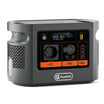
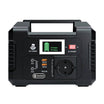
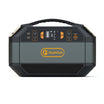
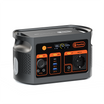
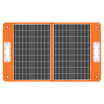
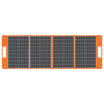
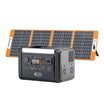
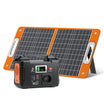
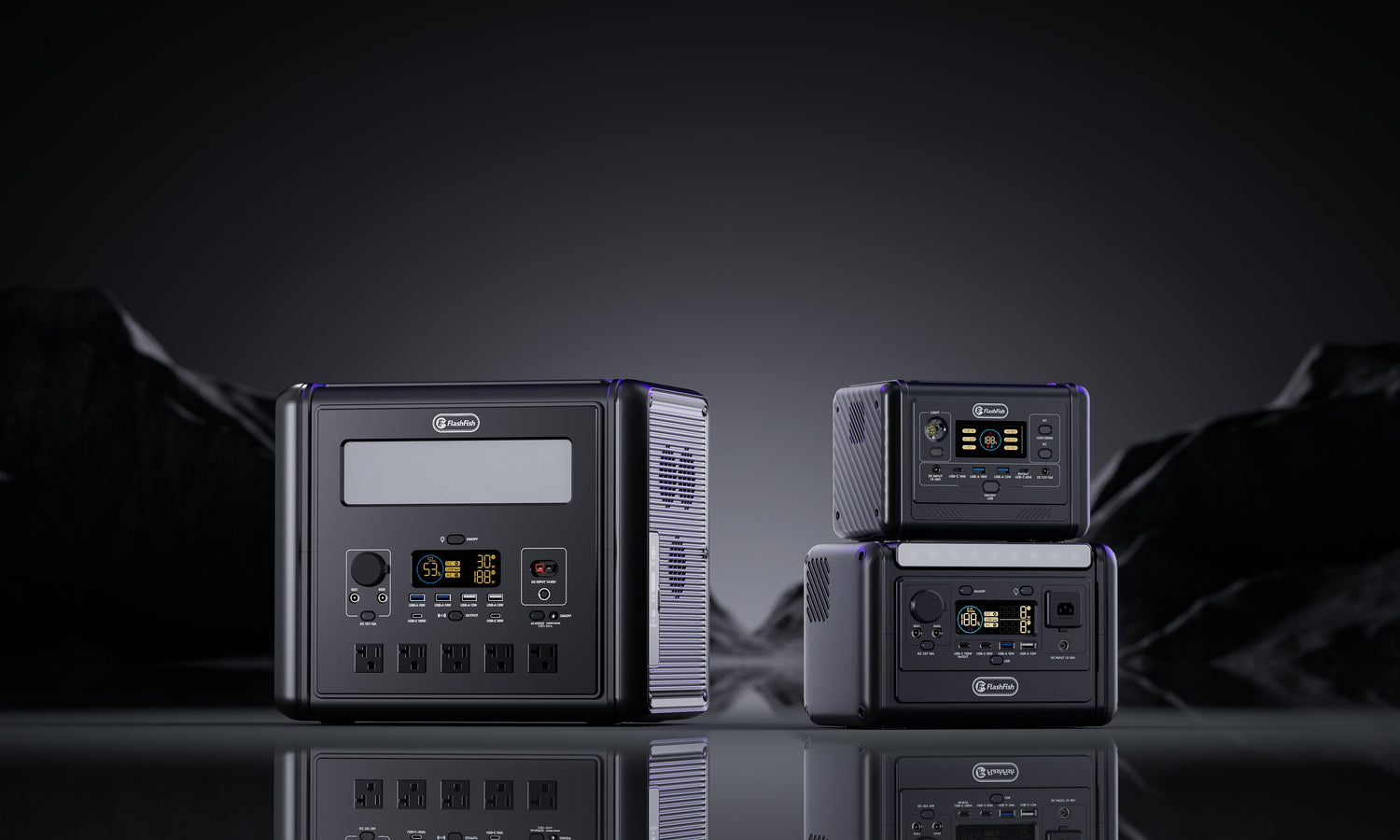
The current FlashFish Europe portable-power collection includes T1200S and T2000 models with Europe product pages. However, the authoritative local manual-derived records for those models are 120V/60Hz source records and do not establish the neutral-earth or plug-in-RCD behaviour of the delivered Europe variants.
That gap is material. This article therefore does not say that a T1200S or T2000 requires an earth rod, supports a particular RCD, or can feed a distribution board. The useful product action is to request the exact EU manual and a written answer for the intended Class I/Class II equipment and environment.
When a portable power station may fit
- The exact regional manual permits the intended standalone load and environment.
- Equipment class, plug, cable, voltage, frequency and total watts are all verified.
- The protective arrangement is documented and no modification or building connection is needed.
- The station and connections remain dry, stable, ventilated and supervised.
When it does not fit
- The plan requires improvised bonding, an earth rod, hard wiring or back-feeding a circuit.
- A Class I appliance is proposed but the source topology and earth path are undocumented.
- A plug-in RCD is treated as automatic approval for every fault.
- The setup is damp, damaged, overloaded, daisy-chained or outside the regional manual.
Next step: Use the FlashFish Europe buying guide to turn your verified load list, socket requirements and regional manual checks into an appropriate station class.
FAQ
Does every portable power station need an earth rod?
No universal rule can be made from the word portable. The source design, manual, connected equipment, environment and national requirements matter. Do not add an earth connection or modify the station unless the manufacturer and a competent assessment explicitly require and define it.
Will a plug-in RCD always work on a portable power station?
Do not assume it will. An RCD detects particular current imbalances, and operation depends on the complete source and fault path. A working test button is useful but is not proof that every fault will be cleared on an unknown inverter topology.
What is the difference between Class I and Class II equipment?
Class I equipment relies on a protective-earth connection for exposed conductive parts. Class II equipment uses double or reinforced insulation and normally carries the square-within-a-square symbol. If the class is unclear, treat that as a stop condition.
Is a portable power station the same as a campsite electric hook-up?
No. A campsite hook-up is a designed installation with defined protective devices, cables and connection rules. A portable inverter supply may have a different topology and must be assessed from its own manual and the intended equipment.
When should I ask a qualified electrician?
Ask before using multiple Class I appliances, outdoor or damp setups, distribution boards, long extensions, hard-wired circuits, uncertain RCD behaviour or any source whose neutral-earth arrangement is not documented for the intended use.
Sources and evidence notes
- HSE electrical-equipment guidance — supply suitability, RCD limits and competent-review principle.
- HSE HSG141 — Class I/Class II and source-arrangement context; generator rules are not transferred.
- Electrical Safety First — extension, overload and damage checks.
- Camping and Caravanning Club — designed campsite hook-up and damp-environment boundaries.
- FlashFish Europe portable power stations and the local product database — product context and the explicit absence of Europe topology evidence.
Editorial viewpoint: EARTH rejects the shortcut that socket shape plus an RCD adaptor equals complete protection. It turns a vague safety question into five evidence gates and makes missing topology a reason to stop, not a reason to improvise.
Evidence checked . Human review required before publication: exact EU product manuals, qualified electrical review, national-scope wording, author/reviewer credentials, links, image crop and rendered FAQ/schema parity.



Commenta
Questo sito è protetto da hCaptcha e applica le Norme sulla privacy e i Termini di servizio di hCaptcha.