









Short answer: E106B USB-C2 cannot provide a 65W source envelope because it is documented at up to 30W. A laptop supplied with a 65W USB-C charger may accept a lower profile, charge slowly, charge only in a low-power state or refuse it. Check the exact laptop manual. For a 65W-class USB-C laptop, E106B USB-C1 is the higher-power port to verify.
The decision has three parts: source port, cable and laptop. All three must share a supported USB Power Delivery profile. Matching USB-C connectors alone does not establish wattage or compatibility.
Compare the two E106B USB-C ports
| Port | Documented profiles | Maximum | What it means for a 65W laptop |
|---|---|---|---|
| USB-C1 | 5V/3A, 9V/3A, 12V/3A, 15V/3A, 20V/5A | 100W | Has a 20V profile and enough headline power for a 65W-class path, subject to laptop and cable negotiation. |
| USB-C2 | 5V/3A, 9V/3A, 12V/2.5A | 30W | Cannot reproduce a 65W or 20V source profile; lower-power charging depends on the laptop. |
Port check: Check the E106B USB-C1 and USB-C2 specifications, then compare them with the exact laptop input table instead of the original charger's headline wattage alone.
Why 65W on the original charger matters
A named example makes the mismatch concrete. Lenovo's ThinkPad 65W Slim USB-C adapter lists PD3.0 output at 20V and 3.25A, which equals 65W. E106B USB-C2 stops at 12V/2.5A and 30W, so it cannot offer that same source profile. This does not prove that every Lenovo laptop requires 65W continuously or rejects lower input.
The USB-IF Power Delivery overview explains that USB PD provides flexible power delivery between devices. In practical terms, the source advertises profiles, the laptop requests one it supports, and the cable must carry the negotiated level. The laptop draws what it needs within that agreement; a 65W charger label is not a claim that the laptop consumes 65W every second.
Three laptop cases
1. The laptop explicitly accepts a 30W or lower profile
USB-C2 may provide useful charging when the manual lists a matching profile. Test while the laptop is off, idle and under the intended workload. A battery icon alone is not enough; confirm whether the battery percentage rises, holds or falls.
2. The laptop expects a 65W, 20V USB-C source
USB-C2 cannot supply that profile. Move the evaluation to USB-C1 and use a cable rated for the required Power Delivery level. The 100W port ceiling creates headroom, but the source, cable and laptop must still negotiate a common 20V profile.
3. The laptop uses a proprietary barrel connector
Neither USB-C port is a direct charging path unless the laptop manufacturer documents an approved USB-C method. The original regional AC adapter may be evaluated against E106B's single AC outlet and 600W shared limit. Do not improvise a passive connector conversion.
A five-minute compatibility worksheet
- Record the exact laptop model and the charging port the manufacturer permits.
- Copy the accepted voltage/current or watt profiles from the current manual or support page.
- Choose USB-C1 or USB-C2 only when a common profile exists.
- Use a cable specified for the required power level; discard damaged or unverified cables.
- Test with the laptop off, idle and under a representative workload, noting warnings and whether the battery rises or falls.
When FlashFish E106B fits
- The laptop supports USB Power Delivery through the intended USB-C charging port.
- A documented laptop profile matches E106B USB-C1 or USB-C2.
- The cable supports that profile and is in good condition.
- A representative workload test shows the battery behaviour needed for the session.
- Other connected devices remain within their own and any shared output limits.
When it does not fit
- The laptop requires 20V/65W but the plan uses the 30W USB-C2 port.
- The laptop does not support charging through that USB-C connector.
- The cable rating is unknown or the connector is damaged.
- The laptop accepts low power but still loses battery during the required workload.
- The plan assumes the port's maximum automatically becomes the laptop's charge rate.
Frequently asked questions
Can E106B USB-C2 provide 65W?
No. The authoritative E106B record lists USB-C2 at up to 30W, with 5V, 9V and 12V profiles. It does not offer a 65W or 20V source profile.
Could a 65W laptop still charge slowly from USB-C2?
Possibly, but only if that exact laptop accepts one of USB-C2's lower Power Delivery profiles. Some laptops warn, charge only while sleeping or discharge under load. Check the laptop manual and test the actual state.
Which E106B port should I check for a 65W USB-C laptop?
USB-C1 is the documented higher-power option: up to 100W with profiles through 20V/5A. The laptop and cable must still support a common profile, so 100W on the port is not an automatic 65W result.
Does any USB-C cable support 65W?
No. Cable capability is part of the power path. Use a cable specified for the required USB Power Delivery level and connector arrangement, and replace damaged or unverified cables rather than relying on appearance.
Can I use the laptop's original AC adapter instead?
If the delivered regional adapter is compatible with E106B's AC outlet and remains within the shared 600W limit, it is another path to evaluate. It adds inverter losses and still needs the original manufacturer guidance.
Next step: Use the Europe power-station buying guide for your full device list, not only the laptop's charger.
Sources and evidence limits
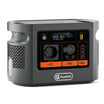
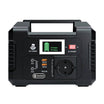
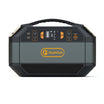
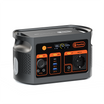
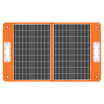
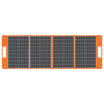
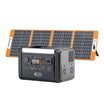
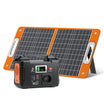
Checked 9 October 2026. E106B port profiles come from the authoritative FlashFish manual-derived local record and current Europe product page. USB-IF provides general Power Delivery context. Lenovo supplies one exact 65W, 20V/3.25A PD3.0 adapter example. FlashFish publishes this guide. No laptop, cable, firmware state, charging curve or workload session was tested, and the ports image is identification context rather than compatibility evidence.




Commenta
Nota che i commenti devono essere approvati prima di essere pubblicati.
Questo sito è protetto da hCaptcha e applica le Norme sulla privacy e i Termini di servizio di hCaptcha.