

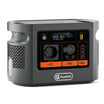
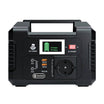

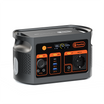






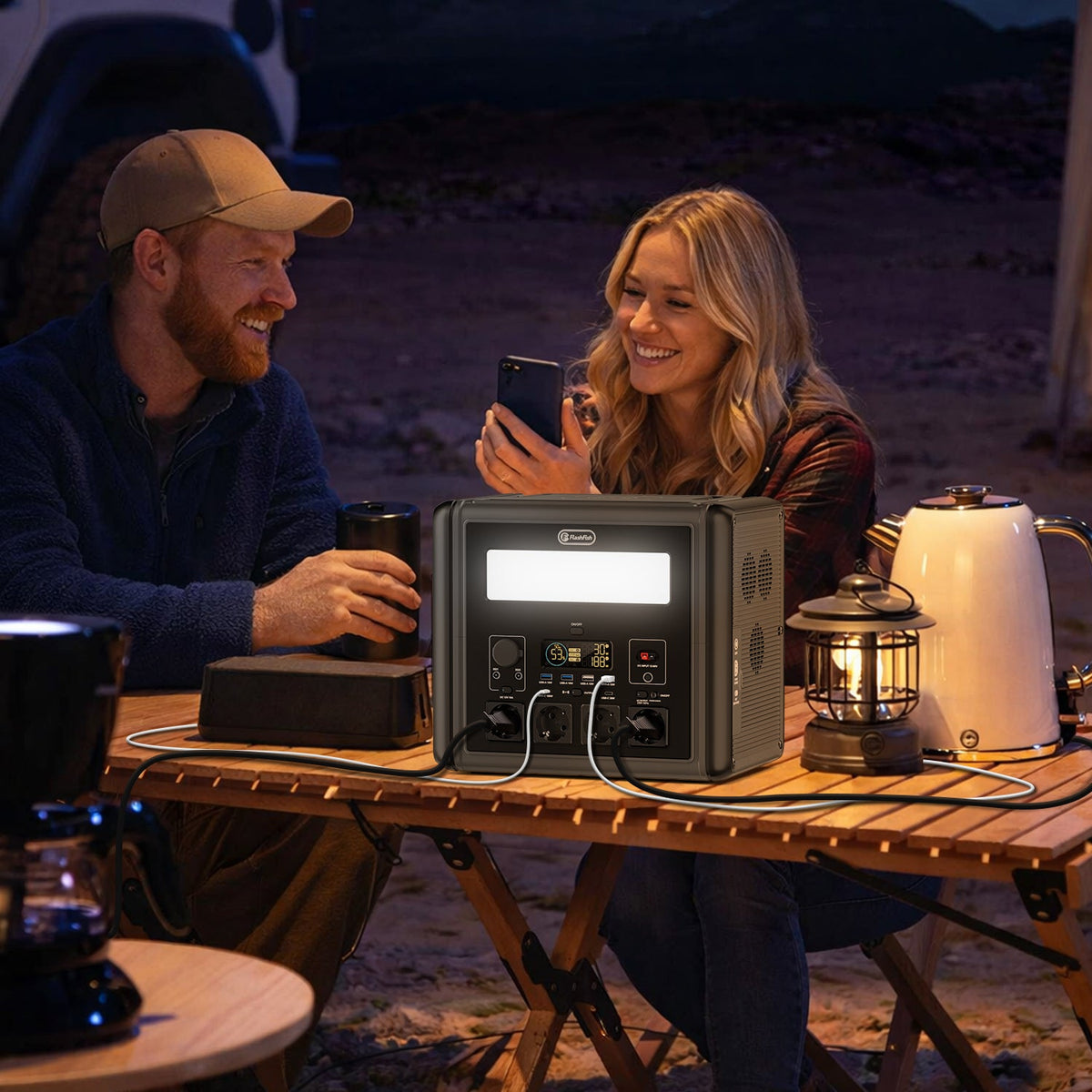
Can the FlashFish T2000 Run a Dehumidifier?
Short answer: the T2000's current Europe page lists 2000W continuous pure-sine AC output, which gives nominal headroom for many domestic dehumidifiers. That does not make every model compatible. Check the dehumidifier type, exact rating label, compressor or heater behaviour, regional voltage/frequency and a dry grounded setup.
A dehumidifier is not one fixed load class. Electrical Safety First lists compressor models commonly up to about 350W and desiccant models across a broader range up to about 650W. Those category figures help you ask the right question; the label and manual on the exact appliance still control.
The DAMP fit check
| Gate | What to verify | Stop when |
|---|---|---|
| D — Dehumidifier type | Compressor, desiccant or another design; operating temperature and mode | The type or manual is unknown |
| A — Appliance label | Voltage, frequency, rated watts/amps and grounding | The label does not match the exact EU station output |
| M — Motor or heater behaviour | Compressor startup, defrost, laundry mode, fan and any heater element | Startup or combined demand is required but undocumented |
| P — Placement and power path | Dry level surfaces, clear intakes, grounded connection and protected cable | Water, damaged cable, blocked airflow or an ungrounded/improvised path is present |
What the T2000 evidence establishes
The FlashFish T2000 Europe page lists 1536Wh capacity, 2000W rated pure-sine AC output and 4000W peak language, with a 230V/50Hz regional output option. Fresh Shopify Admin discovery on 18 August 2026 confirmed the T2000 as ACTIVE with a Europe online-store URL.
There is an important publication gate: the local manual-derived product record is based on a 120V/60Hz source, while the Europe page identifies a regional 230V/50Hz option. The exact physical EU unit label and current regional manual must settle voltage and frequency before an appliance is connected. This article does not use a U.S. manual as authority for an EU unit.
A model-specific example without a compatibility claim
Meaco identifies the Arete Two 20L as a 220–240V, 50Hz compressor dehumidifier. Its product page lists 207W at 20°C and 60% relative humidity, and a published condition table ranging from 176W to 271W. Those operating values sit below the T2000's 2000W continuous class on paper.
That is a first-gate specification fit, not a completed test. Meaco does not supply a compressor-start measurement in the cited table, and no Arete Two was connected to a T2000 for this article. Confirm startup behaviour, regional labels and both manuals before use.
Three practical cases
1. A labelled 220–240V/50Hz compressor model around 200–300W
The continuous-watt check may pass with substantial paper headroom. The remaining gates are startup behaviour, grounded connection, dry placement, airflow and the exact EU T2000 label.
2. A higher-draw desiccant model
Do not reuse the compressor example. Electrical Safety First's category table reaches about 650W for some desiccant units, and modes may differ. Read the exact rated input and all heating/fan modes before deciding.
3. A damp room with a damaged lead or exposed drain path
The setup is a non-fit regardless of watts. Move both devices to a safe dry arrangement, replace damaged equipment and follow the appliance manual. A battery station does not remove shock, fire, water or refrigerant hazards.
Why this article does not give a runtime
A dehumidifier may cycle its compressor, change fan speed, enter defrost or respond to temperature, humidity and set point. Meaco's own table shows power changing with room conditions. T2000 capacity is finite, and conversion plus station overhead also matter. A fixed hours claim from rated Wh divided by one label watt would be too confident.
For planning, record the dehumidifier's measured energy over a representative supervised period with a suitable external meter, then retain a reserve. A short observation is still not proof of every seasonal condition or an unattended moisture-control outcome.
Where FlashFish fits
- The exact T2000 EU label and outlet match the dehumidifier's voltage, frequency, plug and earth requirements.
- The appliance's continuous and documented startup demands leave clear headroom below all applicable limits.
- The plan is for one selected load in a dry, ventilated, supervised setup.
- The owner accepts that humidity control and runtime depend on the room and appliance, not only the power station.
Where FlashFish does not fit
- The dehumidifier label, startup behaviour or regional manual is missing.
- The setup places the station near condensate, a leaking tank, a drain hose or blocked airflow.
- The plan depends on peak output for continuous operation.
- The user needs unattended flood protection, assured mould prevention or a fixed operating duration.
- The appliance or station shows damage, overheating, repeated trips, unusual noise, smell or leakage.
Safety checklist before first use
- Photograph both rating labels and confirm the exact regional manuals.
- Check the dehumidifier type, every operating mode and any startup information.
- Use grounded, undamaged connections rated for the voltage and load; avoid daisy chains.
- Keep the station and all connections dry, level, visible and away from tank or hose leaks.
- Keep the dehumidifier air intake and outlet clear.
- Observe the first run and stop on abnormal heat, smell, noise, leakage or repeated shutdown.
- Never open the sealed refrigerant circuit or the power station; use qualified service routes.
FAQ
Can the FlashFish T2000 run a compressor dehumidifier?
Many domestic compressor models have operating watts far below the T2000's published 2000W continuous class, but that is only the first gate. Check the exact EU station label, dehumidifier voltage/frequency, rated input, compressor startup behaviour, cable path and manual before use.
Can T2000 run a desiccant dehumidifier?
Possibly, but desiccant models can draw more power than compressor types. Electrical Safety First lists a broad category range up to about 650W, so the exact appliance label and manual—not the category average—must decide.
How long will T2000 run a dehumidifier?
This guide does not state a fixed runtime. Dehumidifier power changes with type, temperature, humidity, mode, compressor cycling and set point, while conversion and station overhead also affect delivered energy.
Can peak watts be used to approve compressor startup?
No. Peak output is a short-duration capability under manufacturer conditions, not permission to ignore continuous watts or unknown startup behaviour. Use the appliance manual or a suitable measured startup value.
Can I place the station beside the dehumidifier or drain hose?
Keep both devices on stable, dry surfaces with clear airflow and protected cables. Do not place the station where condensate, a leaking tank or hose can wet electrical components. Follow both manuals.
Sources and further reading
- FlashFish Europe T2000 product page — current regional catalogue specifications.
- Electrical Safety First appliance ratings — compressor and desiccant category ranges.
- MeacoDry Arete Two 20L product page — model-specific supply and condition-dependent operating watts.
- Meaco Arete Two instruction manual — grounding, placement, cable, water and service boundaries.
Editorial viewpoint: a large inverter number opens the question; the DAMP evidence chain decides whether the specific appliance and room setup are defensible.
Human review required before publication: exact EU T2000 label/manual, dehumidifier safety wording, author/reviewer credentials, link accuracy, image crop and rendered FAQ/schema parity.




Commenta
Nota che i commenti devono essere approvati prima di essere pubblicati.
Questo sito è protetto da hCaptcha e applica le Norme sulla privacy e i Termini di servizio di hCaptcha.