







Compare a cycle count only alongside the exact model, remaining-capacity threshold and test conditions. Similar numbers on two product pages do not establish equal service life. If a field is missing, keep it unknown and request the relevant evidence rather than filling it from another model.
Why the same cycle number can leave different questions open
The official System Advisor Model battery-life documentation distinguishes degradation associated with cycling from degradation associated with elapsed time. Its cycle-data description includes cycle count, capacity and depth of discharge; its calendar models can account for time, temperature and state of charge. This explains why a headline number is not a complete model of how a battery will age in your use. SAM has not been used here to simulate any FlashFish product.
Three exact-model examples
| Exact model | Documented statement | Remaining-capacity threshold | What remains unknown for comparison |
|---|---|---|---|
| E103 | 3000+ cycles; LiFePO4 | 80%+ capacity appears in the current Europe statement and exact-model record | Full cycle definition, test temperature, depth of discharge, rate and exact test report |
| E106B | At least 3000 cycles; LiFePO4 | Not provided in the available exact-model specifications | Threshold and full test conditions |
| E112B | At least 3000 cycles; LiFePO4 | Not provided in the available exact-model EU documentation | Threshold and full test conditions |
These are manufacturer/source statements checked on 6 November 2026, not results from a side-by-side aging test. The presence of an E103 threshold does not supply the missing E106B or E112B threshold. Likewise, the shared chemistry label does not establish identical cells, test methods or degradation.
Use this worksheet for each claim
| Field | What to copy | If absent |
|---|---|---|
| Product scope | Complete model, market/variant and whether the claim concerns a cell, battery pack or complete product | Ask which item was actually evaluated. |
| Source | Document title, version/date, exact URL and section | Keep a saved reference and mark the version unknown. |
| Cycle statement | Exact count, inequality and cycle-counting method | Do not simplify “at least” or “to a threshold” into an unqualified lifespan. |
| End point | Remaining-capacity percentage and reference capacity | Leave unknown; do not apply a customary percentage. |
| Conditions | Temperature, depth of discharge, charging/discharging rates and other specified conditions | Request the exact protocol instead of substituting operating-temperature limits. |
| Evidence type | Manufacturer specification, documented test report or independently observed result | Label the statement by its actual evidence type. |
Apply it to an everyday buying decision
Suppose a buyer in Europe wants occasional camera charging and weekend laptop use. First decide which station has the required device paths and an adequate energy plan. Then compare the documented battery claims using the worksheet. The cycle number does not identify a compatible laptop port or tell the buyer how many weekends a station will serve.
If the seller supplies a later exact-model report, check whether its threshold and conditions can be matched across all three models. A fuller report can change what is comparable. It still does not turn an untested individual use pattern into an observed service life.
Keep four common substitutions out of the comparison
- Do not copy an E103 threshold into a neighbouring model’s blank field.
- Do not treat an allowed operating-temperature range as a cycle-test temperature.
- Do not count partial top-ups or days as rated cycles unless the supplied method defines them that way.
- Do not turn a cycle claim into years, warranty duration, unchanged runtime or a resale-value prediction.
Frequently asked questions
Is 80% remaining capacity the same as an 80% charge display?
No. In a cycle-life statement, remaining capacity describes retained capacity relative to its stated reference under the claim’s test method. The charge display describes the present state of charge; do not use it to verify retained capacity.
Can I copy the E103 80% threshold into E106B or E112B?
No. Keep the exact model and source attached to each field. The available E106B and E112B model specifications do not provide that threshold.
Does plugging a charger in once necessarily count as one rated cycle?
The claim needs its cycle definition. Do not assume every charging session, partial top-up or day of use is one cycle under the manufacturer’s test method.
Can I divide the cycle figure by daily use to predict years?
No defensible service-life prediction follows from that division alone. It omits the stated cycle method, operating history and calendar degradation, and does not establish warranty coverage.
Does more complete documentation prove that one model lasts longer?
No. It makes the claim easier to interpret. A lifespan ranking still needs comparable exact-model methods and results; missing documentation is uncertainty, not a measured failure.
Ask for evidence that changes the decision
Request the exact model’s cycle-life evidence from Europe support. Include the full model and ask for the cycle definition, retained-capacity end point, conditions and source version. If no comparable documentation is available, decide on the verified features you need and record the battery-lifetime comparison as unresolved.
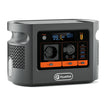
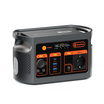
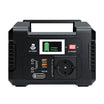
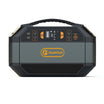
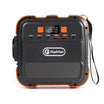
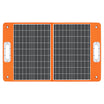
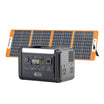
Method: source-based comparison of the selected exact-model records, current Europe specification pages and official battery-modelling documentation on 6 November 2026. No accelerated-aging test, calendar-life simulation, teardown or owner-duration study was performed. The contextual image provides no cycling evidence.





Laat een reactie achter
Deze site wordt beschermd door hCaptcha en het privacybeleid en de servicevoorwaarden van hCaptcha zijn van toepassing.