








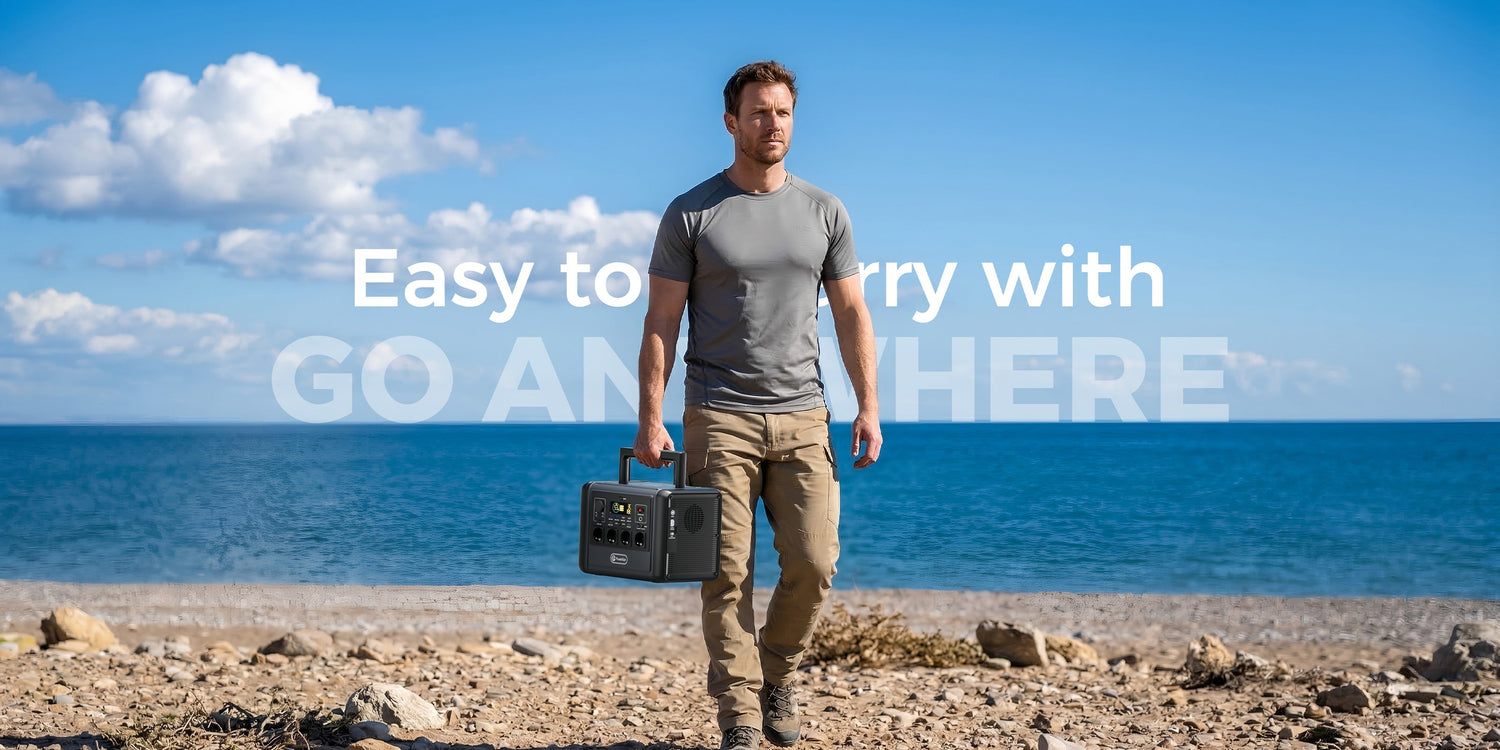
Short answer: price is only one part of a portable power station decision. European buyers should compare rated capacity, continuous AC output, surge headroom, battery chemistry, solar input, port layout, weight, noise expectations, safety boundaries and whether the model fits their real device list. A cheaper station can be the wrong value if it cannot run the load you actually need.
This guide is written as a buying-judgment framework, not a ranking list. The useful question is not "which brand is cheapest today?" but "which specification set matches my phones, lights, laptop, router, cool box, campsite gear or apartment backup plan with clear limits?"
Why this matters
Portable power station pages often lead with price, capacity or a headline wattage number. Those numbers matter, but they can be misleading when read alone. A 100Wh compact station, a 768Wh camping station, a 1536Wh backup station and a 5120Wh balcony-storage product solve different problems. Treating them as a simple price ladder creates poor buying decisions.
For power products, a useful buying guide should explain the tradeoffs that a buyer can verify: Wh, W, battery chemistry, output waveform where stated, solar input and device labels. That is more helpful than a shallow price list.
The comparison framework
| Decision factor | What to check | Why it changes the choice | FlashFish example from verified data |
|---|---|---|---|
| Capacity in Wh | Battery energy, not appliance power | More Wh can support longer selected-load use, but real runtime is lower after losses. | A101 is 97.68Wh, E200 is 151Wh, T1200S is 768Wh and T2000 is 1536Wh. |
| Continuous AC output | The watts the station can supply steadily | This decides whether a device can run at all. Do not use peak output as the normal rating. | E200 is 200W, E103 is 300W, T1200S is 1200W and T2000 is 2000W continuous AC output. |
| Peak or surge output | Short startup headroom where the source provides it | Some compressors, pumps and motors draw more power at startup than while running. | T1200S lists 2400W peak and T2000 lists 4000W peak in the FlashFish product specifications. |
| Battery chemistry | Whether the source states LiFePO4, lithium-ion or leaves it blank | Chemistry affects weight, lifecycle expectations and buyer confidence, but it should not be guessed. | T1200S and T2000 are LiFePO4. E103 chemistry is not provided by the product database. |
| Solar input | Maximum input and real sun conditions | A high input limit only helps when panels, connectors, location, angle and weather cooperate. | T1200S supports up to 400W solar input and T2000 up to 600W solar input. |
| Weight and role | Carry weight, placement and use case | A lighter unit may be better for camping even if a heavier unit has more capacity. | E200 is 1.85kg, T1200S is 12.45kg, T2000 is 19.2kg and SR5000 is 59kg. |
Core explanation: Wh is not W
Wh describes stored energy. W describes power output. A phone, lamp or router may need modest watts, while a kettle or heater can require far more watts. A station with enough Wh but not enough continuous output still may not run the device. A station with enough output but too little Wh may run a device only briefly.
Inverter behavior also matters. The U.S. Department of Energy explains that an inverter converts DC electricity to AC electricity. That conversion is the reason AC appliance planning should include losses and not rely on a perfect Wh divided by W estimate.
Practical example: three buyers, three different answers
| Buyer problem | Likely better class | What to avoid |
|---|---|---|
| Weekend camping with phones, camera batteries and lights | Compact or mid-size station depending on laptop and cool-box needs | Paying for high-output backup capacity that will sit unused. |
| Apartment power-cut kit for router, phones, laptop and one light | Mid-size selected-load station after checking router and charger labels | Assuming a portable station replaces emergency planning or broadband resilience. |
| Balcony solar evening self-consumption | Storage-first product with permission and local-rule checks | Treating balcony storage as the same decision as a movable camping station. |
Common mistakes
- Comparing headline capacity without checking continuous output.
- Using peak output as if it were the normal running wattage.
- Expecting the full rated Wh to appear as usable AC energy.
- Ignoring solar variability from season, shade, panel angle and location.
- Buying a heavier station for camping when the actual load list is light.
- Assuming every product title contains every verified battery or waveform detail.
Buying checklist
- Write down every device you plan to power.
- Record the watt label or charger rating for each device.
- Check the station's continuous AC output before looking at peak output.
- Use capacity as a planning range, not a fixed runtime promise.
- Check solar input only after confirming panel compatibility and real sun conditions.
- Compare weight and storage role: camping, apartment selected-load backup or balcony storage.
- Read blank fields honestly. If a database does not provide a value, do not invent it.
FlashFish product context
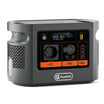
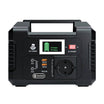
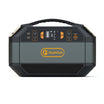
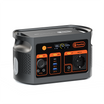
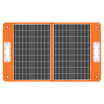
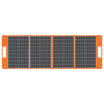
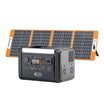
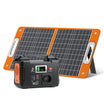
For shoppers comparing portable power stations, FlashFish models can be reviewed against the same framework. The E200 is a compact 151Wh, 200W modified-sine unit for light-duty electronics. The T1200S moves into mid-capacity camping and selected-load backup with 768Wh and 1200W continuous AC output. The T2000 is a higher-capacity 1536Wh, 2000W LiFePO4 station for larger selected loads. SR5000 belongs in a different home-energy-storage conversation, not a simple camping comparison.
Safety note
Do not connect damaged appliances, overload extension leads or treat a portable station as permission to bypass normal electrical safety. Electrical Safety First recommends careful use of extension leads, undamaged plugs and sockets, and fully unwound cable-drum leads to avoid overheating.
FAQ
Is the cheapest portable power station usually the best value?
No. The cheapest model can be good value for phones and lights, but poor value if the buyer needs laptop charging, router backup, solar input or higher continuous AC output.
Should I choose by Wh or W first?
Start with the device watt labels. Continuous output decides whether a load can run. Capacity then helps estimate how long selected loads may be supported, with efficiency losses included.
Does a bigger battery always mean a better camping station?
No. Bigger batteries add weight and cost. Camping buyers should compare the load list, carry distance, solar plan and campsite rules before sizing up.
Can solar panels make any small station enough?
No. Solar can help top up a station, but real output changes with radiation, season, shade, panel angle, system loss and the station's input limit.
What if a product database does not provide a value?
Do not guess. Treat the value as not provided, and verify it through the product manual, live product page or manufacturer support before use a claim.
Sources and further reading
- FlashFish product specifications, accessed 2026-06-26: manual-derived facts for A101, E200, E103, T1200S, T2000 and SR5000.
- FlashFish Europe product listing cache verified after read-only ping on 2026-06-26: active Europe URLs and inventory for priority products.
- U.S. Department of Energy inverter basics for DC-to-AC inverter context.
- European Commission JRC PVGIS manual for solar radiation and PV-production variability context.
- Electrical Safety First extension lead guidance for cable and socket caution.
If you are comparing FlashFish options, start with the portable power station collection, then match the model to your real device list rather than the lowest headline price.



Zostaw komentarz
Ta strona jest chroniona przez hCaptcha i obowiązują na niej Polityka prywatności i Warunki korzystania z usługi serwisu hCaptcha.