








Overload vs Overtemperature Shutdown in Portable Power Stations
Short answer: an overload shutdown points first to electrical demand or a fault in the connected load path; an overtemperature shutdown points first to heat, ventilation, ambient conditions or sustained operation. Neither message is a complete diagnosis. Disconnect loads, inspect the setup and follow the exact model manual before restarting.
A useful distinction: overload is mainly a power-path question; overtemperature is mainly a heat-management question. The two can overlap because excess current can create heat, but treating every shutdown as the same problem encourages unsafe repeat resets.
Why the distinction matters
Portable power stations use protection systems to interrupt output when operating limits are crossed. That interruption may protect the station, the cable or the connected equipment, but it does not certify that everything is safe to reconnect. The user still has to examine the load, the environment and the warning shown by the specific model.
There is no universal consumer error code or trip temperature across brands and models. One station may show an icon, another may display a code and another may simply disable one output group. Use the screen and manual together; do not diagnose from a forum post about a different model.
The STOP framework for a shutdown
| Step | Question | Safe action |
|---|---|---|
| S — Signal | What exactly did the screen, indicator or manual say? | Record the warning and which output group stopped. Do not translate it into a fault the manual does not name. |
| T — Total load | What was connected, including adaptors and startup loads? | Switch off and disconnect loads. Add simultaneous wattages and check device labels, startup behavior and damaged accessories. |
| O — Operating environment | Were vents blocked, was the unit enclosed, hot, wet or in direct sun? | Move it only if safe to a dry, stable, ventilated location within the manual's conditions. |
| P — Proceed only if permitted | Is there any damage, odor, leakage, swelling or repeated warning? | Do not restart when a stop-use sign is present. Contact the manufacturer or a competent service provider. |
Clues that separate overload from heat
| Observation | First question to ask | What it does not prove |
|---|---|---|
| Shutdown begins when a motor, pump, heater or several loads start | Did running plus startup demand or a connected adaptor exceed a documented limit? | It does not prove the appliance is safe at a lower setting or that the station is faulty. |
| Shutdown follows long operation, blocked vents, a hot enclosure or direct sun | Was heat unable to leave the station, or was the environment outside the manual's range? | It does not prove ventilation alone will solve the event. |
| Warning repeats with all external loads removed | Does the manual direct the user to stop and contact support? | It does not justify opening the case, bypassing protection or repeatedly resetting it. |
Three practical examples
1. A heater and charger start together
The sum of the loads may look acceptable until the heater thermostat or charger changes state. Treat this first as a complete-load-path check: device labels, simultaneous demand, adaptor rating, plugs and cables. Remove the loads and follow the station manual; do not keep cycling the output to see whether it eventually stays on.
2. A station runs inside a closed camping compartment
A modest load can still be a poor setup if intake or exhaust paths are blocked, the enclosure is hot or direct sunlight raises the ambient temperature. Move the station only if it is safe, keep it dry and restore the clearance required by the manual. A cooler location is not permission to ignore a recurring warning.
3. The warning returns with nothing connected
This is no longer a normal load-sizing exercise. Record the warning, switch the station off as directed and use the manufacturer support route. Do not open the enclosure, disconnect internal battery parts or bypass a protection circuit.
Common mistakes after a shutdown
- Adding only the largest appliance wattage and ignoring the other simultaneous loads.
- Assuming peak-output marketing is permission to run any motor or heater.
- Covering vents to reduce fan noise or placing the station in a closed box.
- Using a damaged extension lead or daisy-chained adaptor because the station itself looks normal.
- Restarting repeatedly without recording the warning or checking the manual.
- Treating a protection event as proof that the battery is undamaged.
FlashFish manual context
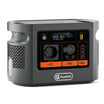
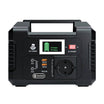
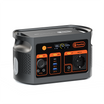
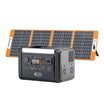
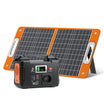
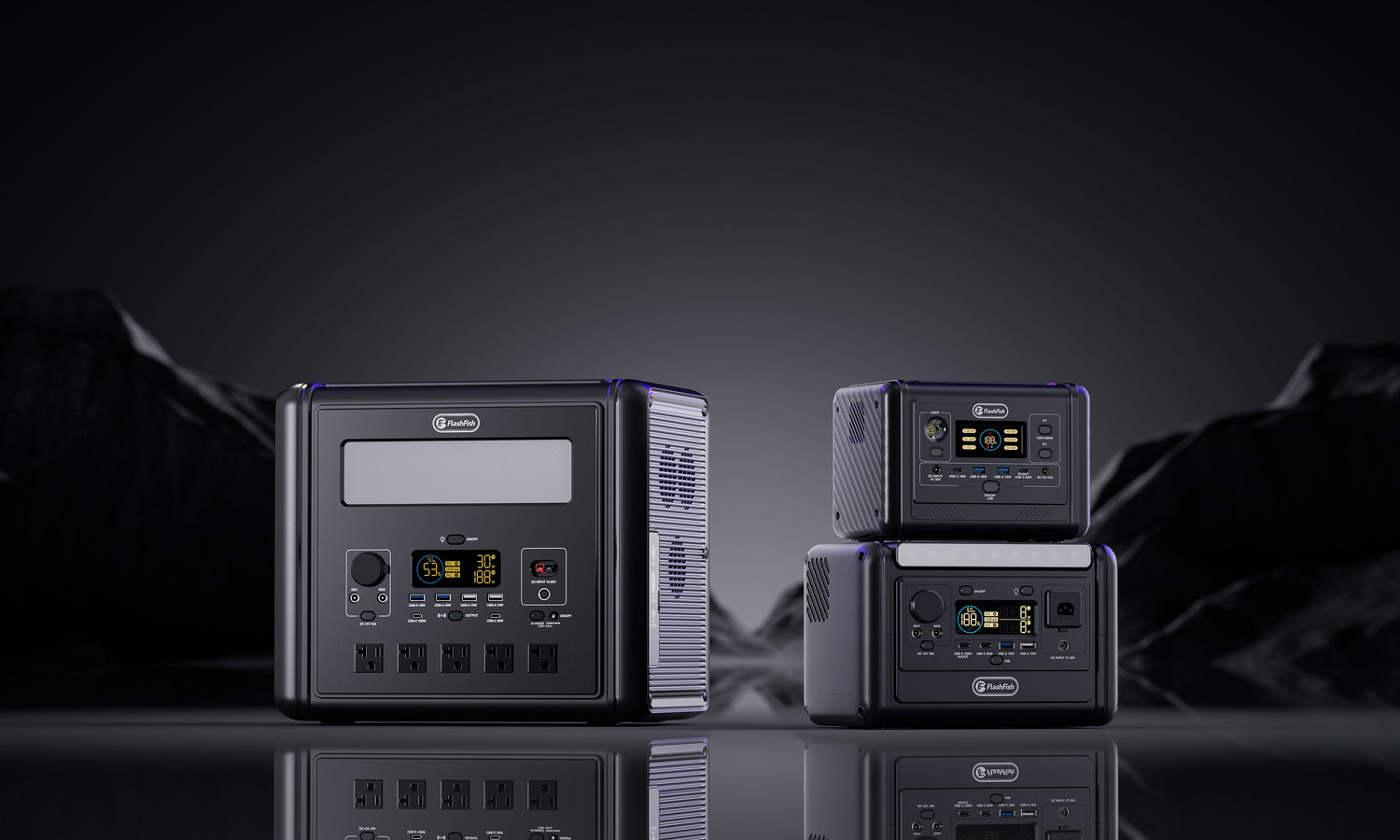
The manual-derived product records for the FlashFish T1200S and FlashFish T2000 list high-temperature, overload, short-circuit and over-current protections. That is useful product-specific evidence that the functions are documented. It does not identify the cause of an individual shutdown, supply a universal reset interval or replace the current Europe manual.
When a portable station fits — and when it does not
It fits when the verified continuous output, port limits, device startup behavior, ventilation and operating environment all match the planned use. Compare current models in the FlashFish portable power station collection using the same STOP questions.
It does not fit when the load or environment cannot stay within documented limits, a critical device needs assured continuity, equipment is damaged, or the user would need an improvised adaptor, repeated reset or protection bypass to make the setup work.
Safety note
Stop using the station if there is smoke, a burning smell, swelling, leakage, cracking, discoloration, unusual noise, damaged connectors or heat that is unsafe to touch. Move away and follow local emergency guidance if there is immediate danger. Otherwise, keep the unit isolated from use and contact the manufacturer or a competent service provider. This guide does not provide repair instructions.
FAQ
Is an overload shutdown the same as an overtemperature shutdown?
No. Overload points first to electrical demand or a fault in the connected load path, while overtemperature points first to heat, ventilation, ambient conditions or sustained operation. The product manual and displayed warning still control the next step.
Can I restart a power station immediately after it shuts down?
Do not restart automatically. Disconnect loads, inspect the station, cables and connected equipment, move it to a safe ventilated location and follow the model manual. Stop using it if damage, odor, swelling, leakage or abnormal heat is present.
Does a protection shutdown prove the battery is damaged?
No. A protection response may prevent damage, but the warning alone does not prove the battery is healthy or damaged. Repeated or unexplained shutdowns need manufacturer or qualified-service review.
Can one low-watt appliance still cause an overload warning?
Possibly. Startup demand, a faulty charger, a damaged cable, an overloaded adaptor or several simultaneous loads can matter. Check the complete load path instead of the appliance's headline wattage alone.
When should I stop using the station and seek help?
Stop if there is a burning smell, smoke, swelling, leakage, cracking, discoloration, unusual noise, heat that is unsafe to touch, damaged connectors or a warning that returns with the loads removed. Follow the manufacturer support route.
Sources and further reading
- UK Health and Safety Executive: Introduction to electrical safety — pre-use checks and stop-use signs.
- Electrical Safety First: Extension leads and adaptors — overload, overheating and daisy-chain boundaries.
- Electrical Safety First: Power bank safety — conservative heat and battery behavior.
- FlashFish product-source bundle, extracted from the T1200S and T2000 manuals — protection names only; original regional manuals still require human verification.
Editorial viewpoint: a shutdown is information, not permission. The professional response is to preserve the evidence, reduce uncertainty and restart only when the manual and physical inspection support it.
Human review required before publication: regional manual wording, safety language, rendered FAQ/schema parity, links, image crop, author credentials and a named qualified reviewer.



Zostaw komentarz
Ta strona jest chroniona przez hCaptcha i obowiązują na niej Polityka prywatności i Warunki korzystania z usługi serwisu hCaptcha.