




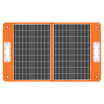
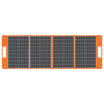


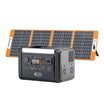

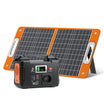

Short answer: do not assume a portable power station is waterproof. Look for a model-specific IP code and the exact conditions attached to it. If the current manual does not state water protection, plan for dry use: keep the station, plugs, adapters and cables away from rain, splash, condensation and pooled water.
This is a documentation and setup guide, not a water test. No FlashFish unit was sprayed, submerged or operated in rain for this article.
The five-part DRY-IP decision
| Check | Evidence to collect | Stop condition |
|---|---|---|
| Documentation | Current model manual, IP code and water warnings | No model-specific protection statement |
| Rain path | Roof coverage, wind direction, ground slope and splash sources | Rain, runoff or condensation can reach the station |
| Your connections | Every plug, adapter, cable joint and open cover | A live connection is wet, exposed or lying on the ground |
| IP-code scope | Test condition, orientation, closed-cover rule and exclusions | The planned setup falls outside the documented condition |
| Post-exposure response | Manufacturer stop-use and inspection instructions | The unit was wet, submerged, damaged, hot, odorous or abnormal |
D: start with documentation, not product shape
Rubber flaps, a sturdy case and an outdoor photograph are not an IP test. Search the exact model manual and product specification for an IP code and for phrases that define permissible water exposure. Record whether the statement applies during storage, transport or operation.
The IEC definition of enclosure protection separates access protection, solid-object ingress and harmful water ingress. That precision matters: “protected against a stated water test” is narrower than “waterproof everywhere.”
R: map how water can actually travel
Rain rarely falls straight down. Wind can drive it under an awning; water can run along a cable; a wet tent wall can touch a plug; feet can splash a low station; and cold equipment can collect condensation after a temperature change. Put the station on a stable, raised, dry surface inside a genuinely dry zone, with clearance for ventilation.
Y: inspect the whole electrical chain
A power station is only one part of the system. Check the appliance plug, extension lead, adapters, solar lead and every connection. Electrical Safety First warns that water and electricity are a dangerous combination. A dry enclosure does not make a wet cable joint acceptable.
- Keep plugs and cable joints off the ground and away from tent entrances.
- Do not handle switches or connectors with wet hands.
- Do not route a cable through puddles or where a vehicle can crush it.
- Keep ventilation openings clear; do not wrap a running station in fabric.
- Use the campsite electrical system only under its operator rules.
I: translate the IP code carefully
An IP code normally has two characteristic numerals. The first concerns access and solid objects; the second concerns water. An “X” means that a numeral is not specified for that position. The code must be read with the product documentation because test orientation, closed covers and other conditions can matter.
| Claim or observation | What it establishes | What it does not establish |
|---|---|---|
| No IP code found | No code was verified in the checked documents | It does not prove water protection |
| Port flap is present | A physical cover exists | It does not establish a tested water-ingress level |
| IP code in the current manual | Protection under the stated test and conditions | It may not include open covers, connected plugs, submersion or damaged seals |
| Outdoor lifestyle image | An intended usage context | It is not a laboratory result or permission to operate in rain |
P: stop after exposure; do not perform a “quick test”
If the station or a live connection gets wet, keep people away and stop using it. Disconnect or isolate power only when that can be done without touching wet live equipment. Follow the model instructions and contact the manufacturer or a qualified service route before charging or turning it on again. The Devon and Somerset Fire and Rescue Service battery guidance is a reminder that a submerged or damaged battery deserves caution, not an improvised restart.
Move away and contact local emergency services if there is smoke, hissing, unusual heat, swelling, leaking material or fire. Do not rely on smell or a dry exterior to assess internal condition.
What the current FlashFish records establish
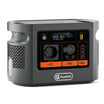
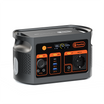
The authoritative FlashFish database verifies the T1200S as a 768Wh station with 1,200W continuous AC output, and the T2000 as a 1,536Wh station with 2,000W continuous AC output. Those electrical values help with load selection; they do not establish water protection.
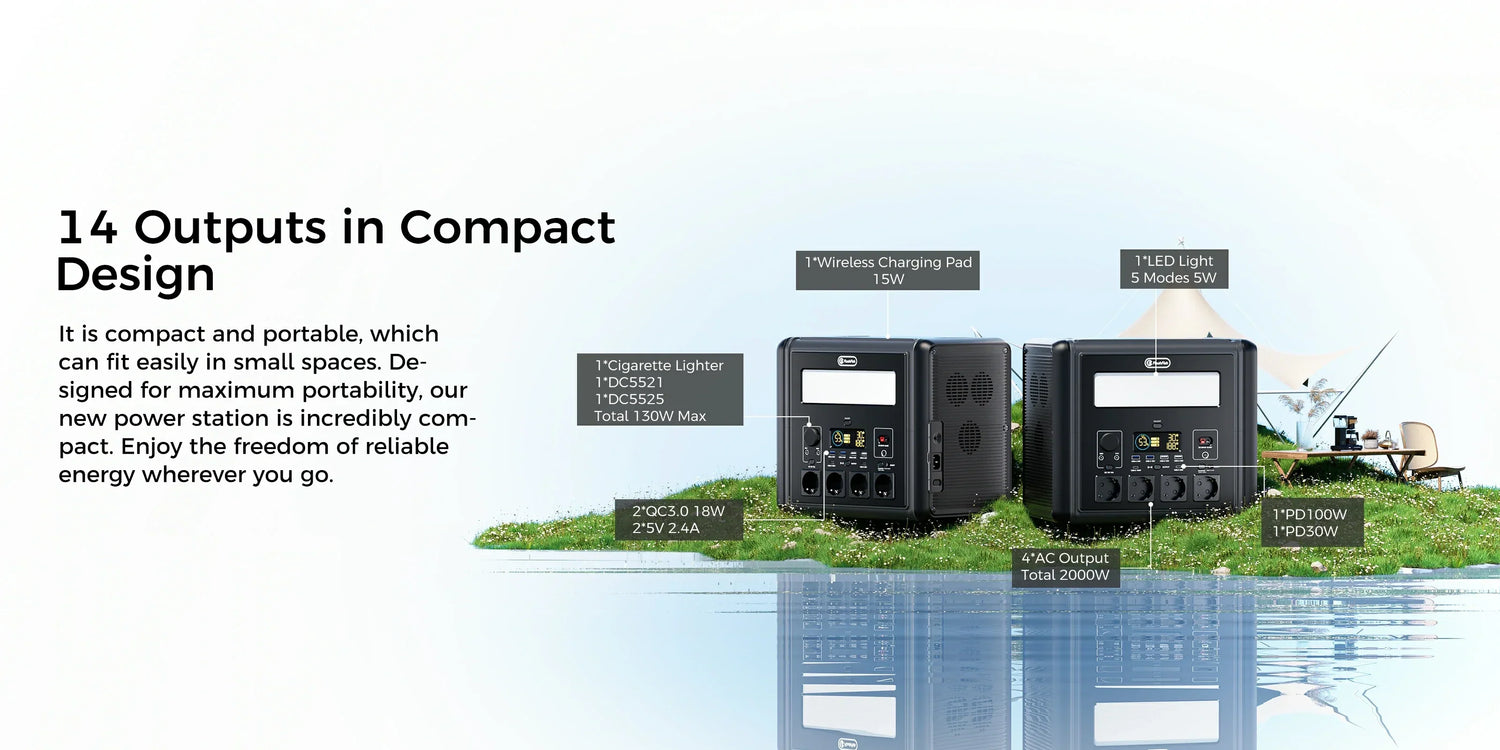
The database does not provide an IP rating for T1200S or T2000. This guide therefore treats both as dry-use equipment unless a current model manual explicitly says otherwise. The featured image shows a dry, covered camping scene and is not evidence of rain resistance.
A practical dry-zone plan for camping
- Read the station, appliance and campsite instructions before departure.
- Choose a raised, stable position well inside a dry shelter, not at the awning edge.
- Trace wind-driven rain, roof runoff, wet fabric and foot-traffic splash paths.
- Route cables with a drip path away from connections and keep joints off the ground.
- Keep the unit ventilated and accessible for shutdown; never seal it in an improvised box.
- Pause operation when conditions change. Move and reconnect equipment only when everything is dry and safe.
When a portable power station fits the plan
- The exact model instructions permit the setup and all equipment remains inside a controlled dry zone.
- The station is raised, stable, ventilated and protected from runoff, condensation and splash.
- Every plug, adapter and cable joint is dry, correctly rated and protected from damage.
- A responsible adult can monitor the setup and stop it before weather reaches the equipment.
When it does not fit
- The plan depends on an outdoor photo, port flap or vague “rugged” wording instead of a documented rating.
- The only shelter is a table, loose tarpaulin or sealed container that can leak, blow away or trap heat.
- Cables must cross wet ground or connections cannot be kept dry.
- The unit has already been wet, submerged, dropped or damaged and has not been assessed through the approved service route.
Frequently asked questions
Does no IP rating mean a portable power station is waterproof?
No. A missing rating gives no basis for a water-protection claim.
Can I run a portable power station under a camping table in rain?
A table alone is not controlled protection from wind-driven rain, runoff, splash or wet cables.
Does an IP rating cover open ports and connected plugs?
Not automatically. Read the exact rating conditions and manufacturer instructions.
What should I do if rain reaches the power station?
Stop use safely, keep people away from wet live equipment and follow the manufacturer or emergency route; do not restart it merely because the case looks dry.
Can I put the unit in a sealed plastic box while it runs?
Do not use an improvised enclosure that can obstruct ventilation, trap heat or collect condensation.
Are FlashFish T1200S and T2000 waterproof?
The current authoritative product database supplies no IP rating for either model, so treat them as dry-use equipment unless a current manual explicitly states otherwise.
Sources and evidence boundary
- IEC Electropedia — what enclosure protection and IP terminology describe.
- Electrical Safety First — general outdoor electrical-safety guidance.
- Devon and Somerset Fire and Rescue Service — damaged and submerged battery caution.
- FlashFish product-source bundle and Europe product pages — verified model facts and the explicit absence of an IP value in the checked database.
Human review must confirm the latest model manuals, local safety wording and rendered links before publication.



Zostaw komentarz
Ta strona jest chroniona przez hCaptcha i obowiązują na niej Polityka prywatności i Warunki korzystania z usługi serwisu hCaptcha.