

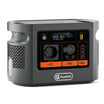
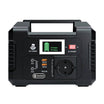

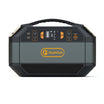
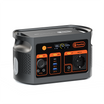


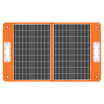
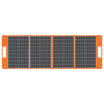


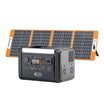

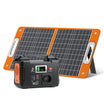

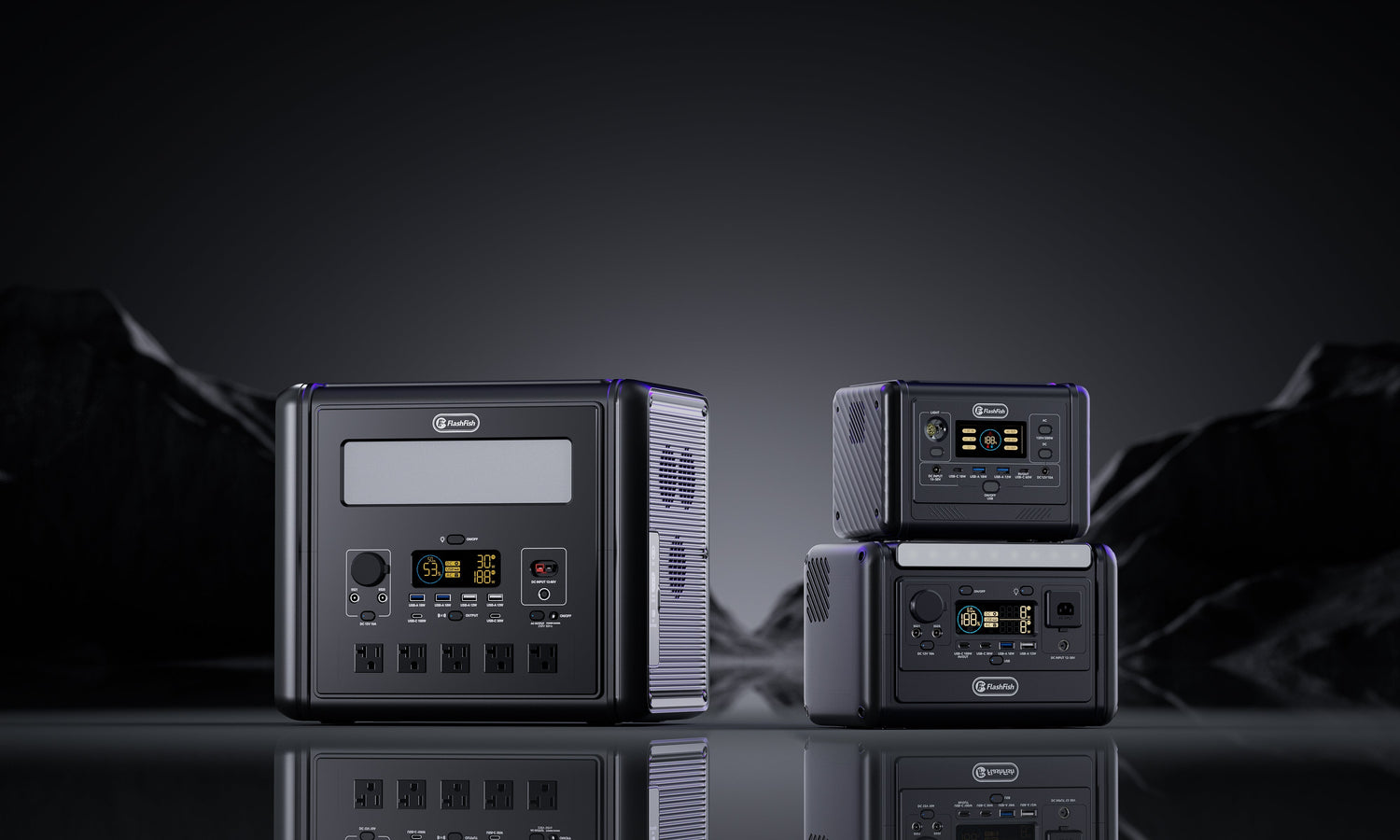
Short answer: stop using and charging a portable power station when it is swollen, dented, cracked, leaking, unusually hot, producing a chemical smell, hissing or cracking, smoking, repeatedly faulting without a clear load cause, or covered by a relevant recall. Capacity loss alone is not the same as a safety failure.
The safest decision is evidence-led: separate ordinary ageing from visible damage, then escalate rather than experimenting. Do not open a battery pack, bypass protection, improvise a charger or attempt a home repair.
Normal ageing, support review or immediate stop?
| Observation | Decision | Why |
|---|---|---|
| Less runtime than when new, with no damage, heat, smell, sound or faults | Record the change and compare it with the manual and load history | Capacity can fade with age; it is not a safety diagnosis by itself |
| One explained overload after connecting too much load | Disconnect the load and follow the model manual before a controlled retry | A protective shutdown may be normal, but the cause must be clear |
| Repeated unexplained shutdowns, charging errors or connector overheating | Stop and contact support before further use | Repeated faults need product-specific assessment, not repeated resets |
| Swelling, case deformation, leaking, impact damage, unusual heat, chemical smell, hissing or cracking | Stop using and charging immediately; keep people away and seek official instructions | Government and fire-service guidance treats these as failure warning signs |
| Smoke or fire | Evacuate, raise the alarm and call emergency services | Battery fires can spread rapidly and produce toxic smoke |
Use the CLEAR check
C — Case, ports and cables
Inspect without opening the unit. Look for swelling, dents, cracks, leaking, loose sockets, bent pins, melted plastic, corrosion and impact damage. Check the charger and leads too. Damage at the cable can mimic a station fault, but a damaged connector is still a reason to stop until the correct service route confirms the next step.
L — Load and charging behaviour
Write down what was connected, the simultaneous watts, which output was used and whether the error occurred while charging or discharging. One overload with an obvious cause differs from repeated shutdowns under a previously verified load. Do not keep resetting a unit when the cause is unknown.
E — Environment and warning signs
Health Canada says not to use swollen, dented or otherwise damaged lithium-ion batteries and to keep them dry and away from extreme temperatures. London Fire Brigade adds extreme heat, leaking, hissing, cracking and chemical smells to its visible warning list. These sources are general, not a remote diagnosis; the exact manufacturer instructions still control.
A — Alerts, recalls and records
Check the exact model, serial number, purchase record, firmware/app alert where applicable and official recall notices. Photograph only when it is safe to do so, without handling a hot, swollen, smoking or unstable unit. Preserve error codes and the load list for support.
R — Response and responsible disposal
For a non-emergency fault, stop use and contact the manufacturer or retailer. For smoke or fire, leave immediately and call the local emergency number; do not attempt a blog-guided intervention. Batteries do not belong in household rubbish. Ask the local municipality or authorised battery collection service for the correct route, and disclose that the unit is damaged before moving or transporting it.
A no-guessing support record
| Record | Your evidence |
|---|---|
| Model, serial and purchase date | ________________ |
| Visible damage or warning sign | ________________ |
| Load and charger connected | ________________ |
| Error code and time | ________________ |
| Temperature/weather context, if safely known | ________________ |
| Recall/manufacturer page checked | ________________ |
| Support case and next instruction | ________________ |
What FlashFish protection lists do—and do not—prove
The local FlashFish product-source bundle lists high/low-temperature, over-discharge, over-charge, overload, short-circuit and over-current protection categories for T1200S and T2000. Those are useful design records. They do not certify that a visibly damaged unit is safe, reveal every internal condition or authorise repeated resets.
Likewise, a cycle-life statement is not a retirement date. A unit with reduced capacity but no safety warning may simply no longer fit the job; a new-looking unit with swelling, heat or smell should be stopped. Compare active FlashFish portable power stations only after the current unit has a safe disposition and the replacement is sized from real loads.
When continued use may fit
- No physical damage, unusual heat, smell, sound, leaking, smoke or recall applies.
- The cause of a single overload is documented and the manual permits a restart after the load is removed.
- The original or approved charger, cables and environment meet the model instructions.
- The station still meets the required energy and output job with a reasonable reserve.
When FlashFish—or any portable station—does not fit
- Any critical warning sign is present or support cannot confirm safe continued use.
- The user plans to open, repair, modify or bypass the battery or protection system.
- The station must support safety-critical equipment without an approved independent continuity plan.
- The unit repeatedly fails under verified loads, or its current capacity no longer supports the intended job.
Frequently asked questions
Does lower capacity mean the station is unsafe?
No. Capacity loss can be normal ageing. Judge safety from damage, abnormal heat, smell, sound, leaking, smoke, repeated faults, recalls and manufacturer assessment.
Should I keep using a swollen station?
No. Stop using and charging it and seek manufacturer/local-authority instructions. If it smokes or catches fire, evacuate and call emergency services.
Can a BMS prove the station is safe?
No. A BMS can monitor and interrupt certain conditions, but it cannot replace physical inspection, recalls, manual limits or manufacturer review.
Is one overload shutdown a retirement sign?
Not automatically. Remove the load and follow the manual. Repeated or unexplained faults require support review before reuse.
Can I repair a damaged station myself?
Do not open or modify the battery pack. Use the manufacturer or an authorised service route.
Can it go in household rubbish?
No. Follow the municipality or authorised battery collection route and disclose damage before any transport.
Sources and evidence boundaries
- Health Canada: Lithium-ion battery safety — damage, charging, storage and disposal boundaries.
- London Fire Brigade: warning signs — heat, swelling, leaking, smell, sound and emergency response.
- European Commission: Batteries — EU information, reuse and recycling context.
- FlashFish product-source bundle and T1200S Europe page — model protection context, not a remote condition assessment.
Human review note: this is risk-triage education, not product diagnosis, emergency-response training or a damaged-battery transport instruction.



Zostaw komentarz
Ta strona jest chroniona przez hCaptcha i obowiązują na niej Polityka prywatności i Warunki korzystania z usługi serwisu hCaptcha.