

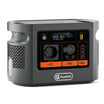
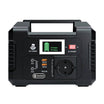

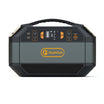
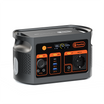


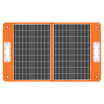
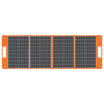


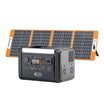

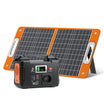


Evidence boundary: this is a specification-led planning guide, not a hands-on workshop test. No e-bike charger, tool-battery charger, laptop, cable system or full working day was tested. The exact regional labels and manuals must decide each connection.
Use BIKE before buying or connecting anything
| BIKE step | Evidence to record | Stop condition |
|---|---|---|
| B — Bench loads | Exact model and European input label for every e-bike charger, tool-battery charger, laptop adapter, lamp and network device. | A label is unreadable, wrong-region or confused with the battery-side output. |
| I — Input path | Plug, voltage, frequency, original adapter, cable rating, reel state, connector condition and any USB-C Power Delivery profile. | An improvised converter, daisy-chain, damaged lead or unsupported USB-C path is required. |
| K — Kilowatts and kilowatt-hours | Measured simultaneous watts plus observed Wh for representative charging sessions, laptop time and reserve. | The plan uses outlet count, peak output or rated battery Wh as a fixed working-day result. |
| E — Environment and exit | Dry stable surface, ventilation, protected cable route, supervision, venue rules and a clear stop/fallback plan. | Rain, condensation, heat, burning smell, damage, abnormal charging or repeated protective trips occur. |
Why the first step matters: the Shimano EC-E6002 manual is one useful example. It identifies a 100-240V, 1.5A, 50/60Hz input for that exact charger. The 1.5A field is not enough to publish a real watt figure, and it says nothing about another charger. Record rated input watts when supplied, or use a suitable wall-side measurement under qualified conditions.
What the T1200S evidence can—and cannot—settle
| Published planning value | T1200S evidence | Decision meaning |
|---|---|---|
| Rated battery capacity | 768Wh | An energy-budget input, not AC energy guaranteed to reach bicycle batteries and the laptop. |
| Continuous / peak AC | 1200W / 2400W | Use 1200W as the normal combined AC ceiling. Peak is not permission for sustained overload. |
| AC outlets | Four on the current Europe page | Four plugs still share the station limit and do not approve an extension chain. |
| USB-C | Up to 100W on one port | Useful for a compatible laptop and cable; it does not make every USB-C laptop a match. |
| Approximate mass | 12.45kg | Include the vehicle-to-bench carry, stairs and stable placement in the workshop plan. |
The current Europe page presents a 230V/50Hz T1200S offer. The local manual-derived record supports capacity and output but comes from a different regional voltage source. The delivered EU label and current regional manual must therefore settle supply details before use.
Decision step: Check the T1200S specification against your completed BIKE sheet.
Build one measured workshop-energy worksheet
| Load | Exact input evidence | Measured watts | Observed hours | Observed Wh |
|---|---|---|---|---|
| E-bike charger | Model, V, Hz, W or A, plug | Record safely | Representative charge | Meter reading or W × h |
| Tool-battery charger | Model, V, Hz, W or A, plug | Record safely | Representative charge | Meter reading or W × h |
| Laptop | AC adapter or USB-C PD profile | Record safely | Expected work time | Meter reading or W × h |
| Lights / network | Exact adapter labels | Record safely | Expected work time | Meter reading or W × h |
Add the observed Wh values, then leave margin for the station inverter, charger conversion, battery condition, temperature, unexpected jobs and the need to pack up with reserve. Separately add the watts of everything that may operate at once. Energy and simultaneous power answer different questions; both must pass.
Set up a dry, controlled repair point
- Confirm venue permission, working-area rules and the location of people, bicycles and cable routes.
- Place the station, chargers and laptop on a stable, dry, ventilated surface away from rain, wheel spray, metal debris and public foot traffic.
- Inspect every plug and cable. Fully unwind a permitted cable reel and never daisy-chain extension devices.
- Start one load at a time and check that the station display and charger behaviour match the recorded plan before adding another.
- Keep a non-electric fallback for job records, customer communication and safely returning partially charged batteries.
- Stop for heat, smell, scorch marks, sparks, frayed cable, unexpected shutdown, repeated trip or any charger/battery warning.
Common mobile-workshop mistakes
- Sizing from battery amp-hours: this omits charger input and conversion loss.
- Multiplying every input amp figure by 230V: this can overstate real watts when power factor is unknown and should not replace rated input power or suitable measurement.
- Counting sockets instead of total load: four outlets do not create four separate 1200W supplies.
- Ignoring laptop charging: a workshop computer can run for hours while chargers cycle.
- Treating a tent or van door as weather protection: wind-driven rain and condensation still reach equipment and connectors.
When FlashFish fits—and when it does not
When T1200S fits
- The exact EU charger and laptop evidence is readable and matches the delivered station.
- Measured simultaneous watts remain inside the continuous limit with margin, and observed Wh supports the planned session with reserve.
- The team can provide a dry, stable, ventilated and supervised work area with a protected cable route.
When T1200S does not fit
- The workshop depends on an unknown charger, improvised voltage conversion or unsupported adapter.
- Rain, condensation, public trip hazards or venue restrictions cannot be controlled.
- The business plan depends on a promised number of battery charges or an uninterrupted working day without measurement and fallback.
FAQ
Can T1200S run an e-bike charger and laptop together?
Possibly, but only after checking the exact European mains-input label for the charger and the laptop adapter or USB-C requirement. Add the simultaneous measured demand and compare it with the T1200S continuous limit; do not rely on connector count alone.
Can I calculate charger watts from a 1.5A input label?
Not accurately from that number alone. The cited Shimano manual identifies input voltage, current and frequency, but a defensible watt figure needs the charger's rated input power or a suitable wall-side measurement. Do not assume volts multiplied by amps is real consumption.
Should I power the laptop by AC or USB-C?
Use the T1200S USB-C output only when the laptop and cable support a compatible USB-C Power Delivery profile within the published 100W port limit. Otherwise use the original AC adapter and include its measured input in the load plan.
How many bicycle batteries will T1200S recharge?
This guide does not promise a count. Battery size, starting state, charger loss, station conversion loss, temperature, laptop use and reserve all change the result. Measure one representative charge and plan a conservative range.
Can a mobile workshop use the power station in rain?
Do not expose the station, chargers, laptop or connections to rain, puddles or condensation. If the venue cannot provide a dry, stable, ventilated and supervised arrangement that follows every manual and local rule, stop the electrical setup.
Sources and evidence notes
- FlashFish Europe T1200S page and the manual-derived local product database — station identity and planning limits, with a regional-source caveat.
- Shimano EC-E6002 user manual — one exact charger input example and model-specific instructions.
- Electrical Safety First cable guidance and garden electrical-safety guidance — damage, overload, reel and moisture boundaries.
Editorial viewpoint: a mobile bicycle workshop is not one appliance. BIKE keeps the charger bank, laptop, supply path, energy throughput and work environment separate so a product headline cannot replace the operating evidence.
Next step: Compare current FlashFish stations if the measured workshop load needs a different size.
Evidence checked . Human review is required for exact regional manuals and labels, professional-work and venue rules, electrical wording, author/reviewer credentials, links, metadata, image context and rendered FAQ/schema parity before publication.





Zostaw komentarz
Ta strona jest chroniona przez hCaptcha i obowiązują na niej Polityka prywatności i Warunki korzystania z usługi serwisu hCaptcha.