

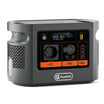
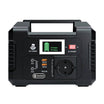

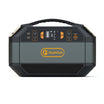
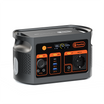







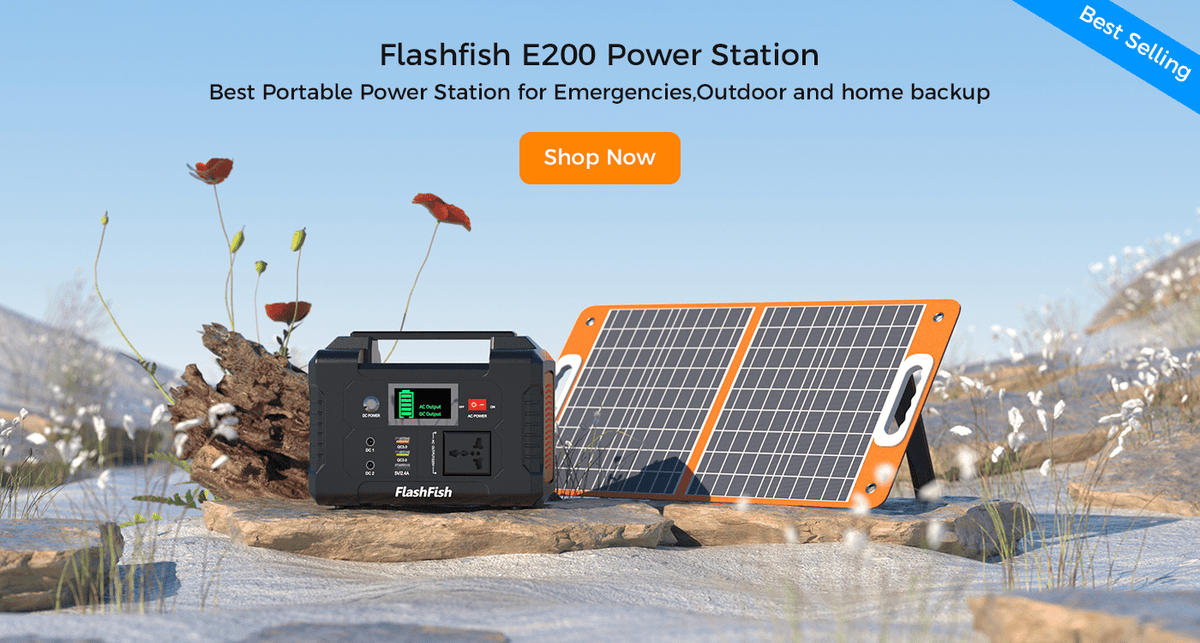
Short answer: choose A201 when its documented 18W USB-C path, slightly higher 172.8Wh nominal capacity and lower 1.7kg listed mass match the kit—and when any AC device does not require waveform evidence that the record lacks. Consider E200 when the load uses its documented DC or USB-A paths, or when a device is explicitly suitable for its known modified-sine AC output. Both are documented at 200W continuous and 400W peak; neither is a universal winner.
A201 and E200: documented fields only
| Decision field | FlashFish A201 | FlashFish E200 |
|---|---|---|
| Nominal capacity | 172.8Wh | 151Wh |
| Continuous / peak AC | 200W / 400W | 200W / 400W |
| Waveform | Not provided in authoritative local record | Modified sine |
| Regional AC | 230V; frequency not provided | 230V; frequency not provided |
| USB-C | One 18W PD port | None documented |
| USB-A | Two ports up to 18W each | Two QC 3.0 ports up to 18W plus one 5V/2.4A port |
| 12V DC output | 12V/10A, 120W | 12V/10A, 120W |
| Listed mass | 1.7kg | 1.85kg |
| Listed dimensions | 153 × 109 × 173mm | 208 × 110 × 158mm |
Use WAVE-PATH-CARRY
- WAVE — waveform evidence first. Read the AC device manual. If it requires pure sine or the requirement is unclear, E200's modified-sine output is not an evidence match and A201's missing waveform field is not a pass.
- PATH — choose one documented power path. AC adapter, USB-C, USB-A or 12V DC each has different voltage, protocol and cable requirements. Connector fit is not enough.
- CARRY — compare the whole kit. A201 is listed 150g lighter, but include approved adapters, cables and the actual bag.
Exactly three device-path examples
Example 1: an 18W-or-lower USB-C device
A201 has a documented 18W USB-C PD path; E200 has no USB-C port in the authoritative record. A201 has the cleaner direct path only if the source, cable and device support a compatible profile. A laptop that expects 45W or 65W does not become an 18W match because the connector fits.
Example 2: cameras and lights using approved USB-A inputs
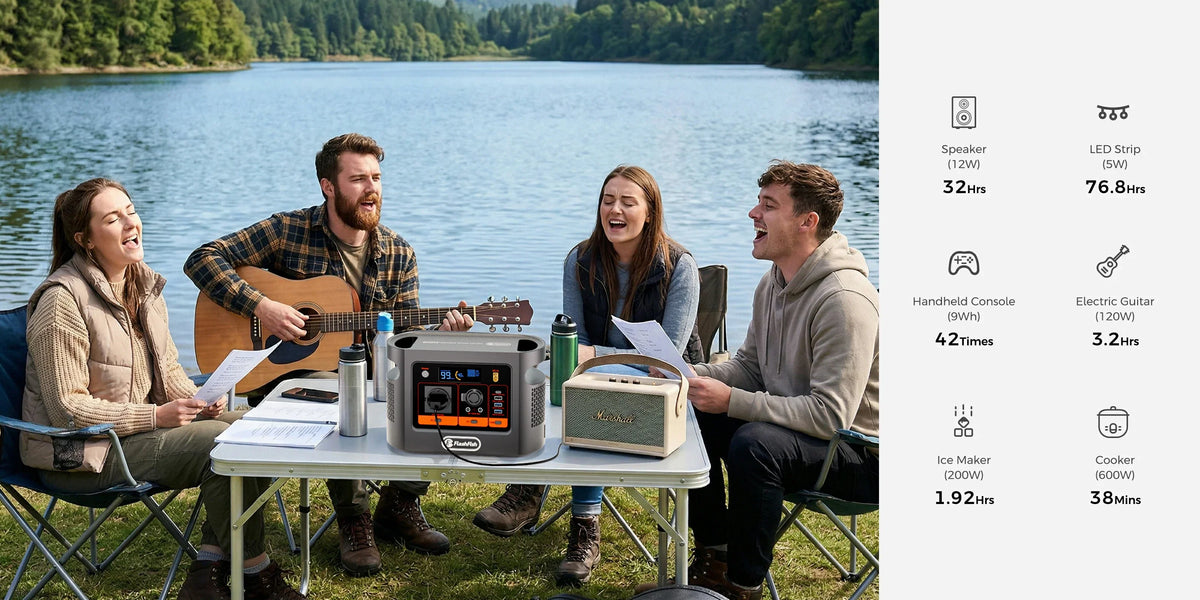
Both products document USB-A outputs, so the next questions are each device's voltage/current request, simultaneous port rules, nominal-energy need and carry preference. Do not turn nominal Wh into a charge-count promise without measurement.
Example 3: an AC device with unclear waveform needs
Choose neither until the device manufacturer and current station documentation resolve waveform and startup demand. E200 is explicitly modified sine; A201's missing waveform field cannot be treated as pure sine evidence.
Why 400W peak does not settle the choice
Both records list 200W continuous and 400W peak. Peak is a short-duration boundary, not permission to run a 300W appliance continuously and not proof that a motor, compressor or adapter will start correctly. The device's normal demand, startup behaviour, waveform requirements and complete simultaneous load all remain decisive. Keep operating demand below continuous output with practical headroom.
Nominal energy and carry mass: useful, but secondary
A201's 172.8Wh is about 21.8Wh more nominal capacity than E200's 151Wh, while its listed mass is 150g lower. Those are real planning differences, but neither converts directly into runtime. AC conversion, DC regulation, device cycling, battery state, temperature and shut-down thresholds affect delivered energy. When the intended device path fails, more nominal Wh does not repair the mismatch.
Choose A201, E200—or neither
| Decision | Evidence-based condition |
|---|---|
| Lean A201 | You need a documented 18W USB-C path, your devices fit it, 172.8Wh nominal and 1.7kg suit the kit, and no AC decision depends on a missing waveform field |
| Lean E200 | Your documented load uses its USB-A or DC path, or its manufacturer accepts modified-sine AC, and 151Wh nominal / 1.85kg suit the session |
| Choose neither yet | The device needs pure sine, more than 200W continuous, an unresolved startup surge, a higher USB-C profile, a missing frequency field or critical uninterrupted operation |
What both product pages cannot decide for you
- The exact input profile of your phone, camera, laptop, router or appliance.
- Whether the load's startup behaviour fits available headroom.
- A201 AC waveform, which remains undocumented in the local authoritative record.
- Session runtime or number of charges from nominal Wh alone.
- Suitability for medical, safety-critical, unattended or seamless-backup use.
- Condition and authenticity of third-party cables and adapters.
Compare the current Europe A201 and E200 pages after checking your device path. If waveform or a regional field controls the decision, pause and obtain current written documentation rather than guessing from the product name.
FAQ
Is A201 better than E200?
A201 has more nominal Wh, lower listed mass and an 18W USB-C port. E200 has a known modified-sine boundary. The better choice depends on a documented device path, not one headline.
Do both models provide 200W?
Both authoritative records list 200W continuous and 400W peak AC output. Peak is not a continuous operating allowance.
Does A201 have pure-sine AC?
The authoritative local record does not provide A201 waveform. Do not infer pure sine from silence or from another model.
Can E200 charge a USB-C laptop?
E200 has no documented USB-C port. A separate AC adapter may still fail on wattage or waveform evidence, so check the exact laptop and adapter rather than assume.
Which model runs longer?
A201 has higher nominal Wh, but no universal runtime follows. Measure the exact path and include conversion losses, device cycling, battery state and temperature.
Conclusion
WAVE-PATH-CARRY keeps the decision honest: resolve waveform, prove one approved path and then compare the complete carry kit. A201's practical advantages are its documented 18W USB-C path, higher nominal capacity and lower listed mass. E200's value is clearest where its documented USB-A/DC paths fit and modified-sine AC is explicitly acceptable. Ask FlashFish Europe when a waveform or regional field is missing.
Sources and evidence limits
- FlashFish Europe A201 page and authoritative local record.
- FlashFish Europe E200 page and authoritative local record.
- USB-IF USB Charger and Power Delivery overview.
- HSE portable electrical equipment guidance.
Evidence checked 28 September 2026. No runtime, charging speed, delivered energy or device compatibility was tested.



Zostaw komentarz
Ta strona jest chroniona przez hCaptcha i obowiązują na niej Polityka prywatności i Warunki korzystania z usługi serwisu hCaptcha.