






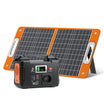


Short answer: record household electricity use hourly—or every 30 minutes where available—for seven consecutive days, including a weekend. Reduce the record to three decision numbers: average daily energy in kWh, energy used during the battery's intended time window in kWh, and the highest simultaneous demand in kW.
This pre-purchase profile helps European households decide whether storage capacity, output power and solar timing match a real objective. It is a screening method, not a savings promise, annual forecast or installation approval.
Why a bill total is not a load profile
A monthly bill may show 240kWh, but it cannot tell whether most use occurs under midday solar, after sunset or in one short cooking peak. Storage moves energy through time; its useful role therefore depends on the shape of demand, not only the total.
The European Commission Joint Research Centre PVGIS manual accepts custom hourly consumption data for battery calculations and can also use a 24-value daily profile. That input design is a useful reminder: when energy is used matters to storage modelling.
Build the seven-day worksheet
- Define one objective. Choose self-consumption, evening-load shifting or a limited selected-load backup plan. Do not combine every possible benefit into one promise.
- Export meter data. Use hourly or half-hourly readings from the meter, retailer or energy monitor where available.
- Add a load diary. Note cooking, laundry, water heating, EV charging, home-office hours, visitors, absences and unusual events.
- Mark solar conditions. Record location, panel orientation, shade changes and the season represented by the week.
- Separate fixed and flexible loads. A router or refrigerator may be difficult to move; laundry or dishwashing may be schedulable.
- Flag simultaneous peaks. Mark which appliances caused the highest intervals and whether they must operate together.
- Keep the raw file. Averages are useful, but the source intervals are needed to test alternative schedules later.
| Day | Total kWh | Target-window kWh | Highest interval kW | Flexible loads | Exceptions |
|---|---|---|---|---|---|
| Mon | ____ | ____ | ____ | ____________ | ____________ |
| Tue | ____ | ____ | ____ | ____________ | ____________ |
| Wed | ____ | ____ | ____ | ____________ | ____________ |
| Thu | ____ | ____ | ____ | ____________ | ____________ |
| Fri | ____ | ____ | ____ | ____________ | ____________ |
| Sat | ____ | ____ | ____ | ____________ | ____________ |
| Sun | ____ | ____ | ____ | ____________ | ____________ |
Calculate three numbers—and keep their meanings separate
1. Average daily energy
average daily kWh = seven-day total kWh ÷ 7. This locates the household's energy scale. It does not mean a battery should equal one full day, nor does a rated battery capacity equal delivered AC energy.
2. Target-window energy
Add only the intervals the battery is intended to support, such as 18:00–23:00. Then show the median and highest day, not just the average. A battery chosen for evening shifting should be compared with evening demand, while a selected-backup plan should list only the chosen loads and their duration.
3. Simultaneous peak demand
Use the highest credible interval plus appliance startup evidence. A 5kWh-class capacity says nothing by itself about whether several high-power appliances can run together; output kW is the separate gate.
Interpret the profile with solar timing
The JRC PVGIS battery tool models energy flowing into and out of storage from battery capacity and hourly or daily demand. Use that principle, together with location-specific PVGIS solar estimates, to test seasons and schedules. Do not paste one sunny week into a 12-month savings claim.
SolarPower Europe notes that household contribution varies with consumption, installation conditions, orientation and local irradiation, while national arrangements and technical standards matter. A useful decision record therefore pairs the load profile with a country/site checklist.
Country and site checklist
| Gate | Question | Stop or escalate when |
|---|---|---|
| Permission | What do national, grid, building, landlord or co-owner rules require? | The responsible authority or permission path is unclear |
| Meter/tariff | Can the meter and tariff record import/export and the intended schedule? | The financial model relies on an unverified tariff or meter behaviour |
| Placement | Are weight, clearance, weather, access and cable routes acceptable? | The manual/site requirements cannot be retained |
| Electrical design | Who verifies grounding, protective devices and permitted connection? | The plan depends on DIY grid wiring or bypassing protection |
| Service | Can support or a qualified technician access the equipment? | Maintenance access or an escalation route is missing |
Apply the profile to SR5000 without overclaiming
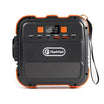
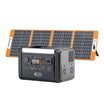
The current Europe FlashFish SR5000 product page and local bundle identify a 5120Wh LiFePO4 system with 2400W rated off-grid AC output, up to 2000W PV input, app-control context and roughly 59kg weight. These figures create four checks:
- Energy: compare the 5.12kWh rated class with target-window demand, but do not assume 5.12kWh reaches appliances.
- Power: compare selected simultaneous loads and startup events with 2.4kW rated off-grid output.
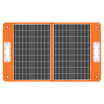
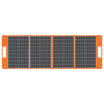
- Refill: compare the permitted PV input with panels, orientation, shade and seasonal location evidence.
- Installation: treat a roughly 59kg fixed-storage product differently from a carryable camping station and resolve all site/local requirements.
When SR5000 may fit
- The measured target-window energy is compatible with a 5.12kWh rated storage class after conservative losses and reserve settings are reviewed.
- Selected simultaneous loads stay within the verified output and startup boundaries.
- The solar/site plan can use the supported PV input without assuming nameplate watts are always available.
- Permission, placement, grounding, grid/meter and service questions have named owners.
When SR5000 does not fit—or needs a different plan
- The goal is lightweight camping power rather than fixed storage.
- The household expects full-property backup or loads above the verified off-grid output.
- The business case depends on assured savings, payback or annual yield from one seven-day sample.
- Local approval, meter, site, electrical or maintenance requirements remain unresolved.
Common load-profile mistakes
- Recording only seven sunny summer days and calling them annual.
- Using monthly kWh without time-of-use data.
- Comparing rated Wh directly with delivered AC energy.
- Ignoring a weekend, holiday, EV charge or electric-heating event.
- Averaging away the highest simultaneous load.
- Adding assumed future loads without labelling the scenario.
Frequently asked questions
Why record seven days?
A continuous week captures weekday and weekend timing better than one bill total, while remaining a manageable first decision sample.
Which three numbers matter most?
Average daily kWh, target-window kWh and highest simultaneous kW answer the energy, timing and output questions.
Can a monthly bill size storage?
Not by itself. It usually hides when energy was used, which is central to storage value.
Does 5.12kWh mean 5.12kWh reaches appliances?
No. Rated capacity is not automatically delivered usable AC energy; settings, losses and conditions matter.
Can seven days prove annual savings?
No. Season, weather, tariffs, rules and behaviour vary. Use the week for screening and test longer periods before financial conclusions.
Is balcony storage legal everywhere in Europe?
No. Country, grid, building, meter and installation requirements differ and must be checked locally.
Sources and further reading
- European Commission JRC: PVGIS manual and PVGIS battery tool — hourly consumption, solar variability and storage-flow context.
- SolarPower Europe: Plug-In Solar PV — consumption, site and regulatory variation.
- European Commission JRC residential self-consumption research — household variability and oversizing caution.
- FlashFish Europe: SR5000 and local product-source bundle — current first-party product class and limits.
Human review note: this is a pre-purchase worksheet, not an installation instruction, legal opinion, tariff calculation, savings forecast or field test.





Leave a comment
Este site está protegido pela Política de privacidade da hCaptcha e da hCaptcha e aplicam-se os Termos de serviço das mesmas.