
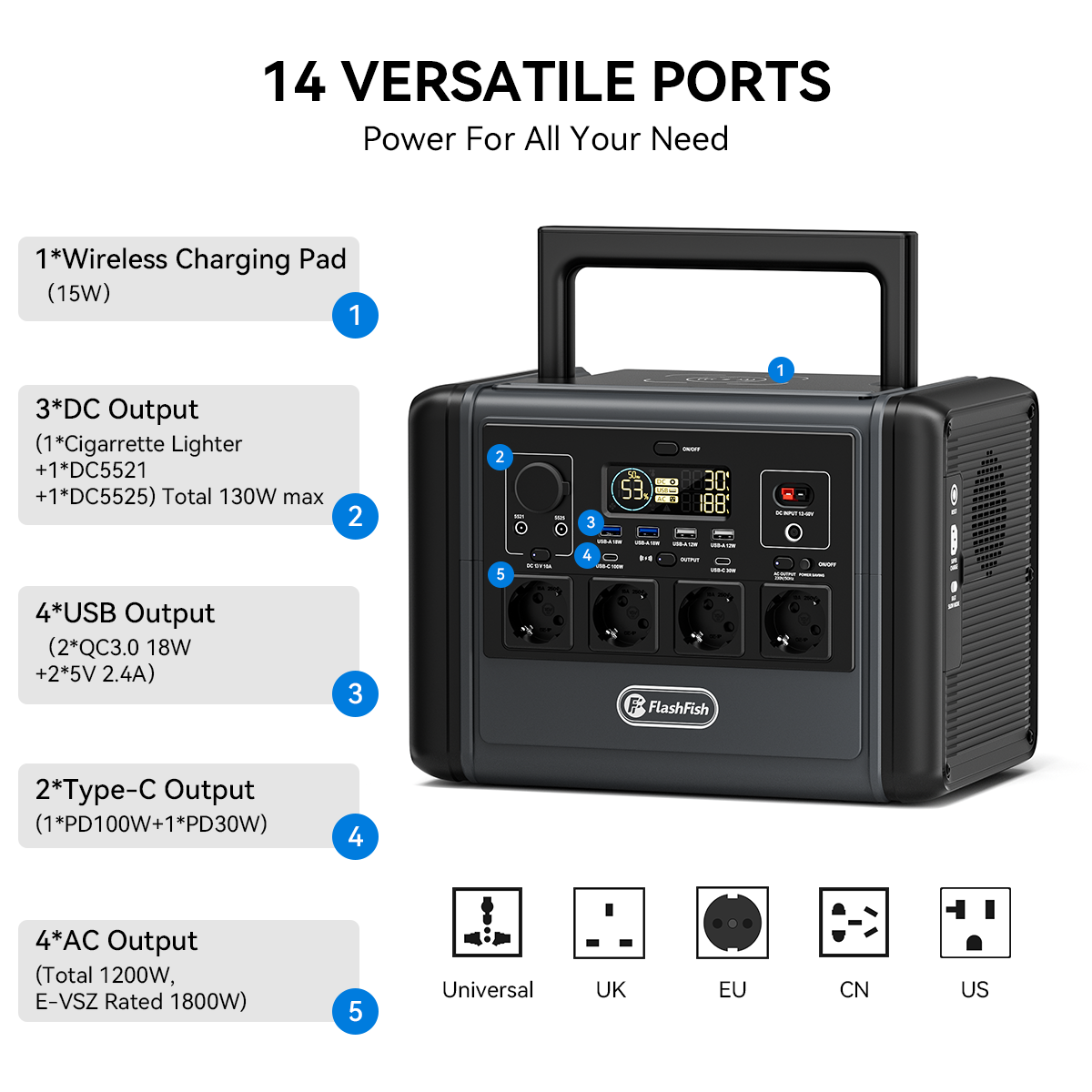
Short answer: the most common camping power mistakes happen before the trip: guessing device demand, packing the wrong cables, assuming perfect solar input, placing the station badly, leaving outputs unmanaged, and skipping a realistic home test. A simple pre-trip check makes the FlashFish T1200S more useful without relying on promised runtime.
Summer camping content from portable-power brands and review publishers keeps focusing on bigger batteries and higher output. Those numbers matter, but campsite success usually depends on a quieter question: did the power plan match the devices, connections, weather, and charging opportunities actually available?
The two-minute pre-trip check
| Check | What to record | Decision |
|---|---|---|
| Devices | Label watts, charger type, and hours needed | Remove non-essential loads first |
| Connections | AC plugs, USB cables, DC leads, and adapters | Pack only tested, compatible cables |
| Charging | Mains, vehicle, and solar opportunities | Plan for imperfect access and weather |
| Placement | Dry, stable, ventilated station location | Keep the battery protected and accessible |
| Test | One normal evening at home | Adjust the device list before departure |
Mistake 1: planning by device name instead of watts and hours
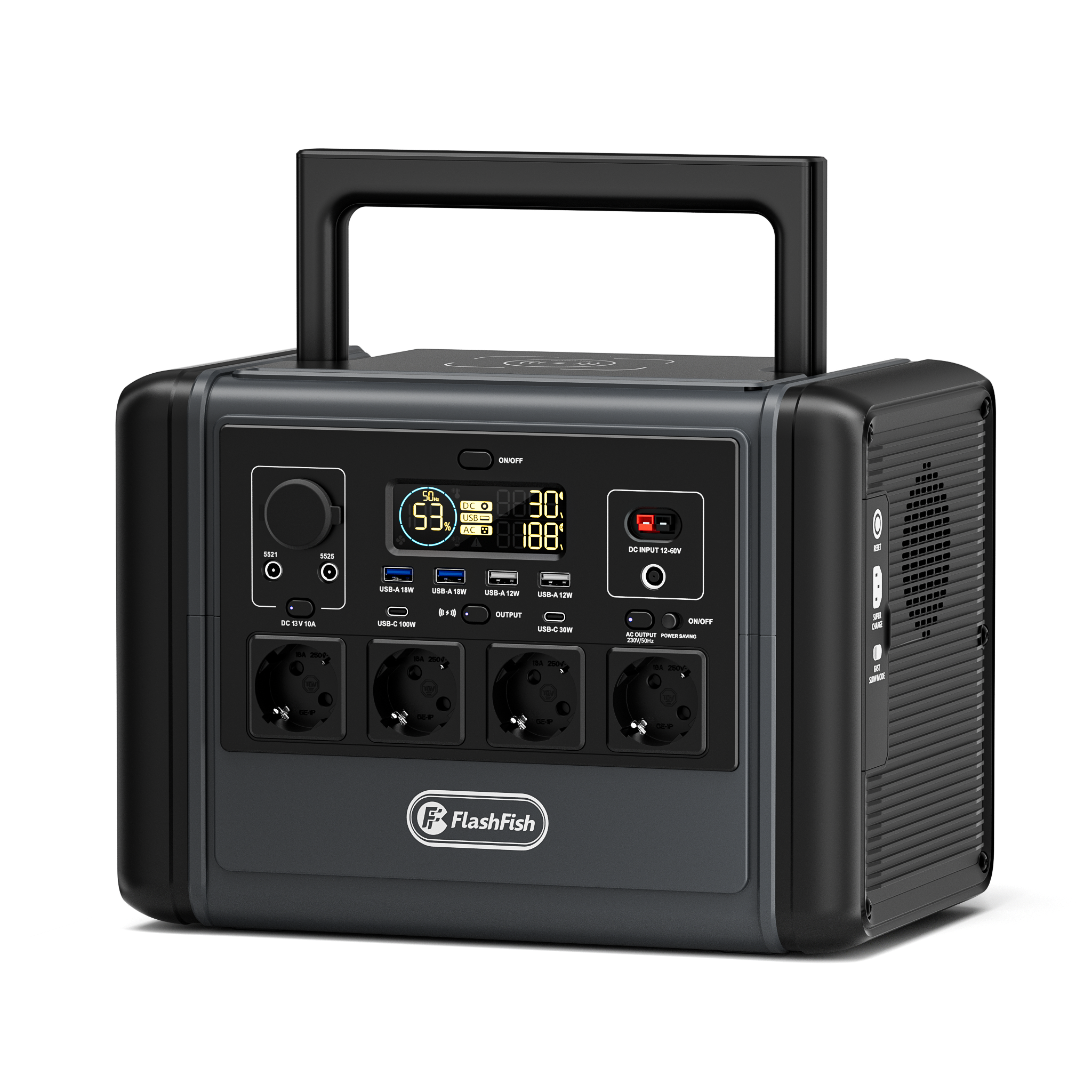
"Laptop", "cooler", and "light" are not useful energy measurements. Read each device label or power adapter, note its watts, and estimate how long it genuinely needs to run. The FlashFish T1200S Portable Power Station is listed as a 1200W, 768Wh LiFePO4 station, but those headline figures are planning limits rather than a guaranteed runtime for a mixed campsite.
Keep a reserve instead of planning to use every listed watt-hour. Conversion losses, changing device draw, temperature, battery state, and charging interruptions make real use less tidy than a spreadsheet.
Mistake 2: packing cables that have never worked together
A useful power station cannot help if the required cable, connector, or adapter is missing. Lay out every device at home and make a simple port map: which items use AC, USB, or DC; which cables belong to which device; and which adapters have already been tested.
Do not improvise incompatible solar connectors or electrical adapters at the campsite. Check the power station, panel, and cable manuals before the trip. For broader product comparison, use the FlashFish portable power stations collection and verify the exact ports on the selected model.
Mistake 3: treating maximum solar input as a daily guarantee
Solar output changes with sunlight, weather, season, location, shade, and panel direction. The U.S. Department of Energy's solar-radiation overview explains that the amount of solar radiation reaching a location varies with time, season, weather, and landscape. That means a solar panel's rating is a useful reference, not a promise that the station will receive that power all day.
Browse the portable solar panels collection only after checking the T1200S input requirements and the panel's voltage, connector, and cable setup. Build the trip around conservative charging opportunities, not perfect sunshine.
Mistake 4: choosing a bad campsite position for the station
Keep the power station on a stable, dry surface with clear ventilation and easy access to the display and cables. Do not leave it where people can trip over leads, where rain or condensation can reach it, or where bedding and bags can block ventilation.
The station and solar panel need different conditions: the panel needs useful sunlight, while the battery station should remain protected according to its manual. Use a sufficiently long, compatible cable rather than placing the battery in direct sun simply to keep it close to the panel.
Mistake 5: leaving every output active
Turn on only the output groups needed for the current devices, and unplug chargers that are no longer useful. This is less about chasing a perfect efficiency number and more about making the system easy to understand. When the display changes, you should know which device caused it.
A small written device priority list also helps groups share power fairly: lighting and communication first, planned work or cooking devices next, and entertainment loads last.
Mistake 6: making the first real test at the campsite
Run one normal camping evening at home before departure. Use the same lamps, chargers, cooler, and cables planned for the trip. Watch how the devices start, how the display changes, and whether the cable layout is practical. Stop and review the setup if a device behaves unexpectedly or the station reports a fault.
This test also reveals whether the T1200S is the right size class. If the plan is lighter, compare compact options in the outdoor activities and camping collection. If the device list is much larger, reduce the load list or reassess the station rather than assuming every campsite plan should fit one model.
A people-first T1200S packing list
- Device list with label watts and expected hours
- Tested cables, adapters, and a labelled cable pouch
- Dry, stable placement plan with clear ventilation
- Realistic charging options that do not depend on perfect sunshine
- Priority order for shared devices
- Product manual and a completed home test
FAQ
Should I calculate an exact camping runtime?
Use a conservative estimate for planning, but do not treat it as a guarantee. Device draw, inverter losses, temperature, battery state, and charging conditions change the result.
Can I leave a portable power station outside overnight?
Follow the product manual and keep the station protected from moisture, condensation, unstable surfaces, blocked ventilation, and trip hazards. Do not assume a campsite is suitable just because the weather looks calm.
Is a bigger power station always better for camping?
No. Capacity and output must be balanced against portability, the real device list, charging access, and how often the station must be moved.



Оставить комментарий
Этот веб-сайт защищается hCaptcha. Применяются Политика конфиденциальности и Условия использования hCaptcha.