Portable Power Station Buying Guide Europe
Quick answer: Choose a portable power station by continuous output and device startup demand first, then compare battery capacity, weight and charging options. Wh describes stored energy; W describes power. More Wh cannot make an undersized output run a demanding appliance.
Sources and limits: The figures below are stated specifications from available FlashFish manuals, not measured usable energy or guaranteed runtime. A201, P56 and P66A now have EU manual records. P56 is listed as 288Wh in the store and 288.6Wh in its manual; P66A is listed as 144.34Wh and 144.3Wh respectively. Match the manual to your product label and ask FlashFish Europe support about version differences. Price, stock and delivery must be checked on the current product page and at checkout.
Engineering update, 21 September 2026: The supplied engineering specification, confirmed by FlashFish for current Europe models, supplements missing battery-chemistry fields. Model-version differences remain separate from nominal capacity and are not treated as measured runtime evidence.
Compact portable power stations: 120-200W
Start here when carry weight is important. Confirm every connected device and its startup demand against the exact model limits.
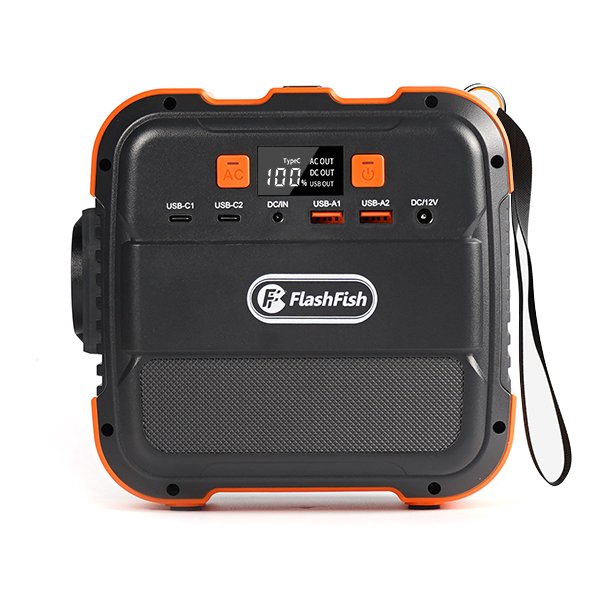
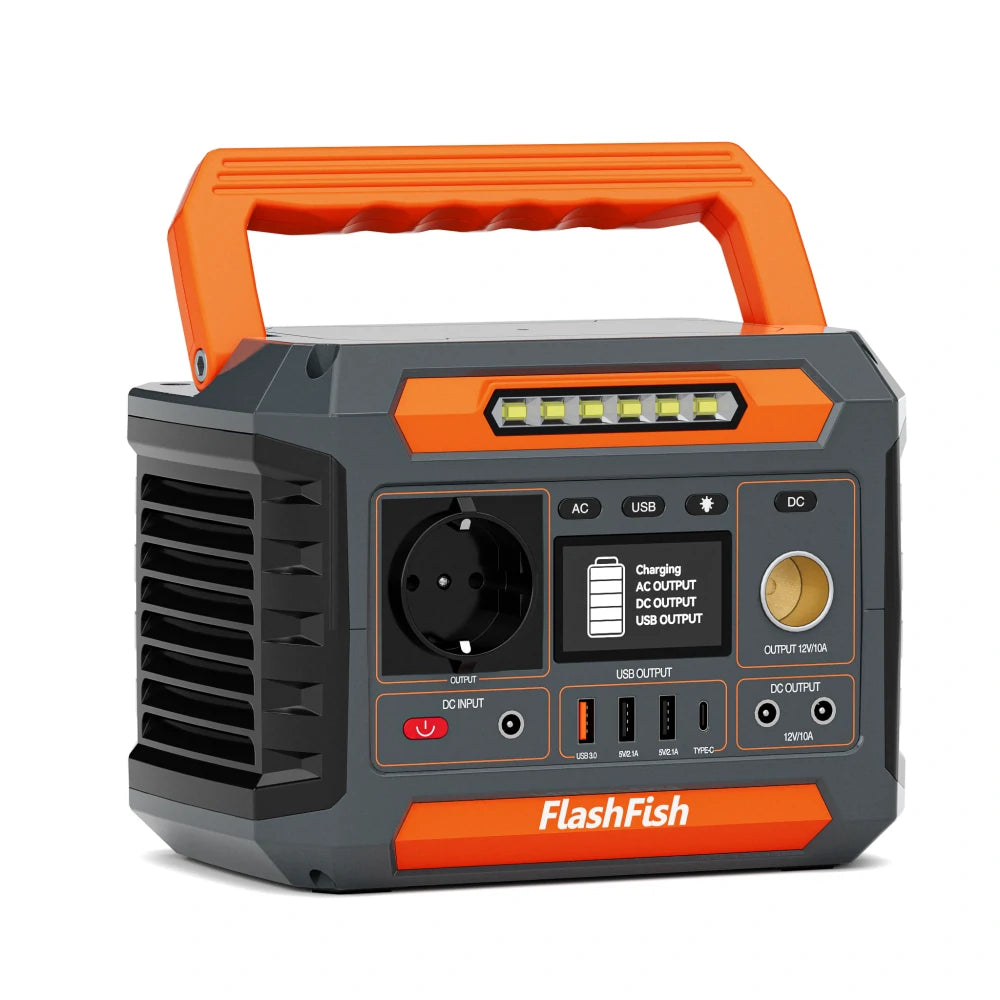
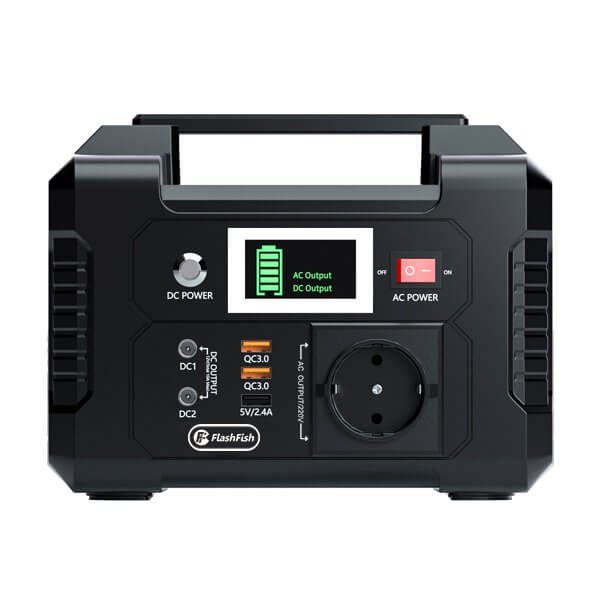
97.68Wh
144.3Wh (EU manual); 144.34Wh in the store title
151Wh nominal; 144.3Wh engineering battery energy (XJM). Not measured usable output energy.
120W
200W
200W
1.2kg
2kg (EU manual)
Approximately 1.85kg
Lithium-ion
Lithium-ion
Lithium-ion 18650
Lowest carry weight in this verified selection; suitable for light electronics within 120W. Confirm current airline and airport battery rules before travel.
EU manual available. Confirm the exact product version before using input or runtime specifications.
Compact option for road trips, camping and light-device charging where 200W is sufficient.
Portable power stations: 200-300W
Compare battery capacity and verified output before using these models for camping electronics or mobile work.
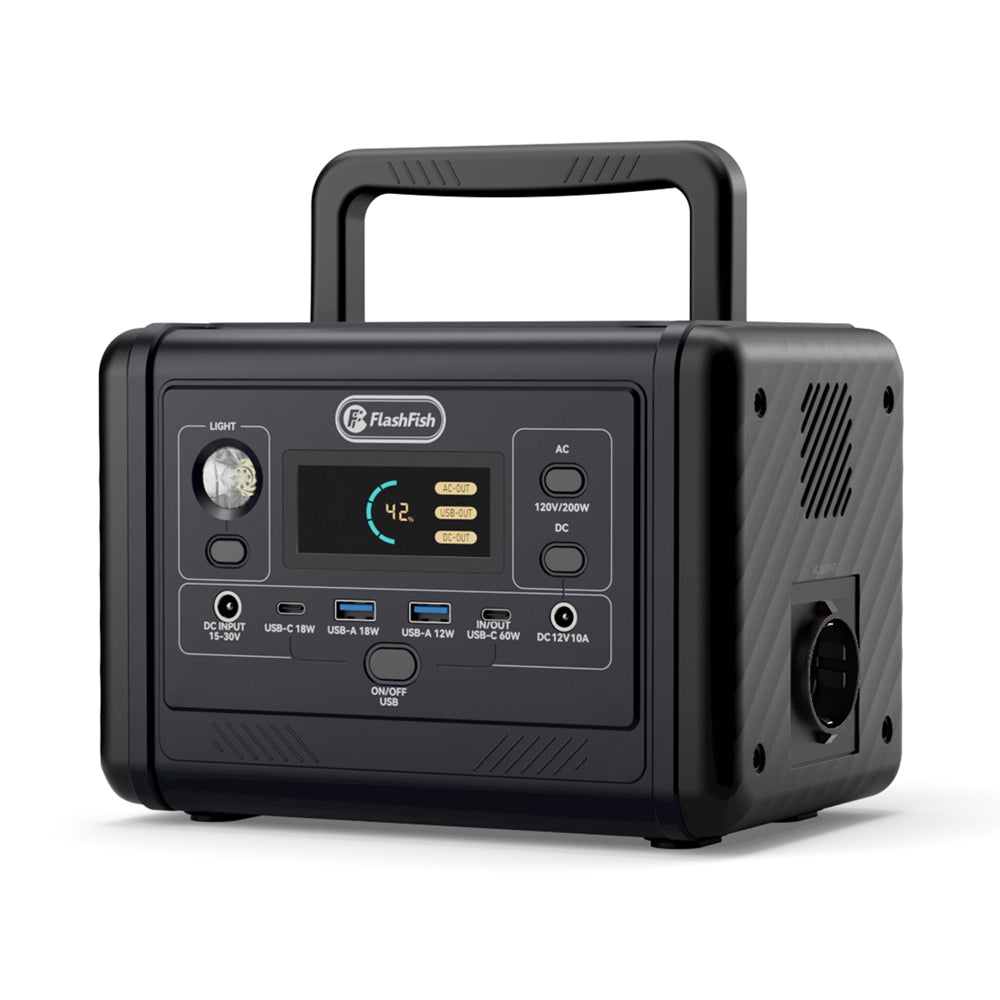
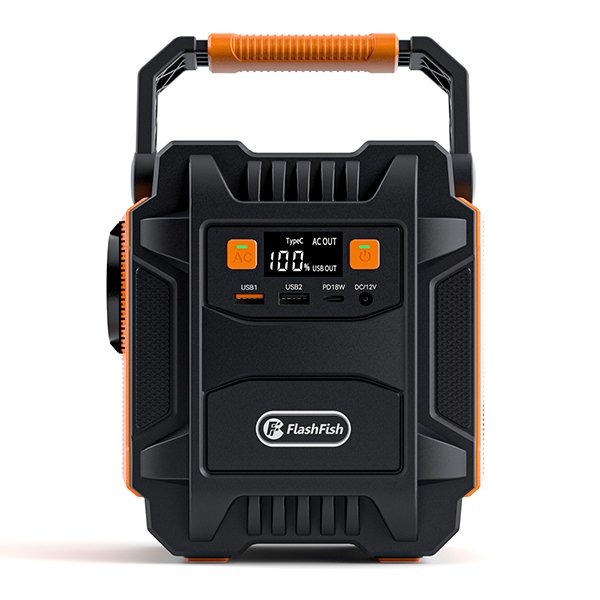

153.6Wh
172.8Wh (EU manual, nominal capacity)
179.2Wh
200W
200W
300W
2.5kg
1.7kg (EU manual)
Approximately 3kg
LiFePO4
Lithium-ion
LiFePO4
Compact LFP option for verified selected loads within 200W. Regional AC details still require the Europe product page or manual.
EU manual available. Different engineering versions exist; match the manual to the label before applying charging specifications.
More output headroom than the 120-200W models, with verified 600W surge output in the available FlashFish product record.
Portable power stations: 300-600W
Check appliance startup demand separately; a connector or capacity value alone does not establish compatibility.
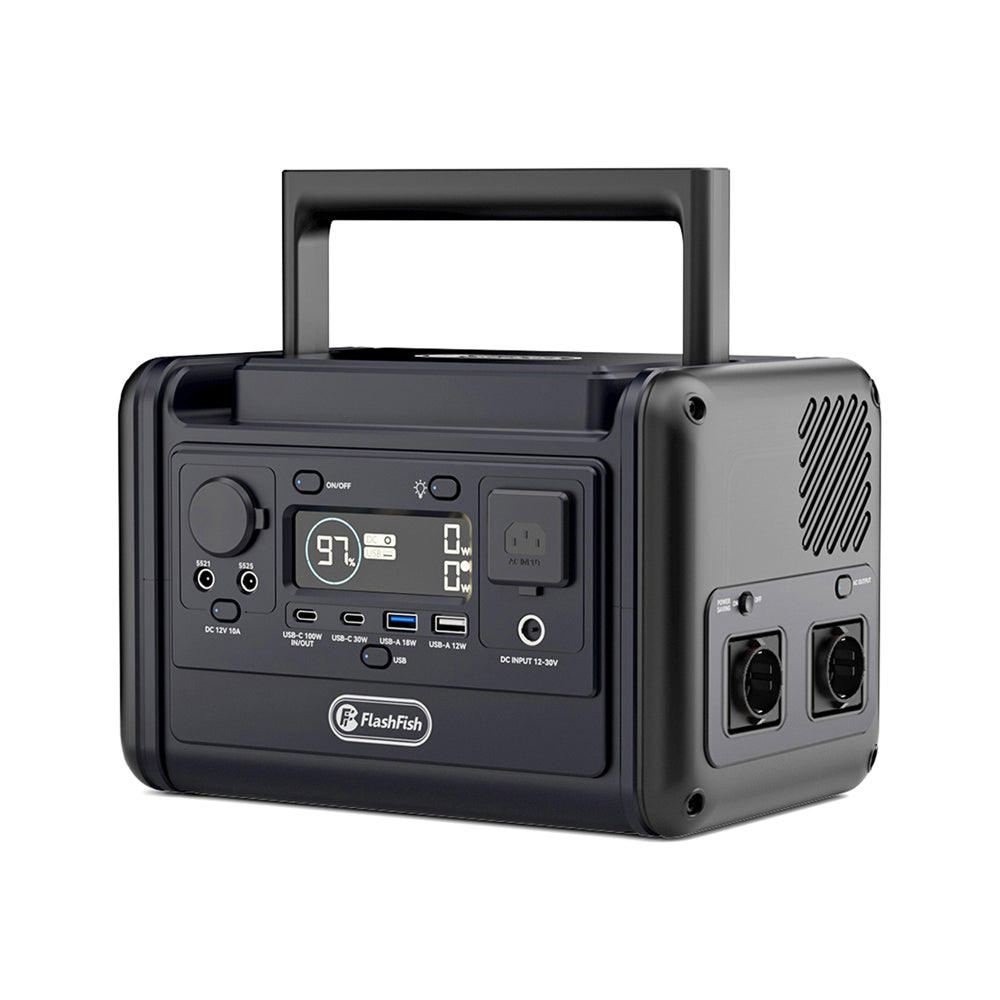
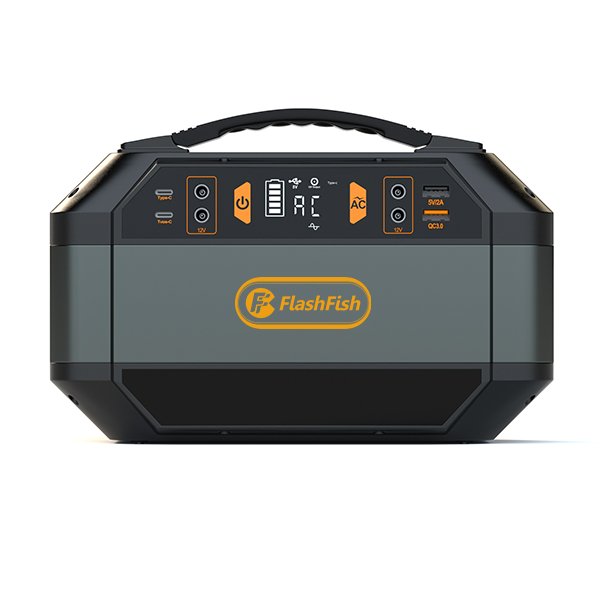
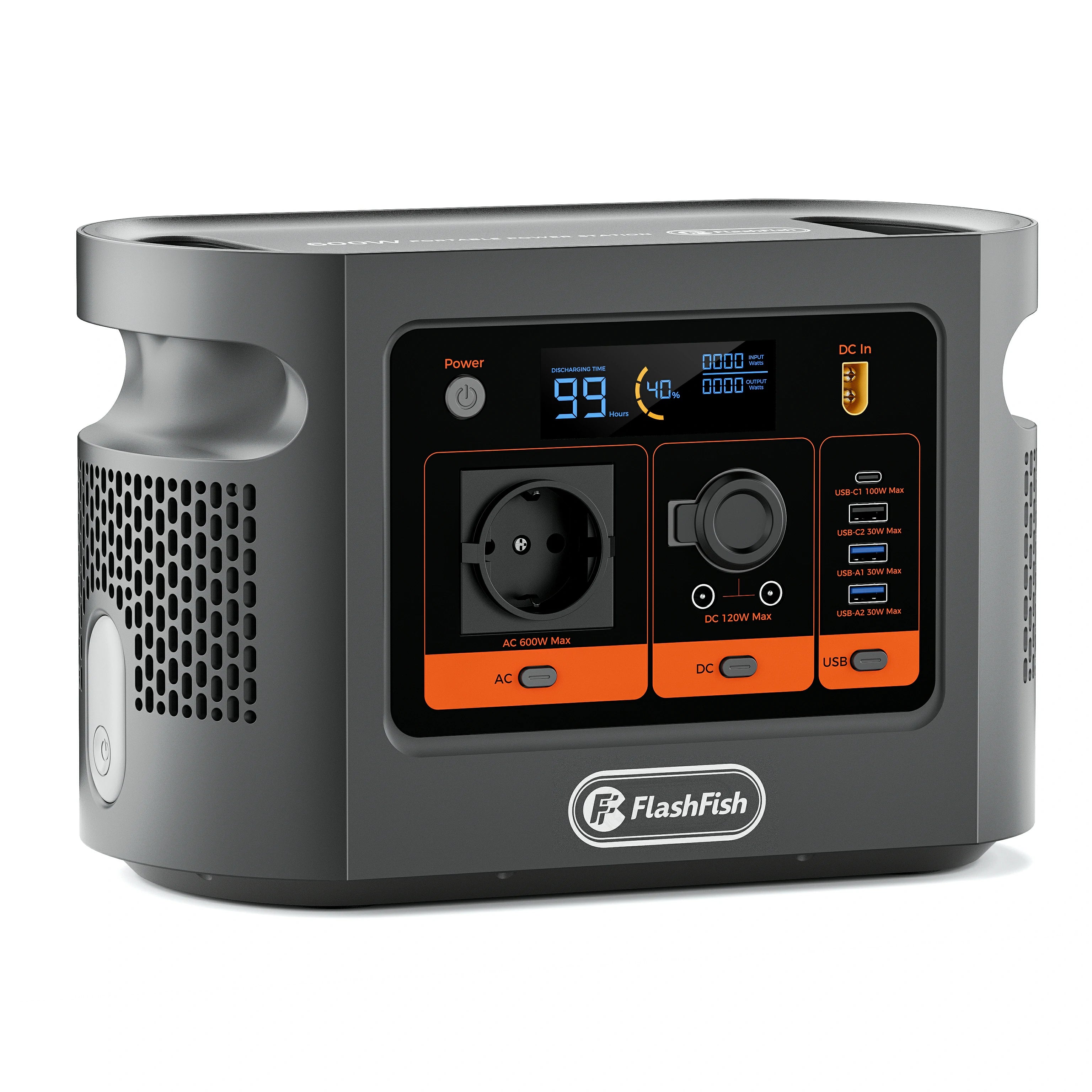
230Wh (manual); 230.4Wh (engineering specification)
288.6Wh (EU manual); 288Wh in the store title
384Wh
300W
330W
600W
4.5kg
4.3kg (EU manual)
Approximately 5.2kg
LiFePO4
Lithium-ion
LiFePO4
Verified 300W continuous and 600W peak output in the available FlashFish product record. Confirm Europe-region AC details on the current product page or manual.
Use the 288.6Wh EU manual record for this comparison; do not substitute specifications from a 299Wh variant.
384Wh and 600W. LiFePO4 is confirmed in the engineering specification supplied for current Europe models. Check startup demand and the exact device requirements separately.
Higher-output portable power stations: 1200-2000W
These models increase output and capacity, but also require a realistic lifting, placement and selected-load plan.
View all portable power stations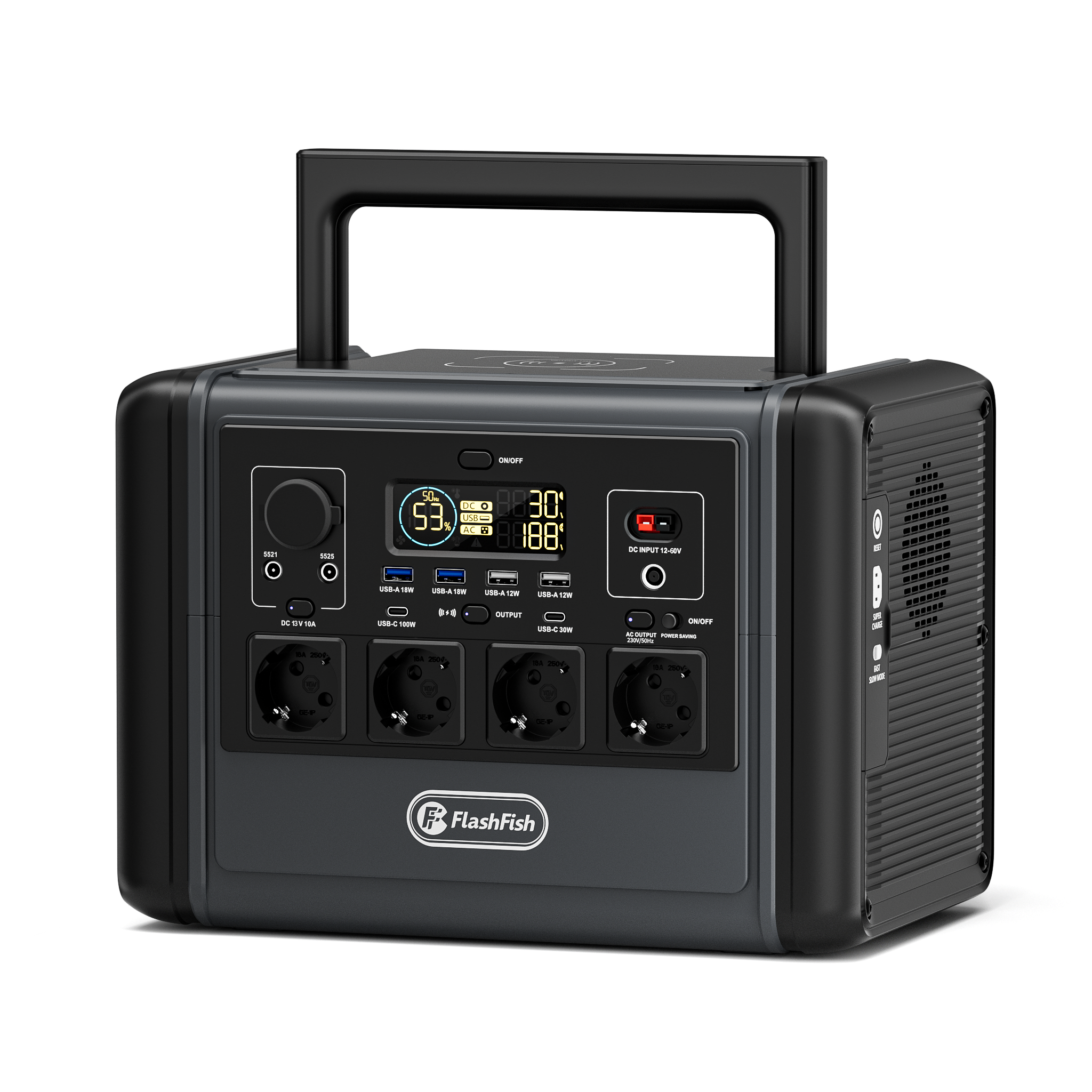

768Wh
1536Wh
1200W
2000W
12.45kg
19.2kg
LiFePO4
LiFePO4
Longer camping or selected-load backup where portability still matters.
Higher-capacity selected-load use with a realistic lifting and placement plan.
How to choose in four steps
Use the FlashFish runtime calculator for a transparent estimate. Calculator results are planning estimates, not guaranteed runtimes.
Record running watts and possible startup demand from each appliance label or manual.
The combined running load and startup demand must remain within the model limits with practical margin.
Multiply device watts by required hours, then allow for conversion losses and operating conditions.
Compare wall, vehicle and solar input only after checking the exact model's input voltage, current and connector requirements.
Choose by use case
Phones, cameras and light travel
Start with A101 or E200 when low carry weight matters and every connected device remains within the model's output limits.
Camping and mobile work
E103 or E106B can provide more output headroom without moving into the 12kg-plus class. Check startup demand for refrigerators, pumps and tools separately.
Longer selected-load backup
T1200S and T2000 fit longer or higher-output plans, but neither should be assumed to provide every-circuit or life-safety backup.
Balcony solar storage
SR5000 is a separate home-energy-storage category, not a portable substitute. Installation, grid interaction and country-level compliance require separate review.
Portable power station buying FAQ
Is the largest battery always the best choice?
No. Output limits, carry weight, charging time, ports and the real load list can matter more than nominal capacity alone.
How do I estimate runtime?
Divide usable battery energy by the device load as a starting point, then account for conversion losses and operating conditions. Use the runtime calculator for a consistent assumption set.
Can a portable power station run any appliance below its watt rating?
No. Startup demand, voltage, waveform, grounding, connector and appliance instructions can still affect compatibility.
Should I choose a power station or a solar generator kit?
Choose the station alone if you already have a verified charging plan. A kit can simplify panel selection, but its voltage, connector and station input limits still need checking.
Where can I verify the latest FlashFish specifications?
Use the exact product page and model manual. If either source is missing or conflicts with the product label, contact support before purchase or use.
Continue your comparison
Portable power stations
Compare current product pages and availability.
Runtime calculator
Estimate energy use with transparent assumptions.
Product manuals
Confirm exact model limits before purchase or use.
Last reviewed: 21 September 2026.