










Short answer: CE marking is the manufacturer's declaration that a product conforms to the applicable European Union requirements that require the mark. It is not an approval issued by the EU, not a mark of European origin and not automatic proof of independent laboratory certification. For a portable power station, the useful buyer check is whether the exact model, regional version and declaration match—and whether the documented use fits your intended load.
What CE marking does—and does not—say
| CE marking indicates | CE marking does not by itself prove |
|---|---|
| The manufacturer declares conformity with applicable EU harmonisation requirements that require CE | That an EU institution approved the product |
| A conformity-assessment process and EU Declaration of Conformity should exist where required | That every product used an independent laboratory or notified body |
| The product may circulate in the EEA when applicable rules are met | That the product was made in the EU |
| The mark relates to the product placed on the market and its documented configuration | That every later modification, accessory, regional variant or use remains covered |
Use MARK for the exact product
- M — Match the model. Compare the product label, model code, regional version, importer/manufacturer details and declaration identity.
- A — Applicable rules. A portable power product can fall under more than one EU act. Do not assume one logo explains every electrical, radio, battery or environmental obligation.
- R — Read the declaration and references. Look for the manufacturer, exact product identification, applicable acts/standards, signatory and date. A generic certificate image is not the same thing.
- K — Keep within documented use. Use approved cables, accessories, voltage, environment and instructions. A modification can change the conformity position and the manufacturer may no longer be responsible for the altered product.
Why a buyer should care about model identity
Portable power stations can share a product family name while differing by socket, voltage, radio module, charger, battery, firmware or market. A declaration for another model or another regional variant is not automatically transferable. The product label, manual and declaration should describe the same item. If a seller shows only a cropped CE logo without the model, responsible operator and documentation path, the evidence chain is incomplete.
Exactly three buyer examples
Example 1: a CE logo appears on the product photo
The logo is a useful starting point, not the finish. Ask for the exact model's EU Declaration of Conformity and compare model codes. Do not describe the logo as an EU safety certificate.
Example 2: the declaration names a similar model
Pause. A shared casing, wattage or marketing family does not prove the declaration covers the delivered product. Ask the manufacturer or responsible economic operator to resolve the identity mismatch in writing.
Example 3: the user replaces a charger or modifies wiring
CE evidence for the original configuration does not automatically validate an altered system. Use approved accessories and instructions; seek qualified advice before any modification that changes electrical, battery, radio or protective characteristics.
A practical pre-purchase document checklist
- Exact product name, model code and regional version.
- Manufacturer name and address, plus EU responsible operator details where applicable.
- EU Declaration of Conformity that identifies the same product.
- Applicable EU acts and referenced standards listed in the declaration.
- Signatory, place/date and current document version.
- Manual in the required language with voltage, frequency, ports, charging limits and environment.
- Approved charger, cable and accessory list.
- Battery, transport, recycling and support documents relevant to the product and country.
- A route to report a mismatch, incident or missing document.
Common mistakes
- Saying 'CE certified' when the evidence only shows the manufacturer's marking.
- Calling CE an EU approval or an origin mark.
- Using a declaration for a related model without matching the delivered label.
- Assuming a CE mark proves suitability for a medical, life-critical, unattended or wet-location use.
- Treating one test report as coverage for every applicable EU act.
- Ignoring later changes to the product, charger, battery or radio function.
- Publishing a compliance claim without keeping the source document and date.
When FlashFish context helps—and when it does not
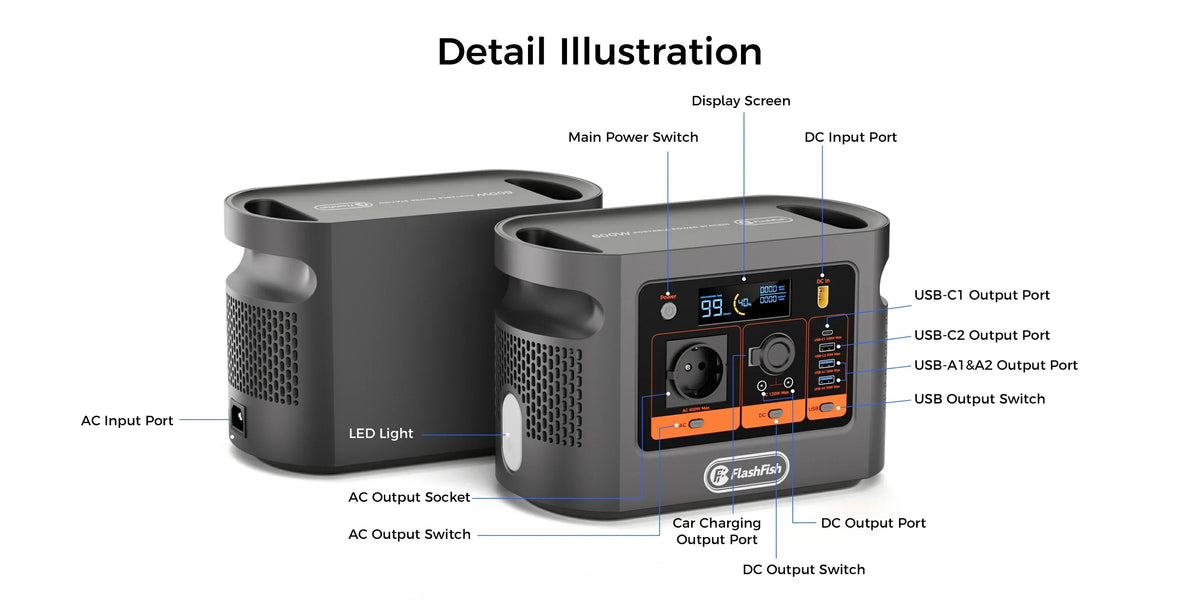
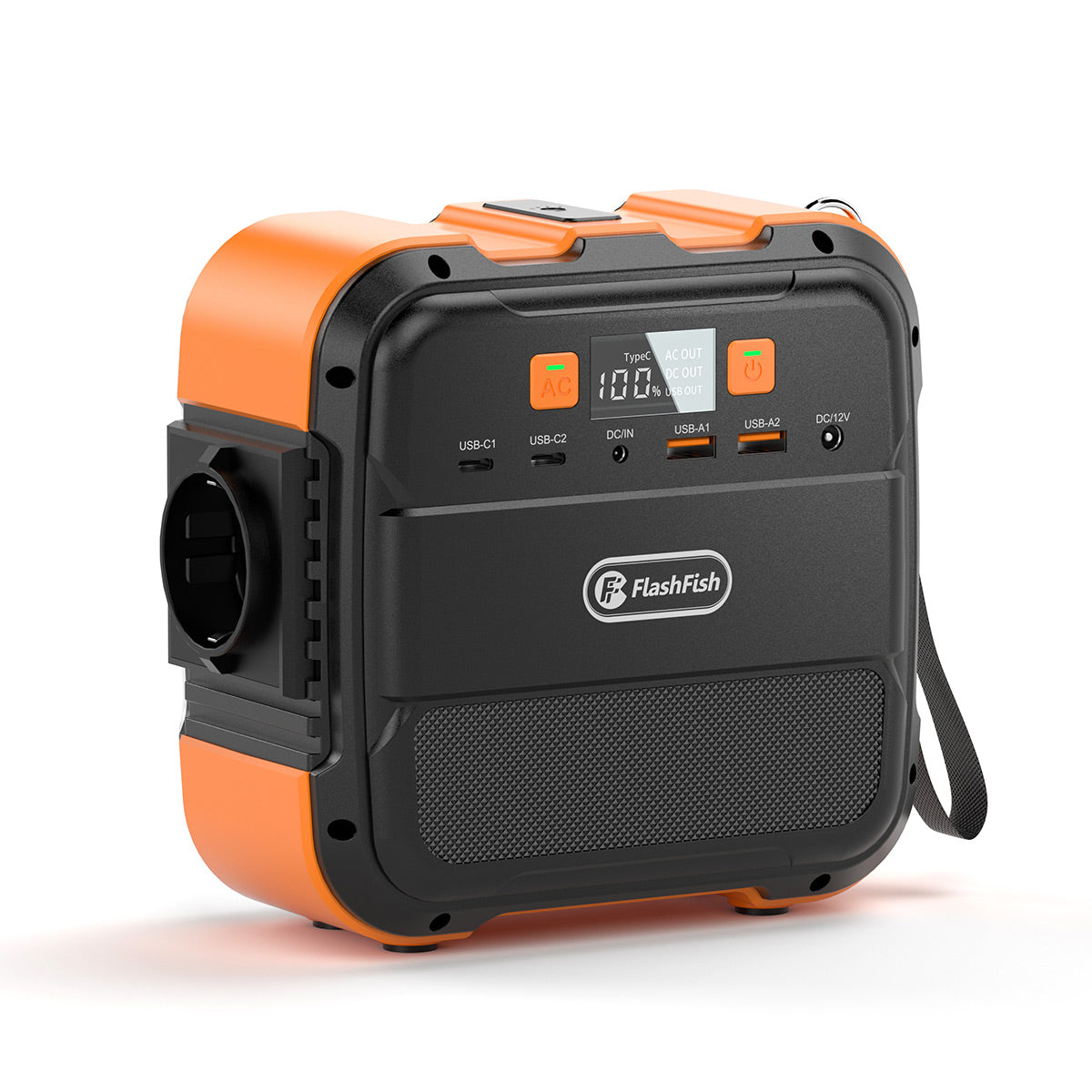
FlashFish Europe can provide the current product page, support route and model manuals that help a buyer match identity and regional specifications. Those records can start the MARK check. They do not let this blog certify a product, inspect a technical file or transfer one declaration to another model. If the exact declaration is absent or mismatched, keep the model-specific conclusion open.
Open the exact model manual or request matching compliance documents. Keep a dated copy of the evidence you relied on and recheck it after a model, charger, firmware or regulatory change.
FAQ
Does CE marking mean the EU approved the power station?
No. Official European Commission guidance says CE is the manufacturer's declaration that applicable legal requirements are met; it is not approval by the EU or another authority.
Does CE marking always mean independent testing?
No. Depending on the applicable legislation, a manufacturer may self-assess or may need a notified body. The mark alone does not tell you which route applied.
Is CE marking proof the product was made in Europe?
No. CE is not a mark of origin. A product bearing it may have been manufactured inside or outside the EU.
What document should I ask for?
Ask for the EU Declaration of Conformity for the exact model and regional version, then match its product identity, manufacturer, applicable acts, references, signatory and date.
Does CE marking prove a power station suits my appliance?
No. You still need to match voltage, frequency, continuous and startup power, waveform, ports, cable, environment and the appliance manufacturer's instructions.
Conclusion
CE marking matters, but the safest description is precise: it is the manufacturer's declaration of conformity with the applicable EU requirements that require the mark. It is not shorthand for 'EU approved.' Use MARK—Match, Applicable rules, Read, Keep within use—and leave model-specific claims open until the exact documentation agrees. Continue with the Europe buying guide after the document check.
Sources and evidence limits
- European Commission CE marking portal.
- Your Europe CE marking guidance.
- EUR-Lex CE marking glossary.
- FlashFish Europe Support Center.
Evidence checked 29 September 2026. No declaration, technical file, laboratory report or product was independently assessed.



Yorum yazın
Bu site hCaptcha ile korunuyor. Ayrıca bu site için hCaptcha Gizlilik Politikası ve Hizmet Şartları geçerlidir.