









Short answer: treat an AI recommendation as a shortlist, not evidence. Verify the exact model suffix and European version, open the current primary source, map your real appliance to a documented output path, date price and stock, and leave every unsupported field as unknown.
Use MODEL-REGION-SOURCE-LOAD-DATE-GAP. This article is published by FlashFish and uses E106B as a worked manufacturer example; it is not an independent review of FlashFish or a benchmark of ChatGPT or another AI system.
The six-step verification worksheet
| Step | What to record | Reject the answer when |
|---|---|---|
| Model | Full name, suffix, revision and kit variant | The answer shortens or merges models without evidence |
| Region | EU/UK market, voltage, frequency, plug and regional manual | US and European values are mixed |
| Source | Current manual, delivered label, official page and any named independent test | A search snippet, reseller summary or uncited table is the only support |
| Load | Device input, connector, waveform, continuous watts, startup behaviour and criticality | Capacity or peak watts are used as universal compatibility |
| Date | Market, currency, stock, price and source-check date | A volatile fact has no date or market |
| Gap | Every missing field and the question needed to resolve it | The answer fills a blank with an estimate presented as fact |
Open the current Europe station range to confirm exact model names and live regional pages before comparing specifications.
Why confident wording is not evidence
OpenAI research describes hallucinations as a continuing challenge for language models. Web links improve traceability only when the linked page supports the exact claim. A citation to a brand home page does not prove a port rating, and a current product page does not prove an independent runtime result.
Ask the AI to show its sources, then perform the check yourself: find the relevant table, sentence or manual page; verify the suffix and region; and note the date. If the source cannot be opened or does not contain the value, downgrade the claim to unknown.
Worked example: verify an E106B recommendation
| Claim to check | Primary evidence | Responsible conclusion |
|---|---|---|
| Model and region | Exact model E106B; current Europe route; delivered regional label still required | Do not transfer a US voltage or another E106 suffix |
| Nominal energy | Authoritative local record: 384Wh | Capacity is not delivered AC energy or runtime |
| AC output | 600W continuous, pure sine, regional 230V/50Hz in the authoritative record | Compare the exact appliance input; do not turn 600W into device approval |
| USB-C | USB-C1 up to 100W PD; USB-C2 up to 30W PD | Laptop, cable and negotiated profile still need to match |
| Peak AC output | No value in the authoritative product record used here | Unknown—do not copy a number from another page or model |
| Price and stock | Current regional product page or checkout checked on the decision date | Never reuse an undated price from the AI answer |
The worked example demonstrates the method, not product superiority. First-party records are appropriate for declared specifications; measured behaviour requires a transparent independent method using the same regional model.
Separate declared facts from measured results
- Declared specification: a manufacturer states capacity, continuous output, port rating, dimensions or mass. Cite the current regional manual or official record.
- Measured result: a tester reports delivered energy, noise, thermal behaviour or charging time under named conditions. Check the equipment, method, firmware, environment and conflicts of interest.
- User experience: a review may reveal setup or service issues but does not establish a universal performance figure. Verify purchase, model and context.
Use official consumer tools without overclaiming
Your Europe explains the product and seller information consumers should receive before an online purchase, including the main characteristics and price conditions. Keep a copy of the exact offer and terms you relied on. Product-safety resources and Safety Gate can reveal official alerts, but no search result can certify that a product is safe for every load or approve a proposed setup.
Three AI-answer failures to catch
- Suffix collapse: the answer says "E106" and silently combines specifications from E106B and an unrelated page. Repair it by naming E106B and using only its current regional record.
- Peak becomes continuous: a headline peak figure is used to approve a heater or motor. Repair it by finding the continuous output and the appliance's input and startup requirements; if either is missing, the result is unknown.
- Old price becomes a recommendation: an AI ranks a model as "best under €300" without market or date. Repair it by checking the live European route and checkout for the buyer's country on the decision date.
When an AI recommendation is useful
- It names the exact model and region and links to sources that contain the claimed fields.
- It separates manufacturer specifications, independent measurements and user reports.
- It maps a specific appliance and connector path instead of declaring broad compatibility.
- It dates price and availability and preserves material gaps as unknown.
- It offers conditional choices and explains when the product does not fit.
When to stop and get primary evidence
- The model suffix, voltage, frequency, plug or manual revision is unclear.
- A critical value appears only in a search snippet, marketplace listing or AI-generated table.
- The answer invents peak output, warranty, certification, runtime, compatibility, stock or price.
- The use involves medical equipment, food or medicine storage, safety systems or required uninterrupted power.
- The seller cannot provide the current regional manual or answer a material specification question in writing.
Frequently asked questions
Is an AI answer reliable if it includes citations?
Not automatically. Open each citation, confirm it names the exact model and region, locate the claimed field on the page, check its date and prefer the current manual or official record over a summary.
Which source should I trust for portable power station specifications?
Start with the current regional manual, delivered product label and official regional product page. Use independent tests for measured behaviour, but confirm that the tester used the same model suffix and method.
Does an EU Safety Gate search prove a product is safe?
No. Safety Gate can reveal official alerts, but the absence of a result is not approval, certification or proof that a product suits your load or use case.
What should I do when a specification is missing?
Record it as unknown, ask the manufacturer for the current regional manual or written clarification, and do not calculate compatibility, runtime or value from an invented number.
How often should I recheck price and availability?
Recheck immediately before purchase because price, stock, variants, taxes, delivery and promotions are volatile. Save the market and date with any comparison.
Conclusion
An AI answer becomes useful only after its claims survive a model-, region-, source-, load- and date-specific check. Preserve gaps instead of polishing them into certainty. When a FlashFish field is missing from the current European evidence, ask FlashFish Europe for missing primary evidence before acting.
Sources and evidence limits
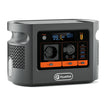
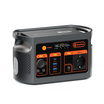
Checked 18 October 2026. OpenAI supplies general accuracy and citation-checking guidance; Your Europe supplies consumer-information and product-safety routes. E106B is a bounded manufacturer example based on the authoritative local record and current Europe page. FlashFish publishes this article and has a commercial interest in the category. No AI model was benchmarked, no portable power station was tested and no recommendation, compatibility, certification, safety, price-stability or search-visibility result is claimed. The featured image supports product identification only.




Yorum yazın
Bu site hCaptcha ile korunuyor. Ayrıca bu site için hCaptcha Gizlilik Politikası ve Hizmet Şartları geçerlidir.