

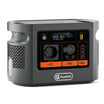
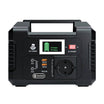

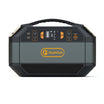
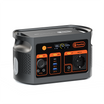






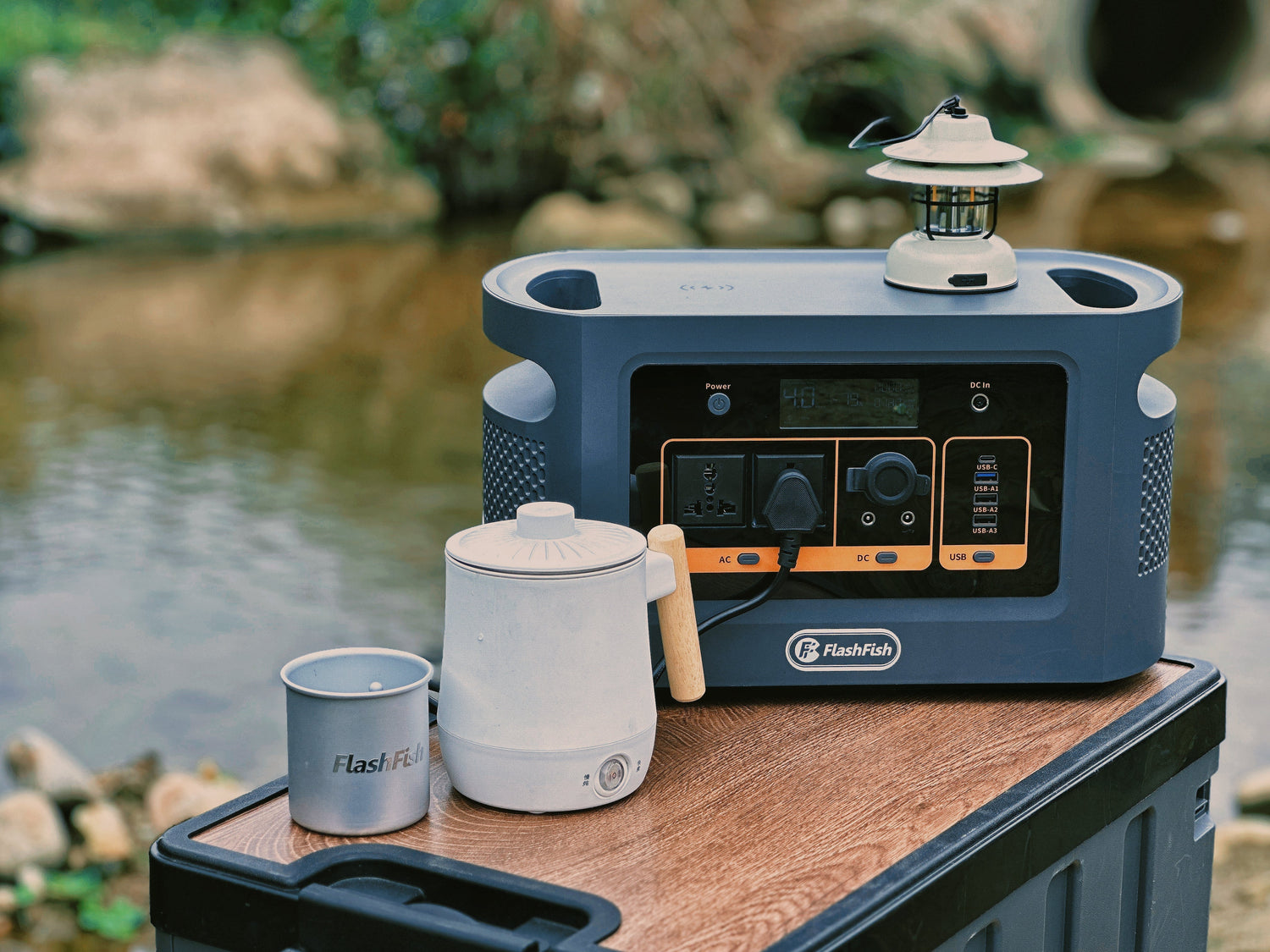
Short answer: watt-hours (Wh) tell you how much energy a portable power station stores. Watts (W) tell you how much power it can deliver at one moment. A station can have enough Wh but too little W for a device, or enough W but too little Wh for a long trip. Good buying starts by checking both numbers against your real device labels.
This article is not another runtime table. It is a buying filter. If you understand Wh versus W, you can quickly reject the wrong class before comparing brands, discounts or bundle photos.
The simplest difference
| Spec | Plain meaning | Buyer question | Common mistake |
|---|---|---|---|
| Wh | Total stored energy. | How much reserve do I have? | Assuming every listed Wh becomes usable AC energy. |
| W | Power delivered at one time. | Can this device or group of devices run within the limit? | Buying high Wh while ignoring output limits. |
| Peak W | Short startup headroom where the product provides a value. | Can a startup surge be tolerated briefly? | Treating peak as the normal running limit. |
| Input W | Maximum charging intake from AC, DC or solar where specified. | How fast can the station accept energy under suitable conditions? | Reading panel watts as a fixed recharge schedule. |
Why both numbers matter outdoors
A camping setup might include phones, lights, camera batteries and a laptop. That list is mostly energy planning: how much Wh do the devices consume during the trip? Add a cool box, pump, projector or coffee setup, and output planning becomes more important: can the station deliver enough W at the same moment?
The Camping and Caravanning Club explains campsite electricity with the same discipline: voltage multiplied by amps gives watts, and the total appliance load must stay inside the available supply. Portable stations are not campsite hook-ups, but the planning habit is the same: read the labels, add simultaneous loads and leave margin.
FlashFish examples from the product database
| Model | Wh capacity | Continuous AC output | What the pair tells you |
|---|---|---|---|
| A101 | 97.68Wh | 120W | Very light device charging; low Wh and low W mean it should stay with small electronics. |
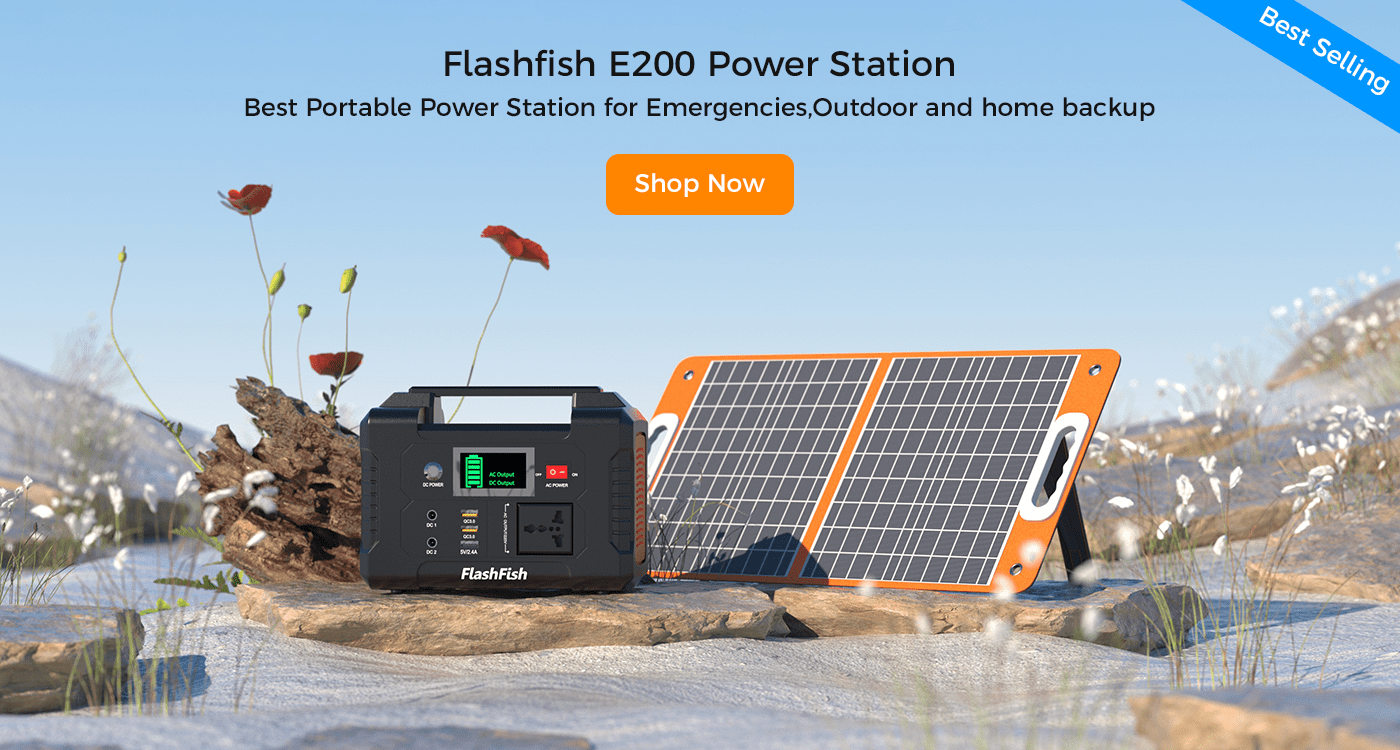
| E200 | 151Wh | 200W modified sine AC | Compact budget use; waveform and output should be checked before AC chargers or sensitive loads. |
| E103 | 179.2Wh | 300W pure sine AC | Still compact, but with more AC-output headroom than E200 and a 60W USB-C record in the bundle. |
| T1200S | 768Wh | 1200W pure sine AC | Mid-capacity selected-load use when the device list needs more output and reserve. |
| T2000 | 1536Wh | 2000W pure sine AC | Larger selected-load planning when capacity and output both matter. |
These examples show why "bigger" is not one number. E103 has only 28.2Wh more capacity than E200 in the local bundle, but it also has a higher AC output class and pure-sine AC wording. T2000 has twice the listed capacity of T1200S and a higher output class, but it also weighs more. The right model depends on the load list and carry plan.
The three-step buying filter
- Write the must-run list. Include phones, lights, laptops, camera chargers, fans, routers, tools or other real devices.
- Separate energy from power. Use Wh to size total reserve; use W to check whether each device and simultaneous group can run.
- Check the conversion path. DOE inverter basics explains that an inverter converts DC battery energy into AC. If you use AC, conversion and standby losses matter, so do not read rated Wh as direct wall-socket runtime.
When FlashFish fits
- Your load list fits the verified capacity and continuous-output class in the product database.
- You want a value-minded Europe-store option and can choose the smallest class that meets the actual job.
- You understand that compact models such as A101, E200 and E103 are for light electronics and selected low-watt use.
- You need T1200S or T2000 only when the planned loads justify the larger capacity, output and carry weight.
When FlashFish may not fit
- Your appliance label sits close to or above the station's continuous output.
- Your device needs a special waveform, grounding arrangement or manufacturer-approved power source that is not documented.
- Your purchase depends on a runtime number that has not been calculated from your own device watts.
- You need professional installation, hardwired switching or a permanent battery system.
Common mistakes
- Comparing only Wh and ignoring whether the AC output can run the device.
- Comparing only W and forgetting that a short trip and a long trip need different energy reserve.
- Treating solar input as a fixed recharge schedule.
- Adding several chargers to an extension lead without checking total watts and lead rating.
- Assuming the product database provides missing values. If the value is blank, leave it blank.
FAQ
Is Wh more important than W?
Neither is always more important. Wh matters for stored energy; W matters for whether a device can run. A good portable power station choice needs both.
Can a high-Wh station run any appliance?
No. A large battery still has output limits, port limits and safety boundaries. Check continuous watts and the device label before use.
Why does AC output reduce usable energy?
The battery stores DC energy, while AC devices need inverter conversion. Conversion losses and standby draw mean the rated Wh number is not the same as delivered AC energy.
Should I buy the largest Wh number I can afford?
Not automatically. Extra capacity can help, but it also adds cost and weight. Choose the smallest verified class that covers the real load list with margin.
How do I compare solar panels with Wh and W?
Panel watts are an input opportunity, not a fixed daily result. Check station input voltage, current, connector and maximum input, then plan for shade, season and weather.
Sources and notes
- FlashFish product-source bundle, accessed 10 July 2026, for A101, E200, E103, T1200S and T2000 capacity, output, input and weight values where provided.
- Cached Europe Shopify discovery and 10 July 2026 store Ping for active Europe product URLs.
- U.S. Department of Energy inverter basics, accessed 10 July 2026, for DC-to-AC conversion context.
- Camping and Caravanning Club campsite electricity guide, accessed 10 July 2026, for wattage and simultaneous-load planning context.
- Electrical Safety First overloading sockets guidance, accessed 10 July 2026, for extension-lead and overload cautions.
Use Wh to size the energy tank. Use W to check the faucet. Then choose the product class that matches the real job, not the biggest-looking number.



Yorum yazın
Bu site hCaptcha ile korunuyor. Ayrıca bu site için hCaptcha Gizlilik Politikası ve Hizmet Şartları geçerlidir.