


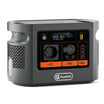
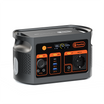






Picture this: you’ve found the perfect campsite. The stars are brilliant, the fire is crackling… and your phone is at 2%. Suddenly, you’re cut off, your camera is useless, and the portable speaker is about to die. Before you resort to burning gas by running your car, there’s a better way to bring power into the wild.
Meet the camping solar generator, the ultimate hero for modern off-grid power solutions. Forget the complicated name; the idea is simple. It's a silent, portable battery box that you can charge for free using the sun. This makes it a clean and quiet power source for campsites, a massive upgrade from those loud, smelly gas generators that can ruin the peace and are often restricted in parks.
Navigating the world of watts and batteries can feel overwhelming, but this guide simplifies the process. It will show you how to determine your power needs, choose the right size kit, and identify the features that actually matter for your adventures.
What's Actually in a "Camping Solar Generator Kit"?
The name “camping solar generator kit” can sound intimidating, but the reality is much simpler. Unlike its noisy, gas-powered cousins, this system has no engine. It doesn’t “generate” power from fuel; it captures it from the sun and stores it. That's why it's completely silent and fume-free. Think of it less as a generator and more as a powerful, rechargeable, and completely portable solar power system.
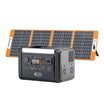
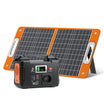
A camping solar panel and battery kit is just three simple pieces working together:
-
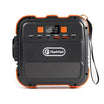
The Power Station (The 'Box'): This is the heart of the system—a large, portable battery with all the outlets (like USB and a regular wall-style plug) you need to charge your gear.
-
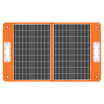
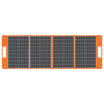
The Solar Panel (The 'Charger'): This is your portable power source. You unfold it in the sun to capture free energy and refill the power station.
-
The Cables (The 'Connectors'): These are simply the wires needed to connect your solar panel to the power station.
And that’s the entire setup. The panel captures sunlight, the cable sends the energy to the box, and the box holds that power until you need it. The most important question is: how much power can the 'box' actually hold?
The "Gas Tank": How to Read a Generator's Battery Capacity (Watt-hours)
When you look at any power station, the most important number is its capacity, measured in Watt-hours (Wh). Think of this as the size of the generator’s fuel tank. A 500Wh power station holds more electricity than a 300Wh model. This single number is the best indicator of how long you can power your gear before the station needs a recharge. If your main concern is running devices for a full weekend, a higher Watt-hour rating is your best friend.
To translate that number into real-world use, divide the generator’s Watt-hours by the power draw of your device, which is measured in Watts (W). For example, a 250Wh power station can run a 25W camp fan for about 10 hours (250Wh / 25W = 10 hours). This calculation is key to figuring out what size portable power station you really need.
It’s wise to plan for a safety buffer. Power transfer isn't 100% efficient, and device needs can fluctuate. As a rule of thumb, choose a generator with about 20% more Watt-hours than your calculations suggest. This ensures you have plenty of power, even if it's colder than expected or you need an extra charge.
The "Water Flow": Why a Generator's Power Output (Watts) Matters
If battery capacity (Watt-hours) is the size of your “gas tank,” then its power output, measured in Watts (W), is how fast that fuel can flow. A high-wattage generator is like a fire hose—it can run power-hungry devices like a small blender. A low-wattage generator is more like a garden hose, perfect for charging phones and laptops. This number tells you what kind of devices you can power at one time.
Every generator has a maximum Watt output. A model with a “600W” rating can supply up to 600 watts at any given moment. To power a device, its own Watt rating must be lower than the generator’s limit. A 75W television will work perfectly on a 600W station, but a 1,000W electric kettle will not. The generator will shut off to protect itself. This output is managed by an inverter, and models with a pure sine wave inverter are best for safely powering electronics while off-grid, especially sensitive gear like laptops and drones.
Finding your device’s power draw is usually straightforward. Look at the fine print on its power adapter or a sticker on the device itself for a number followed by a "W". Before you can choose a portable power station, you first have to know what you plan to plug into it.
Your 5-Minute Power Audit: Calculate Exactly What Size Generator You Need
To determine how much power is enough, perform a simple “power audit.” This is the most important step in choosing a portable solar power setup that fits your needs—ensuring you don’t overspend on a unit that’s too heavy or end up with one that can’t get the job done.
First, list every essential device for your trip. Next to each, estimate its daily hours of use. To find the power draw (Watts), check the device’s label. Here are some common examples for calculating power needs for a camping trip:
-
Smartphone: 10-15W (while charging)
-
LED String Lights: 5-10W
-
Laptop: 50-80W
-
CPAP Machine: 30-60W
-
Portable Electric Cooler: 40-60W (when running)
Once you have your list, multiply: Device Watts × Hours of Use = Watt-hours (Wh) needed. A 50W cooler running for 6 hours will consume 300Wh. Add up the Wh for every device to get your total for a single day. If you’re planning a three-day weekend without recharging, multiply that daily total by three.
Finally, add a 20-25% buffer to your final number. This safety net accounts for power lost during transfer and gives you extra juice for unexpected needs. With your final Watt-hour target, you have the magic number for finding the best portable power station for camping.
Solar Panel Reality Check: How Long to Actually Recharge Your Kit
You might assume a 100-Watt (W) solar panel will charge a 500 Watt-hour (Wh) generator in five hours (500 ÷ 100 = 5), but the real world has other plans. A panel’s wattage is a “best-case scenario,” tested in perfect lab conditions. Factors like passing clouds, the angle of the sun, and dust can reduce its output. For solar panel efficiency and wattage explained simply, expect to get about 70-80% of the panel's rated power on a good, sunny day.
To get a realistic estimate for how long to charge a power station with solar, use this formula: divide the generator’s capacity by the panel’s realistic output (about 75% of its rating). For that 500Wh generator and 100W panel, the math looks like this: 500Wh / (100W × 0.75) = 500 / 75 = roughly 6.7 hours of good, direct sunlight. This helps you plan your day and avoid the disappointment of a half-charged battery.
This baseline applies whether you’re using a small foldable panel or larger portable solar panels for RV battery charging. Keeping your station topped off is key, but the type of power it delivers is just as important for your electronics.
Why "Pure Sine Wave" Is a Non-Negotiable for Laptops and CPAP Machines
Not all power is created equal. Inside every power station, an inverter turns the battery’s stored energy into usable AC power. The critical difference lies in the quality of that power, which determines whether your expensive electronics are safe or at risk.
This is where "Pure Sine Wave" technology is essential. It produces a smooth, clean electrical current identical to the power in your home. Cheaper generators often use a "modified sine wave," which delivers a choppy, blocky current. For an inverter, pure sine wave for sensitive electronics isn't a luxury; it's a bodyguard. Using modified power on a laptop is like putting low-grade fuel in a high-performance engine—it might run, but you risk buzzing, overheating, and permanent damage.
Anything with a computer chip or a sensitive motor needs this clean power. This includes your laptop, drone, camera battery chargers, and especially medical equipment like a CPAP machine. Even a modern camping fridge can have control boards that require stable energy. While you might save a few dollars on a generator without it, the potential cost of replacing a fried laptop makes it a bad gamble.
Beyond the Basics: 3 Advanced Features Actually Worth Paying For
Once you know the basics, focus on three advanced features that are genuinely worth paying for.
First, check the battery chemistry. You’ll see “LiFePO4” on premium models. In the LiFePO4 vs. lithium-ion for portable power debate, the answer is about longevity. A phone battery weakens after a few years; standard lithium-ion behaves similarly. LiFePO4 batteries last for thousands of charge cycles instead of just a few hundred, meaning your investment will serve you for a decade of adventures.
Next, look for an MPPT controller and pass-through charging. An MPPT controller is a smart optimizer that boosts solar panel efficiency, squeezing more energy from the sun to charge your unit faster, especially on cloudy days. This is often paired with pass-through charging, a massive convenience that lets you power your gear while the generator is simultaneously recharging.
These features create a faster, more durable, and more convenient power source. Some high-end models even offer expandable battery capacity, allowing you to connect extra batteries for more power down the road.
Find Your Perfect Match: Which Solar Generator Kit Is Right for You?
You now have the knowledge to look past marketing claims and choose a solar generator with confidence. The key is to match the machine to your adventure.
For simple phone and light charging, a small kit is all you need. If you're powering a laptop or drone, look for at least a 500Wh unit with pure sine wave technology to protect your gear. For those running a family campsite with a cooler or relying on a CPAP machine overnight, a robust 1000Wh+ kit with a LiFePO4 battery offers the best safety and longevity.
You understand the core principles of capacity, output, and recharge time. You’re no longer just shopping for a camping solar generator kit; you’re investing in silent, reliable power and peace of mind. You can now choose the right tool for the right trip.
Related FlashFish resources
Use this video or guide as practical context, then check the current Europe pages below before choosing a product. Availability, regional configuration and bundle contents can change; the linked store page is the current source for the offer.




Yorum yazın
Bu site hCaptcha ile korunuyor. Ayrıca bu site için hCaptcha Gizlilik Politikası ve Hizmet Şartları geçerlidir.