




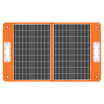
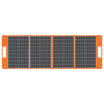


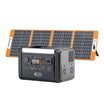

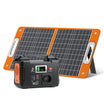


Short answer: verify the delivered E106B before relying on it. Match the model and 230V/50Hz regional label to the current manual, use an approved charging path, inspect every cable, place the station dry with clear airflow, start with one modest known load and record the result. Do not invent a calibration cycle or treat E106B as a professional 0ms UPS.
The process is REGION-CHARGE-CABLE-AIRFLOW-SMALL-LOAD-LOG. It turns first use into an evidence check rather than a promotional unboxing: prove the unit, path and load you actually have, then keep a record for support or later expansion.
First-use verification table
| Step | What to verify | Do not proceed when |
|---|---|---|
| Region | E106B model, delivered voltage/frequency label and matching manual | Model or regional information disagrees |
| Charge | Approved wall or compatible DC/solar input within documented limits | Source, connector or instructions are uncertain |
| Cable | Correct, intact cable with no heat, cuts, loose plug or improvised adaptor | Any damage, unknown rating or daisy chain is present |
| Airflow | Dry, stable placement with vents clear | Rain, damp ground, fabric cover or blocked vent is possible |
| Small load | One known device with a readable label and supported path | The device depends on unknown startup, protocol or critical transfer |
| Log | Charge state, device, path, observed watts, warnings and shutdown | An abnormal event is ignored or cannot be reproduced safely |
Open the current E106B manual and support record before connecting a third-party device.
Facts to carry into the setup
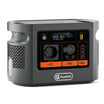
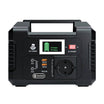
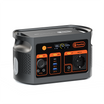
The authoritative record and current Europe page document 384Wh nominal energy, one shared 600W pure-sine AC maximum, 230V/50Hz EU output, a 100W USB-C1 PD port, a 30W USB-C2 PD port and a 120W shared DC group. USB-C2 and USB-A1 share a 5V/3A limit when used together. Those are boundaries, not promises of compatibility, delivered energy or runtime.
Do not invent a battery-conditioning ritual
No universal first-use full discharge, overnight charge or repeated calibration cycle is prescribed here. Procedures vary by model. Follow the current E106B instructions and contact FlashFish Europe when the display, charging behaviour or manual is unclear. Borrowing a routine from another brand can create false confidence or unnecessary cycling.
Start with one non-critical load
A first load should be modest, labelled and easy to turn off. Confirm its required voltage, frequency, watts or USB-C profile. Keep essential work, medical equipment and safety systems outside a first-use experiment. The current product page says E106B is not a professional 0ms UPS, so a computer that cannot tolerate interruption needs a separately verified continuity plan.
Three first-use examples
- A USB-C laptop that accepts a documented profile at or below 100W: use E106B USB-C1 with a capable cable, observe negotiation and retain the normal laptop charger as a fallback. No universal laptop compatibility is implied.
- A 230V task light with a clear low-watt label: it can be a modest AC-path check after the regional labels match. Keep the lead intact and the station dry; the example is not a measured E106B test.
- A 12V accessory with an unknown connector or polarity: stop. The E106B DC group being rated at 120W does not make a physically fitting plug electrically correct.
What to write in the first-use log
- Date, model, serial reference kept privately and regional label.
- Manual revision or support link used.
- Charging source, cable and starting charge indication.
- Connected device model, label, port and cable.
- Observed input or output watts when the display provides them.
- Warnings, trips, unusual heat, smell, noise or loose connections.
- Orderly shutdown result and questions for support.
When E106B fits
E106B fits a first home or work setup when the regional unit and manual match, the device has a supported port or AC path, the combined demand stays inside every limit, the station can remain dry and ventilated, and the user has a non-critical fallback while verifying the workflow.
When it does not fit
Do not rely on E106B when the device manual rejects an inverter, the region or cable is unclear, the setup needs a professional zero-transfer UPS, the load exceeds a group limit, the environment is damp, or failure would endanger health, data or safety. Choose a separately engineered solution for those requirements.
Frequently asked questions
Should I fully discharge a new E106B before first use?
This guide does not prescribe a calibration or full-discharge cycle. Use the current E106B manual and support instructions; do not invent a battery-conditioning routine from advice for another model.
Can I test E106B first with my largest appliance?
No. Begin with one modest, known load after the regional label, charging path, cables and placement pass. Add complexity only after recording stable behaviour and preserving a safe shutdown path.
Is E106B a 0 ms UPS for a desktop computer?
No such claim is made. The current Europe page explicitly says E106B is not a professional 0 ms UPS. Do not rely on seamless transfer for critical work or equipment.
Can I use all E106B ports at the same time?
Only within every documented group limit and the complete load budget. The page states that USB-C2 and USB-A1 share 5V/3A when simultaneous, while the DC outputs share 120W.
What should I record during first use?
Record model and regional labels, starting charge, charge source, connected devices, observed watts if available, warnings, heat, noise, cable condition, shutdown result and any question that needs support review.
Conclusion
First use should prove the exact unit, cable and device path—not confirm a marketing assumption. Match the region and manual, start with one modest load, keep a written log and preserve a fallback. Check E106B ports against your written load sheet before expanding the setup.
Sources and evidence limits
Checked 15 October 2026. E106B fields come from the authoritative local product record and current Europe product/support pages. Electrical Safety First supplies general label, lead and stop-condition guidance. No physical unboxing, first charge, protection trip, transfer test, device session, calibration or runtime measurement was performed for this draft; the image is a ports reference only.




Yorum yazın
Bu site hCaptcha ile korunuyor. Ayrıca bu site için hCaptcha Gizlilik Politikası ve Hizmet Şartları geçerlidir.