









Short answer: do not judge a budget portable power station by price, watt-hours or a long feature list alone. Confirm the exact seller and regional model, search for product alerts, read the manual and conformity information, match the charger and ports, and reject any unit whose continuous output, waveform, temperature limits or support route remain unclear for your intended use.
A lower price can be sensible when the station is smaller and the evidence is complete. It becomes poor value when the listing hides the exact model, mixes regional specifications or forces the buyer to guess about the charger, load limits or after-sales route.
Why the cheapest listing is not the same as the lowest-risk choice
The European Commission advises online buyers to research the seller, verify contact information, check the web address and be cautious with offers that appear implausibly cheap. Your Europe states that consumer goods sold in the EU, online or in shops, must comply with product-safety rules and points consumers to Safety Gate for alerts.
Those rules do not turn a marketplace title into proof. Portable power listings often compress capacity, output, peak watts, chemistry, charger data, port count and regional voltage into one banner. Each field answers a different question. A buyer still needs the exact model and supporting document.
What to collect before comparing price
| Evidence | What it can establish | Stop or ask when |
|---|---|---|
| Seller identity and contact route | Who is responsible for the transaction and support | The legal seller, address or contact path is hidden or inconsistent |
| Exact model and regional label | Which voltage, sockets, battery and limits apply | The listing combines EU, UK, US or universal data without identifying the delivered version |
| Manual and warnings | Charging, operation, temperature, storage and prohibited-use boundaries | No exact manual exists or it contradicts the listing |
| Safety Gate search | Whether authorities have published a matching alert | A matching alert exists, or the model cannot be identified well enough to search |
| Applicable conformity information | Manufacturer declaration and regulated-product context | A required marking or responsible-party information is missing or suspicious |
| Charger and package list | Whether the correct power adapter and cables are supplied | Input voltage, connector, polarity or replacement-charger route is unclear |
| Continuous output and waveform | Whether the station can screen the intended load | Only peak watts are shown, or the device maker requires a waveform the station does not document |
Apply CHECK in order
C: confirm the seller and exact model
Record the product-page URL, seller name, country selector, model, SKU, voltage, sockets and delivery country. Take a dated screenshot or PDF for your own records. A familiar marketplace logo is not the seller identity, and a brand family is not an exact model.
Check whether the manual, label and listing use the same capacity, continuous output, chemistry, dimensions and ports. A variation can reflect a legitimate regional or later revision, but it still needs an explanation before a fair comparison.
H: hunt for product alerts and contradictions
Search the EU Safety Gate by brand and model, then widen to the product category if needed. If an alert matches, follow the named authority or manufacturer action. If no alert appears, keep checking the rest of the evidence: absence from the database is not an approval of every unit.
- Compare model spelling, photographs, charger and label.
- Check whether a recall or alert applies only to a batch or regional version.
- Save the alert link and date rather than relying on a social-media summary.
E: examine evidence, not badges
Your Europe explains that CE marking applies to defined product categories and represents a manufacturer declaration of conformity. It is useful evidence when applicable, but it should not be described as a universal independent approval. Read the responsible-party details, warnings and manual alongside the marking.
Likewise, terms such as “BMS protection”, “long-life battery” and “safe charging” need detail. Ask which conditions are monitored, what limits apply, what the cycle statement means and which warranty or support document applies to the exact purchase.
C: check the charger, cables and connections
An unsuitable charger can defeat an otherwise reasonable purchase. Match input voltage range, current, connector, polarity where applicable and the approved replacement route. For USB-C equipment, match the required power profile and cable rating; for solar input, check voltage, current, connector and maximum accepted power separately.
Do not assume that every cable pictured is included. The package list should name it. If the seller cannot confirm the charger or regional mains lead, treat the purchase as incomplete and add the correct accessory cost only after compatibility is established.
K: keep the intended job inside the evidence
List the devices you must power, their input watts, startup behaviour, waveform needs and operating environment. Compare the largest simultaneous load with continuous output, not peak output. Then compare the task energy with a conservative plan that allows for conversion losses, reserve and conditions; do not treat catalog watt-hours as measured delivered energy.
Stop if the setup is safety-critical, fixed-wired, wet, unsupervised or medically necessary and the exact manufacturer guidance does not cover it. A budget station can be appropriate for selected non-critical loads without being a substitute for a professionally designed backup system.
Worked example: the €30 saving that creates four unknowns
Imagine two listings in the same capacity class. Listing A costs €30 less but gives only peak watts, shows two different regional sockets, names no charger specification and has no exact manual. Listing B costs more but identifies the seller, regional SKU, continuous output, waveform, input range, package list, warnings and support route.
CHECK does not automatically select Listing B. It says Listing A is not yet comparable. The next action is to request the missing evidence. If the seller supplies it and the model fits the load, the cheaper option may be reasonable. If the evidence stays incomplete, the apparent saving includes an unresolved compatibility and support cost.
Common buying mistakes
- Comparing peak watts with a device’s running demand. Peak output is not a continuous allowance.
- Treating capacity as compatibility. Watt-hours do not establish voltage, waveform, port or startup fit.
- Using review stars as product identity. Reviews may mix variants, sellers and older revisions.
- Assuming every pictured accessory is included. Use the written package list and exact SKU.
- Reading protection names as proof of every failure mode. Correct use and documentation still matter.
- Ignoring the return and support route. A low price is less useful when a defective or mismatched item cannot be handled predictably.
How to apply the same method to FlashFish
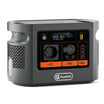
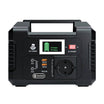
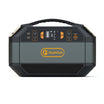
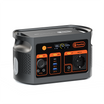
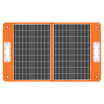
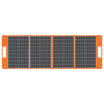
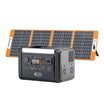
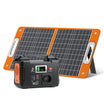
The current FlashFish Europe portable power station collection lists compact and larger models with product pages for the exact regional purchase. Apply CHECK to FlashFish in the same way: open the model page and manual, confirm the delivered sockets and charger, compare continuous output and waveform with the load, and preserve the current support and purchase records.
The point is not that a brand page removes risk. It is that exact product identity and evidence make a decision auditable. If a FlashFish page, manual and delivered label conflict, pause and use the official support route rather than selecting whichever number is more attractive.
When FlashFish fits this budget-buying method
- The exact ACTIVE Europe model has a public product URL, regional specification and support route.
- Your selected loads fit the documented continuous output, waveform, ports and environment.
- The charger and required accessories are confirmed before purchase.
- You accept the model’s real capacity, carry weight, charging and display trade-offs.
When FlashFish does not fit
- The delivered regional version, manual, charger or critical load requirement remains unresolved.
- You need a fixed, whole-property, wet-location, life-safety or medically necessary power system.
- The purchase depends on a price, review, runtime or certification claim that cannot be tied to the exact current model.
Safety boundary
Do not open a battery enclosure, bypass protection, improvise a charger or test a damaged unit. Stop using or charging equipment that is swollen, leaking, scorched, unusually hot, producing an abnormal smell or making unusual sounds. Follow the current manual, manufacturer route and any authority alert.
Frequently asked questions
Does a low price mean a portable power station is unsafe?
No. Price alone does not establish safety or danger. Check the exact model, seller identity, manual, applicable conformity information, charger, product alerts, support route and whether the specifications fit the intended load.
Does a CE mark mean an independent laboratory approved the product?
Not necessarily. Your Europe explains that the manufacturer declares conformity for products covered by CE rules. Treat the marking as one evidence item, not a substitute for the exact manual, seller, model and recall checks.
How do I check whether a power station has been recalled in Europe?
Search Safety Gate by brand, model and product category, then follow any national authority or manufacturer instructions. A clean search is useful but does not certify an individual unit.
Are a long protection list and a BMS enough evidence?
No. Protection categories describe functions or cut-offs. They do not replace correct use, a compatible charger, temperature limits, physical inspection, product documentation or applicable conformity evidence.
Should I buy if the exact manual or regional version is unclear?
Pause when the missing information affects voltage, sockets, charger input, waveform, temperature, load fit or support. Ask the seller for the exact regional document before paying.
Sources and evidence limits
- European Commission: Protecting you when buying online — seller, website and deal-verification guidance.
- Your Europe: Product safety — EU product-safety, warning, CE and recall context.
- European Commission Safety Gate — public rapid-alert database for dangerous non-food products.
- Electrical Safety First: Check It Out — online-marketplace and counterfeit electrical-product caution.
- FlashFish Europe portable power stations — current model and internal-link context only.
This article is a buyer-evidence framework, not a laboratory test, conformity assessment, legal opinion or product approval.





Yorum yazın
Tüm yorumlar yayınlanmadan önce incelenir.
Bu site hCaptcha ile korunuyor. Ayrıca bu site için hCaptcha Gizlilik Politikası ve Hizmet Şartları geçerlidir.