

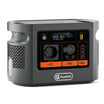
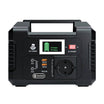

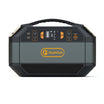
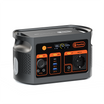






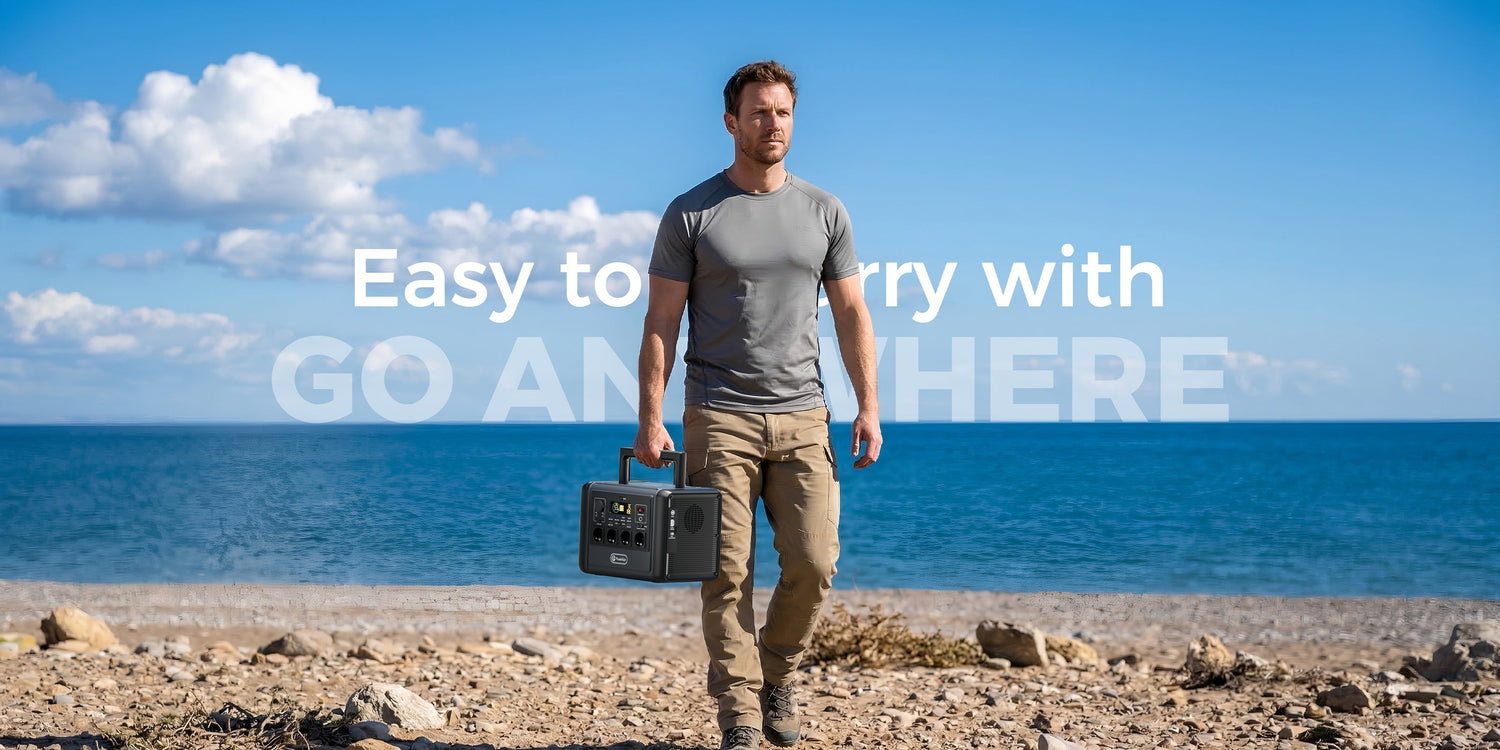
Short answer: FlashFish T1200S can fit a camping setup built around selected fans, lights, phones and laptops when you check every device label, choose the correct output port and budget daily watt-hours instead of guessing runtime. The manual-derived database records 768Wh capacity and 1200W continuous AC output, but neither number determines exactly how long a particular fan or lamp will run.
The most useful planning method is to divide the load list into must-have, nice-to-have and leave-at-home. This protects lighting and communication first, then uses remaining energy for comfort devices.
What this setup can and cannot do
| Use | Planning position | Reason |
|---|---|---|
| Low-power LED lights | Must-have | Safety and basic campsite function; verify the actual USB, DC or AC rating. |
| Phone charging | Must-have | Communication priority; use a supported cable and port. |
| Small fan | Must-have in heat or nice-to-have otherwise | Consumption varies by speed and design, so use its label or a plug meter. |
| Laptop or camera charging | Nice-to-have | Schedule after lighting and communication, preferably through a compatible direct port. |
| Kettle, heater or hair dryer | Usually leave at home for this plan | Heating loads can consume the energy budget rapidly even when they fit a power rating. |
| Medical or critical equipment | Outside this article | Requires a dedicated manufacturer-approved backup plan, not a casual campsite estimate. |
Build the daily watt-hour budget
For each device, calculate device watts x hours used per day = daily watt-hours. If the label gives volts and amps, watts can be estimated as volts x amps. Use a measured value where practical because fans change consumption with speed and lights may have several modes.
| Device | Your watts | Hours per day | Your daily Wh |
|---|---|---|---|
| Primary LED light | Read label or measure | Enter planned hours | Watts x hours |
| Backup/head lamp charging | Read charger label | Enter charging time | Watts x hours |
| Camping fan | Measure the chosen speed | Enter planned hours | Watts x hours |
| Phone | Use charger or measured input | Enter charging time | Watts x hours |
| Laptop/camera | Read charger label | Enter charging time | Watts x hours |
Add the rows, then include conversion and standby losses rather than treating all 768Wh as deliverable device energy. This draft deliberately avoids a fixed efficiency percentage because the available product-source record does not provide one, and real losses vary by port and load.
Choose the lowest-complexity suitable port
The product-source bundle records T1200S with one 100W USB-C PD port, one 30W USB-C PD port, USB-A outputs, 12V DC output and pure-sine AC output. A supported direct USB or DC connection can avoid using the AC inverter for a device that does not need AC, but the device, cable and charging protocol must all agree.
- Use a compatible USB light through the specified USB port and cable.
- Use a compatible USB or DC fan only when its voltage and connector requirements match.
- Use AC for devices designed for the mains, after confirming the label watts and total continuous load.
- Do not force adapters, reverse polarity or assume every USB-C cable supports the same power.
Step-by-step campsite checklist
- Write the must-have list: lighting, phone and any heat-related fan need.
- Copy the watt or volt/amp label for each device and charger.
- Identify which loads run at the same time; total simultaneous AC loads must remain within continuous output.
- Calculate daily watt-hours, not just instantaneous watts.
- Assign the correct port and cable to each device.
- Run a short supervised test at home with the real fan speed and light modes.
- Pack a separate head torch or small light that does not depend on the station.
- Place T1200S on a stable, dry surface with unobstructed airflow.
- Keep leads out of walkways and fully unwind any cable drum.
- Recheck campsite rules; a battery station does not override pitch, tent or electrical restrictions.
Common mistakes
- Planning from the fan's maximum setting but using a lower figure - or the reverse.
- Adding watts but forgetting hours of use.
- Dividing 768Wh by one label number and calling the result certain runtime.
- Using peak output instead of the 1200W continuous figure for normal planning.
- Leaving the AC inverter on for no reason when all loads use USB.
- Putting the station under bedding, inside a closed bag or where rain can reach it.
- Using high-watt heating appliances because they start successfully once.
When T1200S fits
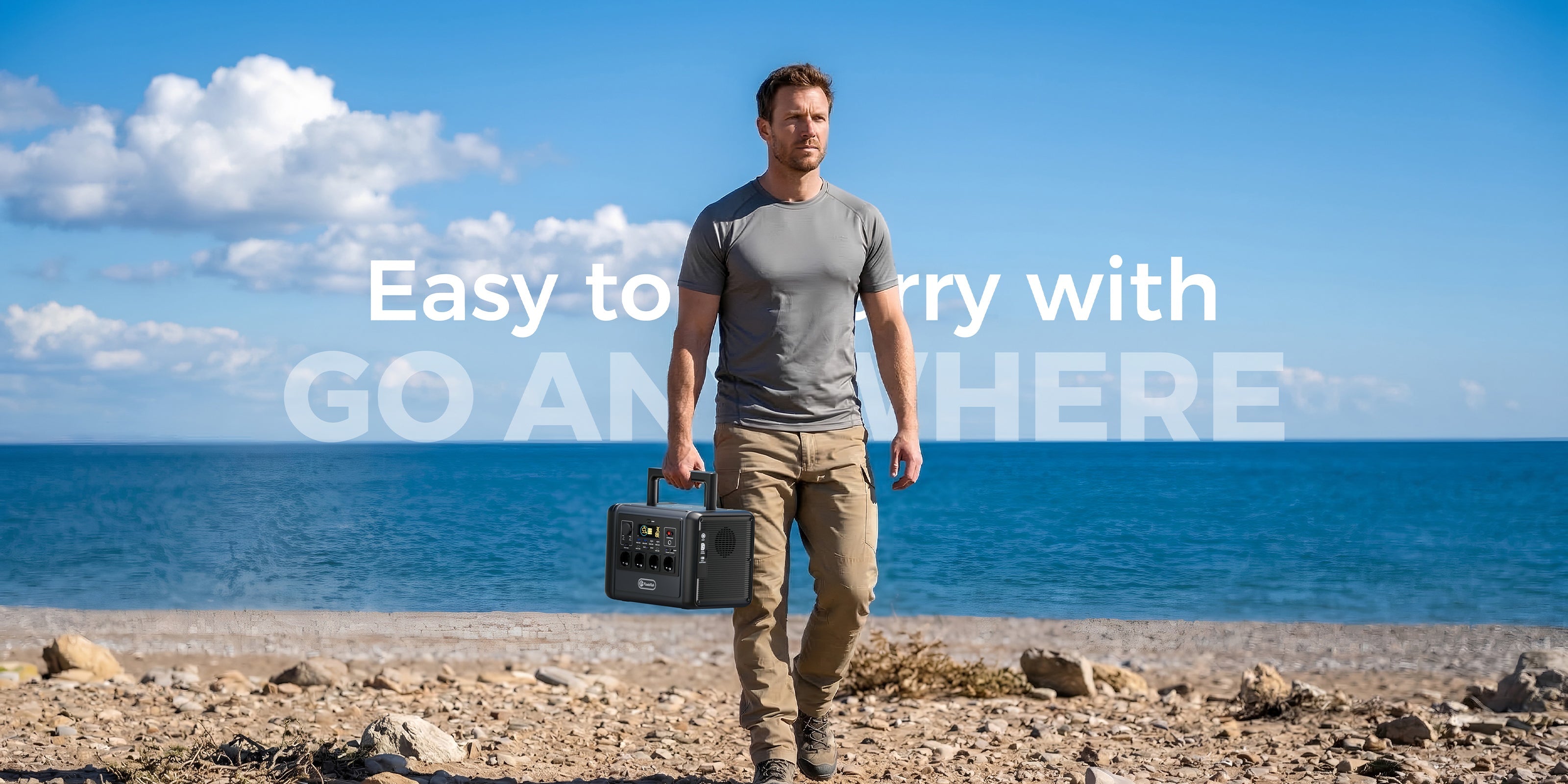
FlashFish T1200S fits campers whose checked list goes beyond phone-only power and benefits from its 768Wh capacity class, 1200W continuous AC output, multiple USB outputs and 400W maximum solar input. It also fits car-to-pitch use where the manual-derived 12.45kg weight is acceptable.
The value is headroom for a defined selection of devices - not permission to plug in everything at once.
When T1200S does not fit
T1200S may be more station than needed for one phone and a small lamp, especially if every kilogram matters. It also does not fit when the required device lacks a verified electrical match, when the site cannot provide a dry and ventilated position, or when a critical load needs a formally validated backup system.
Browse the FlashFish camping power collection by load list and carry weight rather than assuming the largest option is best.
Safety note
The Camping and Caravanning Club advises using the actual equipment rating and taking extra care with electricity in damp campsite conditions. Keep T1200S and its connections dry, do not block airflow, and do not alter wiring. Electrical Safety First recommends checking leads, plugs and sockets for damage and fully unwinding cable drums.
FAQ
Can FlashFish T1200S run a camping fan and lights?
It can fit many selected fan-and-light setups when the real device labels, connectors and combined continuous load stay within the relevant output limits. Compatibility and runtime depend on the exact devices and operating pattern.
How do I estimate fan and light runtime without guessing?
Add the measured or label watts for the devices that will run together, estimate daily watt-hours, then apply a documented efficiency allowance. Do not divide 768Wh by one device wattage and present the result as certain runtime.
Should I use AC or USB for camping lights?
Use the connection designed for the device. Direct USB or DC can avoid an AC conversion step when the device and cable are compatible, but connector fit alone is not proof. Follow each device's instructions.
Is a 1200W station necessary for only a fan and lights?
Not always. T1200S may be larger than needed for a very small load list. Choose it when the 768Wh capacity class, ports or additional selected loads justify the extra size and 12.45kg carry weight.
Can I place T1200S inside a closed tent compartment?
Do not block ventilation or expose the unit to damp conditions. Use it on a stable, dry surface with airflow, away from bedding, fabric and trip hazards, and follow the product manual.
Sources and further reading
- FlashFish product-source bundle, accessed 2026-07-01: T1200S capacity, continuous output, ports, solar input, chemistry, dimensions and weight. Original-manual verification remains required before publication.
- EU Shopify discovery cache, generated 2026-06-30: T1200S ACTIVE status, inventory and Europe-store URL.
- Camping and Caravanning Club: campsite electricity, accessed 2026-07-01 for device-label, load and damp-environment planning.
- Electrical Safety First: extensions and leads, accessed 2026-07-01 for lead, plug and cable-drum precautions.
- European Commission Joint Research Centre: PVGIS, accessed 2026-07-01 for location- and season-dependent solar planning.
Protect the must-have loads first; comfort devices use what remains.



Yorum yazın
Bu site hCaptcha ile korunuyor. Ayrıca bu site için hCaptcha Gizlilik Politikası ve Hizmet Şartları geçerlidir.