

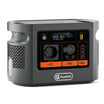
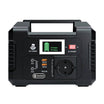

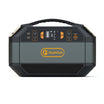
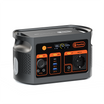


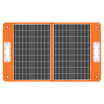
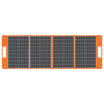


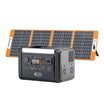

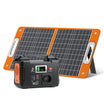

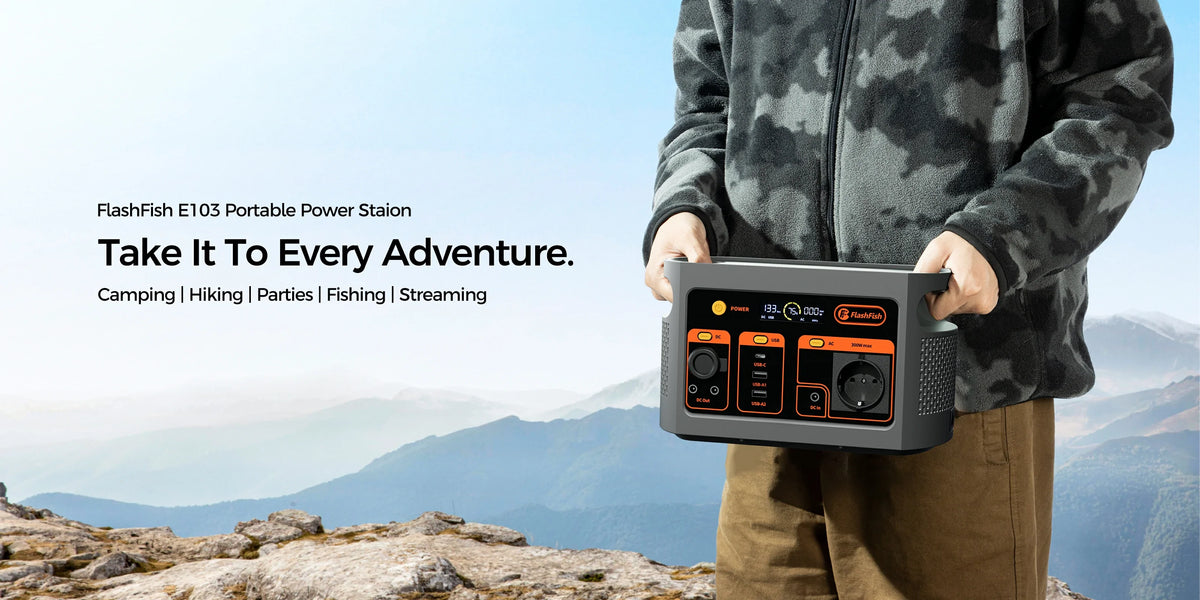
Short answer: choose by connection path. FlashFish E103 is the stronger fit when one checked 230V AC appliance or charger is essential. EcoFlow TRAIL 200 DC is the stronger on-paper fit for a lighter USB-first kit because it weighs 1.83kg and lists 140W plus 100W USB-C ports. Neither is a universal winner, and EcoFlow’s Europe page showed TRAIL 200 DC sold out on 23 September 2026.
The decision is AC access versus lighter high-power USB-C
The nominal-energy difference is small: E103 documents 179.2Wh and TRAIL 200 DC lists 192Wh. Those figures do not reveal delivered energy or runtime. The more important difference is architecture. E103 combines one 300W pure-sine 230V AC outlet with a 60W USB-C output. TRAIL 200 DC has no AC outlet, but EcoFlow lists 220W maximum total DC output with one USB-C port up to 140W and another up to 100W.
| Decision field | FlashFish E103 | EcoFlow TRAIL 200 DC | Why it matters |
|---|---|---|---|
| Nominal energy | 179.2Wh | 192Wh | Capacity class only; neither value is delivered energy. |
| AC output | 230V, 300W rated pure sine, 600W surge | None listed | An AC-only charger or appliance rules out a DC-only path. |
| USB-C | One port, up to 60W | One up to 140W and one up to 100W | Check the exact laptop, camera charger and cable profiles. |
| Other DC | Two USB-A up to 18W each; shared 12V group up to 120W | Two 12W USB-A; no car outlet listed for 200 DC | Count simultaneous devices and shared limits. |
| Mass | Approximately 3kg | 1.83kg | The 1.17kg published difference matters on foot. |
| Current page state | ACTIVE and in stock in EU Admin snapshot | Sold out on EcoFlow Europe page | Availability is dated and must be rechecked. |
The PATH test for a camping kit
- P — Plugs: list every device as AC, USB-C PD, USB-A or 12V. Do not assume USB-C shape proves the required profile.
- A — At-once demand: identify which devices charge together and compare them with individual and shared output limits.
- T — Travel burden: count the station, original adapters, cables and any protective case, not the station alone.
- H — Hours measured: run the actual kit over a representative trip interval. Nominal Wh and manufacturer charge-count tables are not your measured result.
Three camping kit profiles
1. USB-C laptop, phone and camera
TRAIL 200 DC has the clearer port advantage when the laptop accepts a documented USB-C PD profile above 60W and the other devices can use its second USB-C or USB-A ports. E103 can still fit a 60W-or-lower USB-C laptop, but check whether other simultaneous ports share a limit.
2. Camera batteries with an AC-only charger
E103 has the necessary outlet type on paper, subject to the charger label, regional voltage and the station’s 300W rated AC limit. TRAIL 200 DC cannot serve an AC-only charger without changing the device-side charging plan. A third-party inverter is not part of this comparison.
3. Mixed kit carried from a vehicle to camp
E103 trades extra mass for an AC fallback and 12V outputs. TRAIL 200 DC saves 1.17kg on the published station weights and gives stronger USB-C ceilings. Choose the missing path you cannot work around, then weigh the complete bag.
When FlashFish E103 fits, and when it does not
E103 fits better when: one checked AC-only charger matters, the laptop is satisfied by 60W USB-C or its original AC adapter, a shared 12V output is useful, and approximately 3kg is acceptable.
E103 does not fit as well when: every device is USB-C, the primary laptop needs more than E103’s documented 60W USB-C profile, hiking mass is the dominant constraint, or the trip needs an independently tested delivered-energy result that this comparison does not provide.
Check E103 ports against your camping device list before treating an AC outlet as automatically more useful than direct USB-C.
Where TRAIL 200 DC may fit better
EcoFlow’s model may be the cleaner architecture for a USB-only kit that benefits from 140W and 100W USB-C outputs and a lower published mass. The trade-off is the absence of AC and, on the evidence date, a sold-out Europe product page. That page state can change, so availability should be rechecked rather than used as a permanent product judgment.
What this comparison cannot prove
- No side-by-side efficiency, delivered-energy, noise, thermal or reliability test was performed.
- Nominal Wh cannot be converted into phone charges or laptop hours without device energy and conversion evidence.
- A USB-C watt label is a ceiling; source, cable and device must negotiate a compatible profile.
- Manufacturer protection lists and warranty terms are not comparative test results.
- Current availability is volatile and does not establish long-term support or resale value.
FAQ
Is E103 more powerful than TRAIL 200 DC?
E103 has a 300W rated AC outlet, while EcoFlow lists 220W maximum total DC output. Those are different output architectures, so one headline number does not produce a universal ranking.
Which one is better for a USB-C laptop?
TRAIL 200 DC has stronger published USB-C ceilings. E103 lists up to 60W USB-C. The laptop and cable must support the required USB PD profile in either case.
Which one works with an AC-only camera charger?
E103 provides one 230V pure-sine AC outlet within a 300W rated limit. TRAIL 200 DC lists no AC outlet, so it needs a different approved charging path.
Does 192Wh mean TRAIL 200 DC runs longer?
Not by itself. Delivered energy depends on the selected output path, conversion loss, standby demand, device behaviour and temperature. This article has no matched discharge test.
Can I buy TRAIL 200 DC in Europe now?
EcoFlow’s Europe page showed the TRAIL 200 DC variant as sold out on 23 September 2026. Stock can change; verify the current official page and regional variant before deciding.
Conclusion
For USB-first camping, TRAIL 200 DC has the more attractive published USB-C and mass profile. E103 earns its place when a real AC-only need remains in the bag. Map every plug before choosing. Compare compact camping power options after mapping every plug, and recheck competitor availability on the day you buy.
Sources and evidence limits
E103 facts come from its manual-derived record and current Europe page. EcoFlow facts and dated availability come from the official TRAIL Series Europe page. USB negotiation context comes from the USB Implementers Forum. No independent side-by-side test was performed.



Yorum yazın
Bu site hCaptcha ile korunuyor. Ayrıca bu site için hCaptcha Gizlilik Politikası ve Hizmet Şartları geçerlidir.