

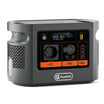
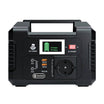

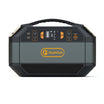
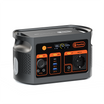


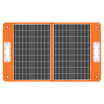
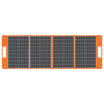


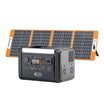

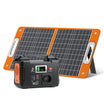

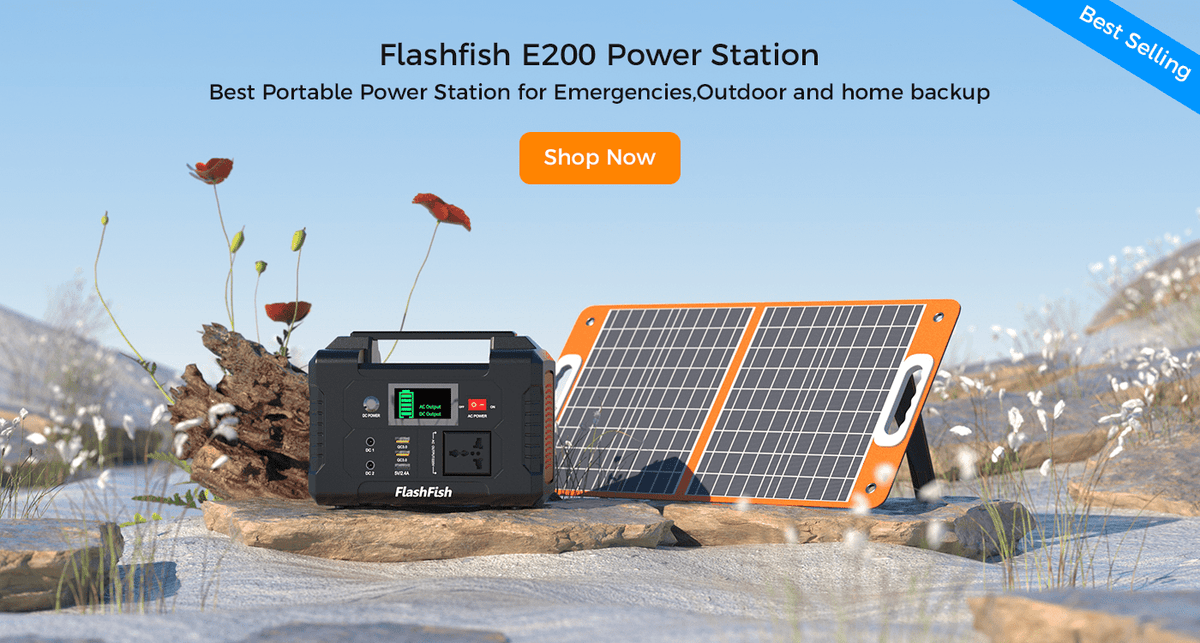
Direct verdict: choose by charging path, not by brand headline. FlashFish E200 is the more plausible screen when an existing camera kit needs a regional AC socket, because it provides 151Wh and 200W modified-sine AC—but the charger must explicitly tolerate that waveform. Jackery Explorer 100 Plus is the lighter USB-first option at 965g, with two USB-C ports up to 100W individually and 99.2Wh in its EU manual. Neither is a universal winner.
Use LENS for a phone-and-camera kit
- L — List the exact devices. Include the phone, camera batteries, original charger, USB charger, cables and any laptop, light or gimbal that will share power.
- E — Establish the electrical path. Decide whether each item genuinely accepts USB-C PD, USB-A at a documented profile or regional AC through its original charger.
- N — Nominal energy and number of ports. Compare 151Wh with 99.2Wh, but do not turn either into charge counts without measured losses and battery condition.
- S — Stop on uncertainty. Pause for an undocumented USB profile, missing AC waveform compatibility, conflicting product-page language or a cable that does not state its capability.
E200 vs Explorer 100 Plus: equal-field comparison
| Field | FlashFish E200 | Jackery Explorer 100 Plus | Why it matters |
|---|---|---|---|
| Nominal energy | 151Wh | 99.2Wh in EU manual; 99Wh on current page | Planning input only; delivered charging energy is lower and variable |
| Mass | About 1.85kg | About 965g | Jackery is about 885g lighter before cables and chargers |
| AC path | One 230V regional outlet; 200W continuous, 400W peak; modified sine | No AC outlet shown in EU manual or port diagram | An existing mains charger may favour E200, but waveform compatibility must be confirmed |
| USB-C | None documented in local record | Two USB-C ports, each up to 100W; 110W combined | Jackery better matches verified USB-C PD phones, cameras and chargers |
| USB-A | Two QC ports up to 18W each; one 5V/2.4A port up to 12W | One USB-A port up to 18W | Check the exact voltage/profile accepted by the device |
| All-port ceiling | No single combined USB total is supplied by the local record | 128W across USB-C1, USB-C2 and USB-A in the manual | Port-specific and group limits both matter |
| Battery chemistry | Lithium-ion 18650 cells | LiFePO4 | A documented difference; not a complete durability or safety ranking |
| Evidence type | FlashFish manual-derived record and current Europe page | Jackery EU page and model JE-100A manual | No side-by-side lab or field test was performed |
Three camera-kit examples
1. USB-C phone plus a verified USB-C camera charger
Explorer 100 Plus is the cleaner first screen when both devices publish compatible USB-C PD profiles: it exposes two USB-C ports and a 110W combined USB-C limit. A 100W port is only a ceiling; each device requests a supported profile. E200 does not document USB-C output, so a USB-A-to-USB-C cable cannot create USB-C PD capability.
2. USB-C phone plus Sony BC-QZ1 mains charger
The Sony BC-QZ1 example accepts 100-240V AC at 50/60Hz. E200 physically offers a regional AC path, while the Jackery EU manual shows no AC outlet. However, Sony's page does not state modified-sine compatibility. Do not connect it on the basis of plug fit alone; obtain manufacturer confirmation or use a documented USB charging route.
3. Several legacy USB-A chargers
E200 offers three USB-A ports, while Explorer 100 Plus offers one. That may suit an older multi-battery kit only when every charger's accepted voltage and protocol match the available ports. Port count does not prove simultaneous full-rate output, battery compatibility or a fixed number of charges.
What the numbers cannot tell you
151Wh versus 99.2Wh is nominal stored energy, not energy delivered to phone and camera batteries. Conversion losses, station overhead, cable loss, charger efficiency, device temperature, battery age and charge state all matter. The accurate workflow is to start with fully identified batteries and chargers, measure a representative charging session, then keep reserve.
Likewise, “100W” does not mean every device will charge at 100W. The source, cable and receiving device must support the same negotiated profile. A camera battery charger may accept far less, and some cameras require model-specific power conditions while operating.
When each option fits—and when neither does
| Choose E200 as the first screen when | Choose Explorer 100 Plus as the first screen when | Choose neither yet when |
|---|---|---|
| Your exact camera charger requires regional AC and its manufacturer approves modified-sine power | Your phone and camera-charging path are verified USB-C PD, and low carry mass matters | A charger profile, waveform requirement, cable rating or battery compatibility is missing |
| You need several verified USB-A paths and can accept 1.85kg | You need two USB-C ports and about 965g carry mass | You need a fixed charge count, airline approval or unattended charging without current evidence |
| 151Wh nominal energy is useful after a measured session and reserve plan | 99.2Wh is sufficient after the same measured planning method | The kit includes high-power lighting, a laptop or other loads not included in this comparison |
Compare your camera charger labels with the current Europe E200 ports. If the kit is USB-C-first, keep Jackery's lower mass and stronger documented USB-C path in the comparison instead of forcing an E200 recommendation.
Buyer checklist
- Record every battery and charger model, not just the camera body.
- Photograph each charger input and output label.
- Confirm USB-C PD profiles on source, cable and receiving device.
- Confirm whether an AC charger accepts modified-sine power in writing.
- Count simultaneous ports and group ceilings.
- Measure one representative phone-and-camera charging session in watt-hours.
- Include cables, charger bricks and adapters in carry weight.
- Keep charging dry, ventilated and supervised; stop for heat, smell, swelling, damaged leads or repeated trips.
- Recheck live regional pages and manuals before buying.
Common mistakes
- Calling the Jackery's 128W all-port USB ceiling a 128Wh battery.
- Assuming the Jackery sales-page AC wording proves a physical AC outlet despite the manual port diagram.
- Assuming E200 USB-A ports provide USB-C PD through a cable.
- Treating 151Wh or 99.2Wh as delivered battery-charging energy.
- Using E200's AC socket without resolving modified-sine compatibility.
- Claiming a fixed number of phone or camera charges without a measured method.
- Turning lower mass, chemistry or port count into a universal quality verdict.
FAQ
Which has more nominal energy?
E200 lists 151Wh; the Explorer 100 Plus EU manual lists 99.2Wh. Nominal energy does not equal delivered charging energy or a fixed charge count.
Which is lighter?
Explorer 100 Plus is about 965g versus E200 at about 1.85kg, a difference of roughly 885g before chargers and cables.
Does Explorer 100 Plus have an AC socket?
The EU manual and port diagram list USB-C and USB-A only, so this article does not credit an AC outlet despite conflicting sales-page wording.
Can E200 run any camera battery charger?
No. Its AC output is modified sine wave. The exact charger's voltage, frequency, waveform tolerance and power requirement must be confirmed.
Does a 100W USB-C port make every camera charge faster?
No. Charging is limited by the common profile supported by the source, cable and receiving device, plus the device's own thermal and battery controls.
Conclusion
E200 and Explorer 100 Plus solve different compact-power problems. E200 offers more nominal energy and a regional AC path, but modified-sine compatibility is a real gate. Jackery is much lighter and better documented for USB-C, but its manual shows no AC outlet. Apply LENS to the kit you already own, then browse active FlashFish Europe portable power stations by verified port needs only after the charger evidence is complete.
Sources and evidence limits
- FlashFish Europe E200 page plus the authoritative local manual-derived record.
- Jackery Explorer 100 Plus EU product page.
- Jackery Explorer 100 Plus EU user manual.
- Sony BC-QZ1 specifications.
- USB Implementers Forum Power Delivery overview.
Evidence checked 26 September 2026. No charging, efficiency, charge-count, reliability or side-by-side product test was performed.




Yorum yazın
Bu site hCaptcha ile korunuyor. Ayrıca bu site için hCaptcha Gizlilik Politikası ve Hizmet Şartları geçerlidir.