








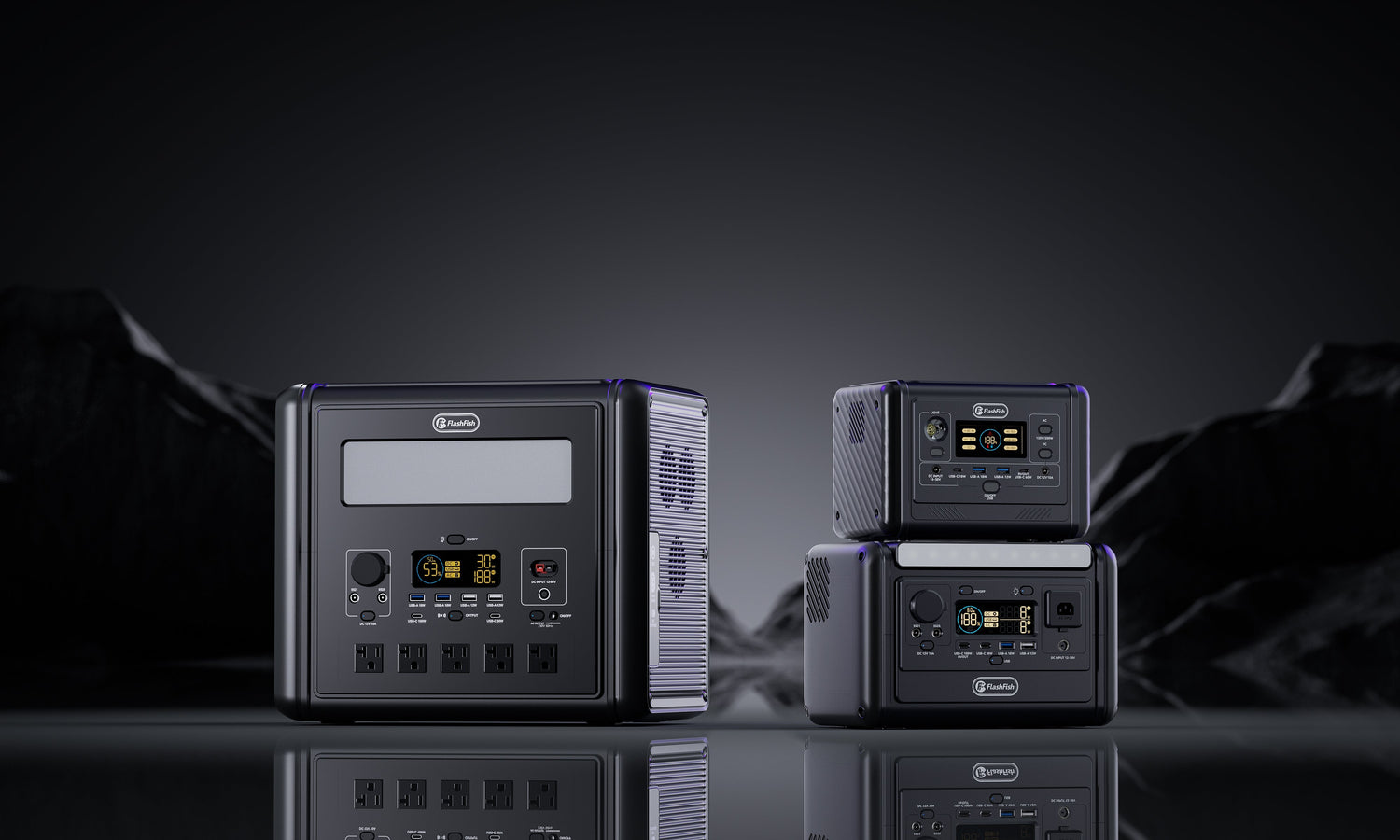
Short answer: state of charge (SoC) tells you how full a battery is now; state of health (SoH) describes how its present condition and performance compare with when it was new. A display can show 100% charge while the battery has less capacity, lower power capability or different self-discharge behaviour than it had originally.
That distinction matters when buying, storing or assessing a portable power station. Charge percentage is an operating estimate. Health is a broader evidence question. Neither a full icon nor a cycle-life headline is a substitute for a repeatable capacity or performance assessment.
State of charge answers “how full”; state of health answers “how capable”
Regulation (EU) 2023/1542 provides useful, precise definitions. It describes state of charge as the available energy in a battery expressed as a percentage of rated capacity declared by the manufacturer. It describes state of health as the general condition of a rechargeable battery and its ability to deliver specified performance compared with its initial condition.
| Signal | What it can answer | What it cannot prove alone |
|---|---|---|
| State of charge: 100% | The battery-management system estimates the pack is at its current full point | Original capacity, current usable Wh, power capability or remaining life |
| Cycle count | Part of the usage history | How deep, hot, cold or stressful those cycles were |
| Cycle-life specification | A manufacturer test-condition or design statement | The present condition of one unit |
| Repeatable capacity test | Energy delivered under recorded conditions | Every output path, future condition or internal safety state |
The practical conclusion is simple: 100% SoC can coexist with less-than-original SoH. Think of the charge display as the fuel gauge and health as the changing size and capability of the fuel tank and delivery system. The analogy is imperfect, but it prevents the most common buying mistake.
What the EU framework treats as battery-health evidence
Annex VII of the EU Batteries Regulation lists remaining capacity and, where possible, remaining power capability, round-trip efficiency, the evolution of self-discharge and resistance for stationary battery storage and certain other battery categories. It also identifies lifetime-history inputs such as energy throughput, capacity throughput, harmful events and full-equivalent cycles.
Those parameters show why a single number is weak evidence. A battery may retain useful energy but struggle with a high-power load. Another may deliver power normally but lose charge faster during storage. The exact reporting obligations depend on product category and regulation scope; this article uses the framework for buyer reasoning, not to claim that every portable power station must expose every parameter.
A practical example: two units both show 100%
Imagine two same-model power stations charged to 100%. Unit A is new. Unit B has been stored hot, experienced repeated deep discharges and has no documented baseline. Their displays may both say 100%, because each system is reporting its current charge estimate. That is not evidence that both will deliver the same energy or support the same load for the same period.
A fair comparison would record the model, firmware, temperature, output path, controlled load, starting charge, ending condition and energy delivered. Even then, the result is a test under those conditions—not a universal remaining-life certificate.
Why cycle-life claims need a boundary
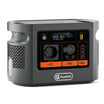
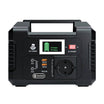
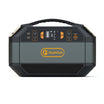
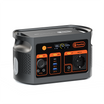
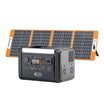
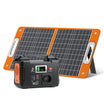
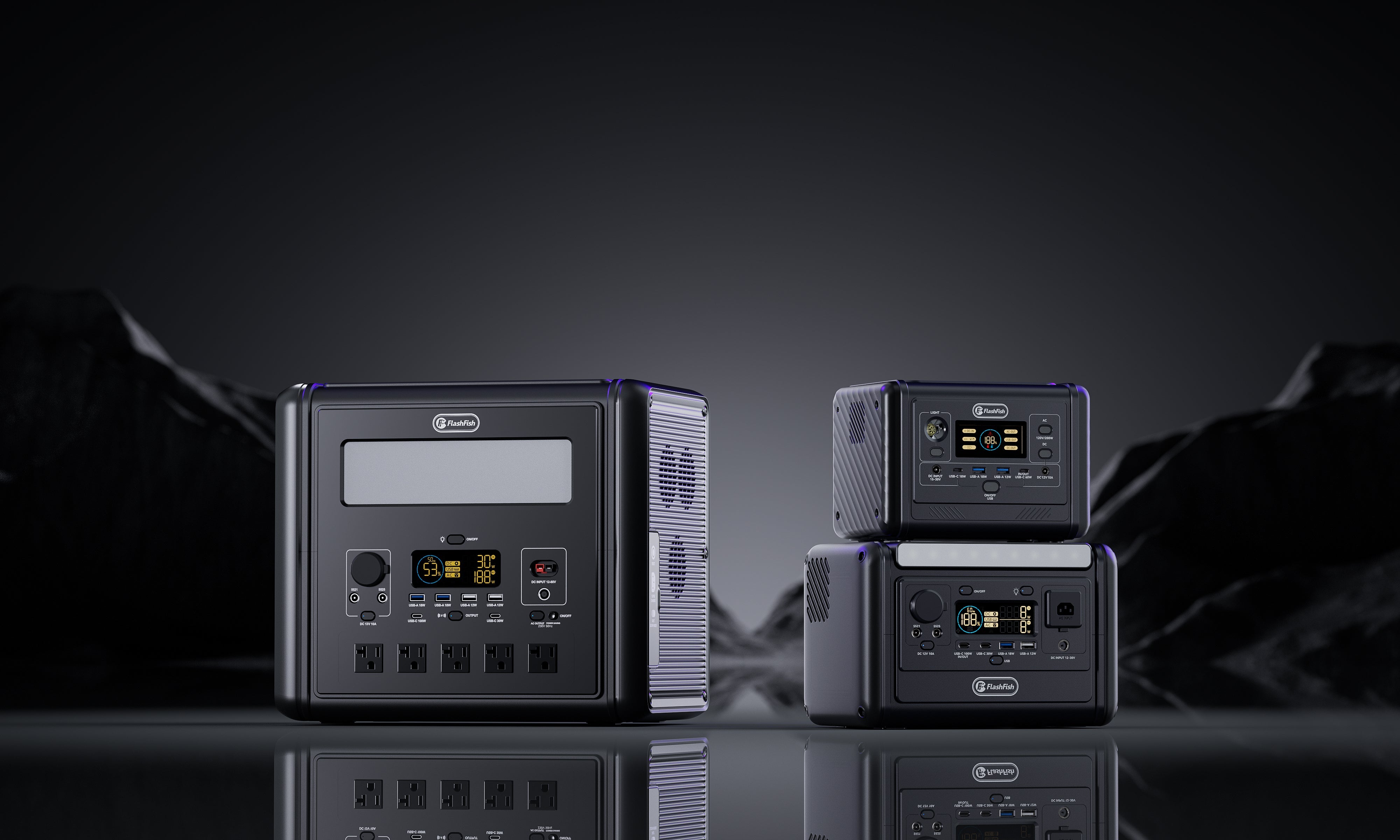
The FlashFish product database records T1200S and T2000 as LiFePO4 models with catalog capacities of 768Wh and 1536Wh. It also records a 3,500-plus-cycle statement tied to remaining capacity above 80%. That statement is useful product context, but it is not a live health reading for every unit.
- A cycle-life statement depends on the maker's defined test conditions.
- A partial cycle and a full-equivalent cycle are not always the same event.
- Temperature, depth of discharge, time at high charge and load conditions can change ageing.
- The local T1200S and T2000 records do not provide a current user-visible SoH percentage.
Therefore, do not turn “3,500+ cycles” into a fixed number of years, a warranty promise or a current health percentage.
A buyer and owner checklist that avoids guesswork
- Identify the evidence type. Is the number a live charge estimate, a cycle count, a manufacturer specification or a controlled test?
- Ask for the baseline. Capacity retention needs an original reference and comparable test conditions.
- Record the load path. AC, USB-C and DC results include different conversion paths and port limits.
- Check power, not only energy. A health assessment should ask whether the unit supports the required stable load without faults.
- Inspect history and condition. Look for damage, swelling, unusual heat, fault messages, moisture exposure and poor cable condition.
- Stop at the enclosure. Do not open, probe, bypass or rebuild a battery pack. Use manufacturer-supported diagnostics or qualified service.
Common mistakes
- Mistake: “It reaches 100%, so the battery is like new.” Better: treat the display as charge state only.
- Mistake: “Low runtime proves bad cells.” Better: first control for load watts, inverter losses, temperature, standby time and output path.
- Mistake: “Cycle count gives an exact health percentage.” Better: use it as one history input.
- Mistake: “A reset restores lost capacity.” Better: calibration can change estimation behaviour; it does not recreate degraded active material.
- Mistake: opening the pack to check cells. Better: stop and use qualified service.
When FlashFish fits and when it does not
FlashFish fits when a buyer wants an ACTIVE Europe-store model and is willing to choose by verified catalog capacity, output, ports, product condition and honest evidence limits. T1200S and T2000 can be assessed with the same HEALTH framework: their cycle-life claims are context, while the actual condition of an individual unit remains a separate question.
FlashFish does not fit when the decision requires a manufacturer-supported SoH percentage or diagnostic report that the exact model, app and current regional manual do not provide. It also does not fit a safety-critical plan based only on a charge icon, catalog cycle count or an unrepeatable runtime anecdote. Review the FlashFish portable power station range, but reject any unit whose evidence does not match the decision.
Safety note
A battery that is swollen, damaged, unusually hot, wet, leaking, smelling abnormal or repeatedly faulting should not be used merely to complete a health test. Disconnect it when safe, move people away from the risk, follow the manufacturer and local emergency guidance, and contact qualified support. Never open the enclosure or bypass the battery-management system.
Frequently asked questions
Does 100% charge mean a battery is at 100% health?
No. A 100% state-of-charge display means the system estimates the battery is full relative to its current control limits. It does not prove that the battery still matches its initial capacity or power capability.
Is cycle count the same as state of health?
No. Cycle count is one usage-history input. Battery health can also depend on remaining capacity, power capability, temperature history, self-discharge and other model-specific evidence.
Can a portable power station show state of health?
Some battery systems expose health data, but many portable power stations show only charge percentage and operating information. Check the exact app, display and manual rather than assuming a health figure exists.
Can I test battery health from one runtime result?
Not reliably. One runtime depends on load, output path, temperature and measurement conditions. A defensible comparison needs repeatable conditions and an original baseline.
What should I ask when buying a used power station?
Ask for age, usage history, storage conditions, fault history and any manufacturer-supported health data. Inspect for damage and reject claims based only on a 100% charge display.
Sources and evidence limits
- Regulation (EU) 2023/1542 – formal SoC, SoH and battery-management definitions.
- EU Batteries Regulation, Annex VII – state-of-health and expected-lifetime parameters for covered battery categories.
- FlashFish T1200S Europe page and FlashFish T2000 Europe page – current model context.
- FlashFish product-source bundle – manual-derived capacity, chemistry, cycle-life and missing-field boundaries.
This is a decision framework, not a battery-health test, legal opinion or remaining-life certificate.
Use the HEALTH checklist before accepting a battery-condition claim, then compare only models and units whose evidence fits your real load and risk level.



Leave a comment
This site is protected by hCaptcha and the hCaptcha Privacy Policy and Terms of Service apply.